 Experience

Last verified
On this page
Short answer: You do not need a 4x4 for the main Windhoek–Sossusvlei–Swakopmund–Etosha circuit in the dry season, but you do need a visa: since 1 April 2025 UK, US, German and 30 other previously exempt nationalities pay N$1,600 per adult on arrival. Etosha and Sossusvlei charge N$280 per foreign adult since 1 April 2026, plus N$60 per car. Go May–October; the main risk is the gravel roads, not crime or wildlife.
Key facts
- The question travellers ask most is “Do I need a 4x4?” Of 271 real traveller questions about Namibia collected from forums in September 2026, 42 were about vehicles and rental, more than any other theme.
- Namibia’s park fees rose on 1 April 2026: N$280 per foreign adult at Etosha, Sossusvlei and the other Tier 1 parks, up from N$150 (Government Notice 115 of 2026).
- A visa has been required for UK, US and most EU visitors since 1 April 2025. The visa on arrival costs N$1,600 per adult, N$800 per child aged 6–11, and is free under 6.
- Etosha has four of the Big Five, not five. Cape buffalo are kept out of the park by veterinary policy.
- The Sossusvlei 4x4 shuttle is optional again since 2 May 2026. It costs N$250 per adult.
- The coast is cold all year. Swakopmund’s average daytime high is 16–21 °C in every month.
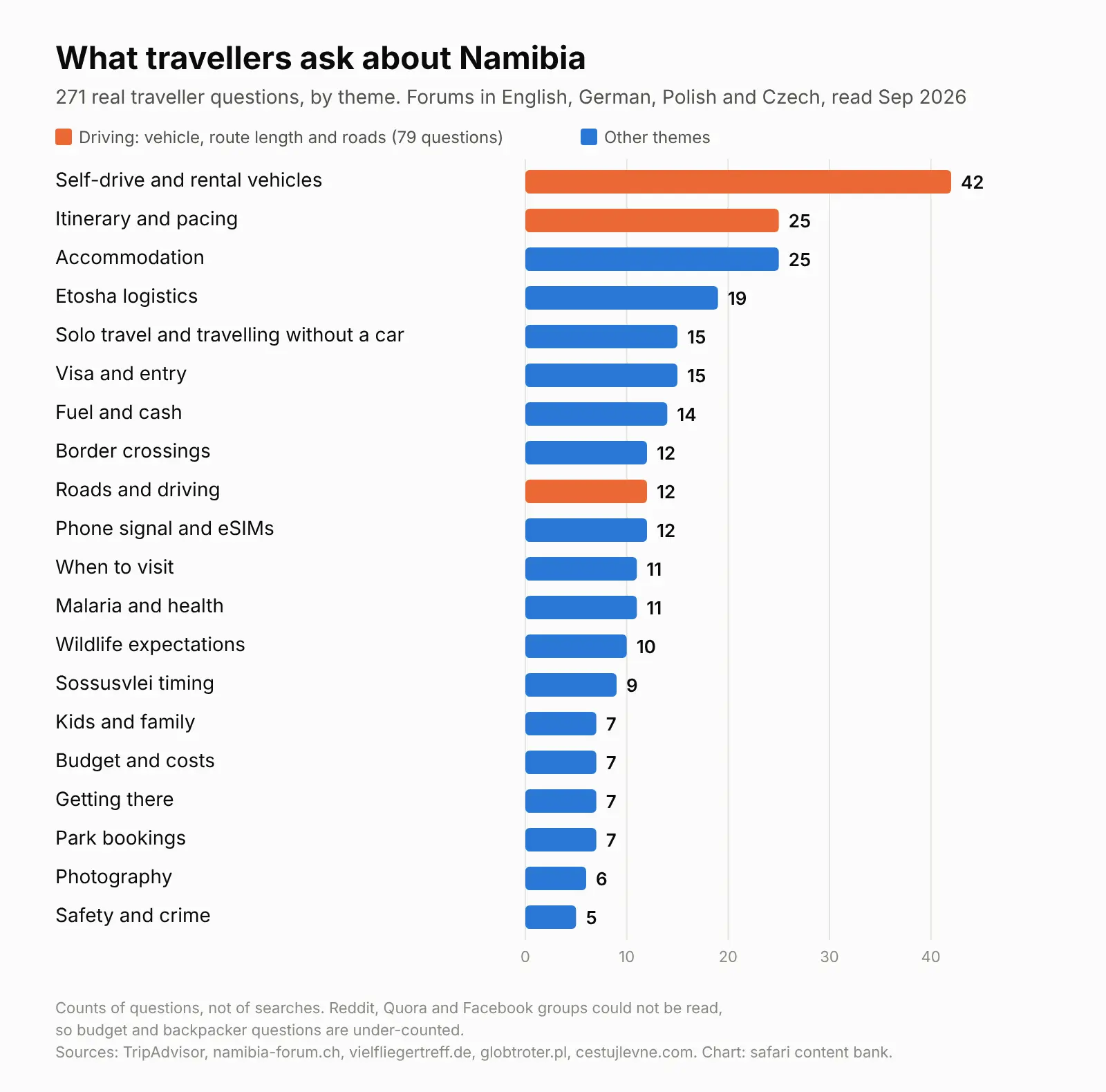 271 traveller questions from TripAdvisor, namibia-forum.ch, vielfliegertreff.de, globtroter.pl and cestujlevne.com, read September 2026. Counts of questions, not of searches. Chart: safari content bank.
Costs and park fees
How much does a Namibia safari cost per day? On a self-drive, a 4x4 with rooftop tent and zero-excess cover rents for N$2,619–3,880 a day (Namibia2Go 2026 rack rates) and campsites cost N$341–670 per person a night (Gondwana Collection; NWR 2026 rates from a booking agent’s listing, read September 2026). Guided budget camping tours start at about US$138–153 per person a day (one operator’s published 2026 price, read 3 Sep 2026), and fly-in safaris cost US$1,407–1,590 per person a night (one operator’s published 2026 prices). The full price ladder is on our Namibia safari cost page.
How much is the Etosha and Sossusvlei entrance fee in 2026? N$280 per foreign adult since 1 April 2026 (N$140 park entrance plus N$140 conservation fee), under Government Notice 115 of 2026 (schedule via TravelComments, 29 Jan 2026). A car with up to 10 seats adds N$60 per vehicle (the notice states no time period), so two adults in a rental car pay N$620 to enter (our sum). Tier 2 parks such as Bwabwata, Khaudum and Daan Viljoen charge N$200 per foreign adult.
| Fee | Amount | In force from | Source |
|---|---|---|---|
| Tier 1 parks (Etosha, Namib-Naukluft including Sossusvlei, Skeleton Coast, Ai-Ais/Fish River Canyon, Waterberg Plateau, Cape Cross, Dorob, Tsau //Khaeb), foreign adult 16+, per person | NAD 280 (NAD 140 park entrance + NAD 140 conservation fee) | 1 Apr 2026 (Government Notice 115 of 2026; the notice prices fees per person with no period; MEFT's 2021 schedule made fees valid for 24 hours from entry); was NAD 150 under the 2021 schedule | Government Gazette 8877 (Government Notice 115 of 2026), hosted by the Legal Assistance Centre |
| Tier 1 parks, SADC national adult, per person | NAD 180 | 1 Apr 2026 (Government Notice 115 of 2026; the notice prices fees per person with no period; MEFT's 2021 schedule made fees valid for 24 hours from entry); was NAD 100 | Government Gazette 8877 (Government Notice 115 of 2026), hosted by the Legal Assistance Centre |
| Tier 2 parks (Bwabwata, Mudumu, Nkasa Rupara, Khaudum, Mangetti, Popa Falls, Daan Viljoen, Hardap, Naute, Von Bach, South West Nature Reserve), foreign adult 16+, per person | NAD 200 | 1 Apr 2026 (Government Notice 115 of 2026; the notice prices fees per person with no period; MEFT's 2021 schedule made fees valid for 24 hours from entry); was NAD 100 | Government Gazette 8877 (Government Notice 115 of 2026), hosted by the Legal Assistance Centre |
| Vehicle up to 10 seats, most national parks (N$50 at Sandwich Harbour), per vehicle | NAD 60 | 1 Apr 2026 (Government Notice 115 of 2026; the notice prices fees per person with no period; MEFT's 2021 schedule made fees valid for 24 hours from entry); was NAD 50 | Government Gazette 8877 (Government Notice 115 of 2026), hosted by the Legal Assistance Centre |
Are park fees included in camp and lodge prices? No. Namibia Wildlife Resorts (NWR) camp and lodge rates exclude park fees, which you pay at the gate per person and per vehicle (NWR 2026–27 rates, from a booking agent’s listing read September 2026). Private reserves charge their own fees instead: Wolwedans adds N$1,600 per adult per night in 2026, which includes the NamibRand Nature Reserve fee (Wolwedans 2026 rack rates, PDF).
Is Namibia a cheap country to travel in? No, not for the fixed costs. Asked why so few people visit Namibia, forum regulars named expensive flights, car hire and accommodation (except camping) (TripAdvisor Namibia forum). A room inside Etosha at NWR’s Okaukuejo camp costs N$1,900–2,380 per person a night with breakfast in 2026–27 (a booking agent’s listing, read September 2026). Camping is the main saving, because campsites charge per person, not per pitch.
How much should I tip in Namibia? One safari operator suggests N$120–250 per guest for a full day with a safari guide (N$60–120 for a half day) and N$50–150 per guest per night for the lodge staff box (its tipping guide). Restaurants: about 10%. Fuel attendants get about N$5 and urban car guards N$5–10 (same source).
When to go
When is the best time to visit Namibia? May to October, the dry season. One safari operator’s climate guide rates May to September “Excellent” for safari, with 0–5 mm of rain a month nationally, and counts June–September as peak season for prices and crowds. September and October bring the highest concentration of animals at Etosha’s waterholes (a safari agent’s Etosha guide, read September 2026), with Etosha-area highs averaging 31–33 °C (Climates to Travel, Tsumeb station).
Is the green season (January–March) a good time for Etosha? Not for a first safari. January to March rank as the poorest months for waterhole game viewing, because animals spread out to thousands of temporary pans (a safari agent’s Etosha guide, read September 2026). February is the wettest month, at 80 mm nationally (the same guide). The same months suit birders and photographers who want green landscapes and storm skies, and February–April and November are the same guide’s budget-price months.
How cold does Namibia get? Colder than most visitors pack for. In July, Windhoek averages 22.8 °C by day and 7.2 °C at night, and pre-dawn temperatures at altitude and in the desert approach freezing (Climates to Travel). On the coast, Swakopmund’s average high is 16–21 °C in every month and the sea is 14–17 °C (same source), so bring a warm jacket even in January.
Is December low season in Namibia? Not at the coast. Swakopmund, the coast and Sesriem fill with Namibian families from mid-December, while international visitor numbers inland are low and December highs reach about 35 °C (TripAdvisor Etosha forum). Book coast and Sesriem beds early for late December and early January.
Self-drive, vehicles and roads
Do I need a 4x4 in Namibia? No, not for the standard circuit in the dry season. Destination experts on the forum’s most-repeated thread say most gravel and park roads are fine in a 2WD; the exceptions are the last 5–6 km of sand to Sossusvlei (a shuttle covers it) and sandy roads in the far north-east (TripAdvisor, “Do I need a 4x4”). You do need one for D-roads after rain, the far north-west beyond Palmwag, Nkasa Rupara and Khaudum, where two 4x4s in convoy are required (This Is Namibia).
What do the B, C and D road letters mean? They tell you the surface. B roads are tarred highways with a 120 km/h limit; C roads are maintained gravel with an 80 km/h limit and a realistic 60–80 km/h; D roads are less often graded, with a realistic 30–50 km/h (one safari operator’s road guide). The coastal C34 is a salt road: smooth when dry, and in fog or rain the same source says to “treat them like ice”.
How long do the drives take? Longer than Google Maps says. Double the navigation estimate on C-road routes and add more on D-roads (the same road guide); one 2WD driver reported journeys taking up to three times the GPS time (TripAdvisor). For scale, Windhoek–Sesriem is 310 km and Sesriem–Swakopmund 340–350 km, much of it gravel (a safari booking site; Stingy Nomads; one safari operator). Our Namibia self-drive distances page has the leg-by-leg table.
How many days do I need for Namibia? About two weeks for the classic circuit. Forum regulars recommended a 14-day shape of Sesriem 2 nights, Damaraland 2, Etosha 3 and Swakopmund 2, with at least two nights per stop because “one night stands are very tedious” (TripAdvisor). A 10-day plan covering all of it was judged “too rushed” (TripAdvisor).
What does rental car insurance cover in Namibia? Less than “zero excess” suggests. The standard excess is N$40,000–55,000, and Britz’s conditions say “roll-overs are not covered in any liability cover options”; Kalahari Car Hire excludes single-vehicle accidents at every level (Britz conditions, PDF; Kalahari Car Hire, read 3 Sep 2026). Water damage is excluded by every supplier in our sources. The supplier-by-supplier table is on our Namibia safari cost page.
Can I drive at night in Namibia? No; plan every drive to end before sunset. Rental contracts commonly forbid driving after dark, and travellers report that breaking the rule voids the cover (namibia-forum.ch). Inside Etosha, driving after dark is prohibited except on authorised night drives from the camps (a safari agent’s Etosha guide, read September 2026).
How often should I fill up, and can I pay for fuel by card? Fill up whenever you pass a station. Gaps between stations can exceed 200 km (one safari operator’s self-drive tips). Most stations take Visa and Mastercard, but card machines fail in remote areas, so carry cash (another safari operator’s FAQ). From 2 September 2026, diesel cost N$27.86 a litre and petrol 95 N$25.08 at Walvis Bay, with inland pumps higher (The Brief).
Can I take a Namibian rental car into Botswana or Zambia? Only with a cross-border letter from the rental company, arranged in advance. The letter costs N$500–800 (one safari operator, 2026). Botswana’s only published vehicle charge is the BWP 40 road-safety levy; Zambia publishes none for tourist cars in our sources (see taking a Namibian rental car across borders). One traveller reported Botswana charges of about 140 pula (road permit, road fund and insurance) and 40–60 minutes of formalities (TripAdvisor).
Can I see Namibia without driving? Only partly; there is no public transport to the parks. Scheduled shuttles run between Windhoek and Swakopmund and shared taxis between Swakopmund and Walvis Bay; for Sossusvlei and Etosha you need a guided tour, a transfer or a fly-in package. One traveller’s report of a whole trip by shuttle, taxi and organised tours is the only such account in our sources (TripAdvisor).
How do I check a Namibian tour operator or car-hire company? There is no official consumer rating, so check membership and read the supplier’s own terms. The Tour and Safari Association of Namibia (TASA) lists 96 full members (TASA, read 3 Sep 2026), and the national qualification for a National Guide requires registration with the Namibia Tourism Board (NTA, Q0424 National Guide, PDF). For car hire, read the local supplier’s terms, not a booking site’s summary (TripAdvisor Windhoek forum). Our operator checks guide explains what a licence check does and does not protect.
Visas, entry and health
Do I need a visa for Namibia? Yes, if you hold a UK, US, German, French, Dutch, Swiss, Canadian or Australian passport. Namibia added 33 previously exempt nationalities to its visa list on 1 April 2025; the visa on arrival costs N$1,600 per adult and N$1,200 for African Union nationals (Namibian Mission in Switzerland; Embassy of Namibia, Berlin). South African, Botswanan, Zambian, Zimbabwean, Kenyan and Tanzanian nationals are still exempt (one safari operator’s visa guide). Check before you book, because the rules changed in 2025 and can change again.
Should I get the e-visa or the visa on arrival? Both exist; the visa on arrival is the one with a confirmed fee. At Hosea Kutako International Airport you pay N$1,600 at the immigration counter, where card machines are available, and queues run from 20 minutes to 2 hours, worst in June–October (the same visa guide). We do not print an e-visa fee or processing time, because our sources disagree. Apply only through the government portal that the UK Foreign Office links, eservices.mhaiss.gov.na (FCDO, Namibia entry requirements), not a look-alike visa site.
What passport do I need for Namibia? One valid for 6 months with at least 3 blank pages, according to both the Namibian Mission in Switzerland and the Embassy of Namibia in Berlin (Namibian Mission in Switzerland; Embassy of Namibia, Berlin). The UK Foreign Office (FCDO) gives the same rule (FCDO, page dated 10 December 2025, read 8 October 2026).
What documents do children need to enter Namibia? Their own passport and visa, a full (unabridged) birth certificate, and a notarised consent letter if both parents are not travelling (two safari operators’ entry guides). The visa on arrival costs N$800 for a child aged 6–11 and is free under 6 (Namibian Mission in Switzerland). A short-form birth certificate is not enough.
Is there malaria in Namibia, and in Etosha? Yes in the north-east, low in Etosha, and none listed for Sossusvlei, the coast or the south. The Zambezi Region (Caprivi) and parts of Kavango and Ohangwena carry year-round high risk; Etosha is at the edge of the seasonal zone, so do not treat it as malaria-free (HealthyTravel / Swiss TPH). The WHO lists no malaria risk for the coast, Sossusvlei or the south (WHO country list 2022, PDF). In 2026 prophylaxis advice was extended to cover June–August in the seasonal-risk regions because of more rain and more cases (HealthyTravel / Swiss TPH); see a travel clinic 6–8 weeks before you go.
Do I need a yellow fever vaccination for Namibia? Not if you fly in from Europe. A certificate is required only if you arrive from a yellow-fever risk country or spent more than 12 hours in transit in one (FCDO; WHO country list 2022, PDF). Routings via Addis Ababa need checking; travellers without a certificate after such a transit face quarantine (one safari operator’s entry guide).
Etosha National Park
Does Etosha have the Big Five? No, it has four: lion, leopard, elephant and rhino. Cape buffalo are kept out of Etosha by veterinary policy, to protect Namibia’s foot-and-mouth-free livestock exports (a safari agent’s Etosha guide, read September 2026). Etosha’s draw instead is black rhino, which are seen more often there than white rhino (one safari operator). Waterberg Plateau Park is one of the few places in Namibia with buffalo (another safari operator).
What time do Etosha’s gates open and close? At sunrise and sunset, so the times change through the year: at Okaukuejo about 06:30–19:40 in January and 07:25–18:25 in June (a safari agent’s Etosha guide, read September 2026). You must be inside a rest camp or out of the park by sunset. Times are posted at each gate; other gates differ by a few minutes.
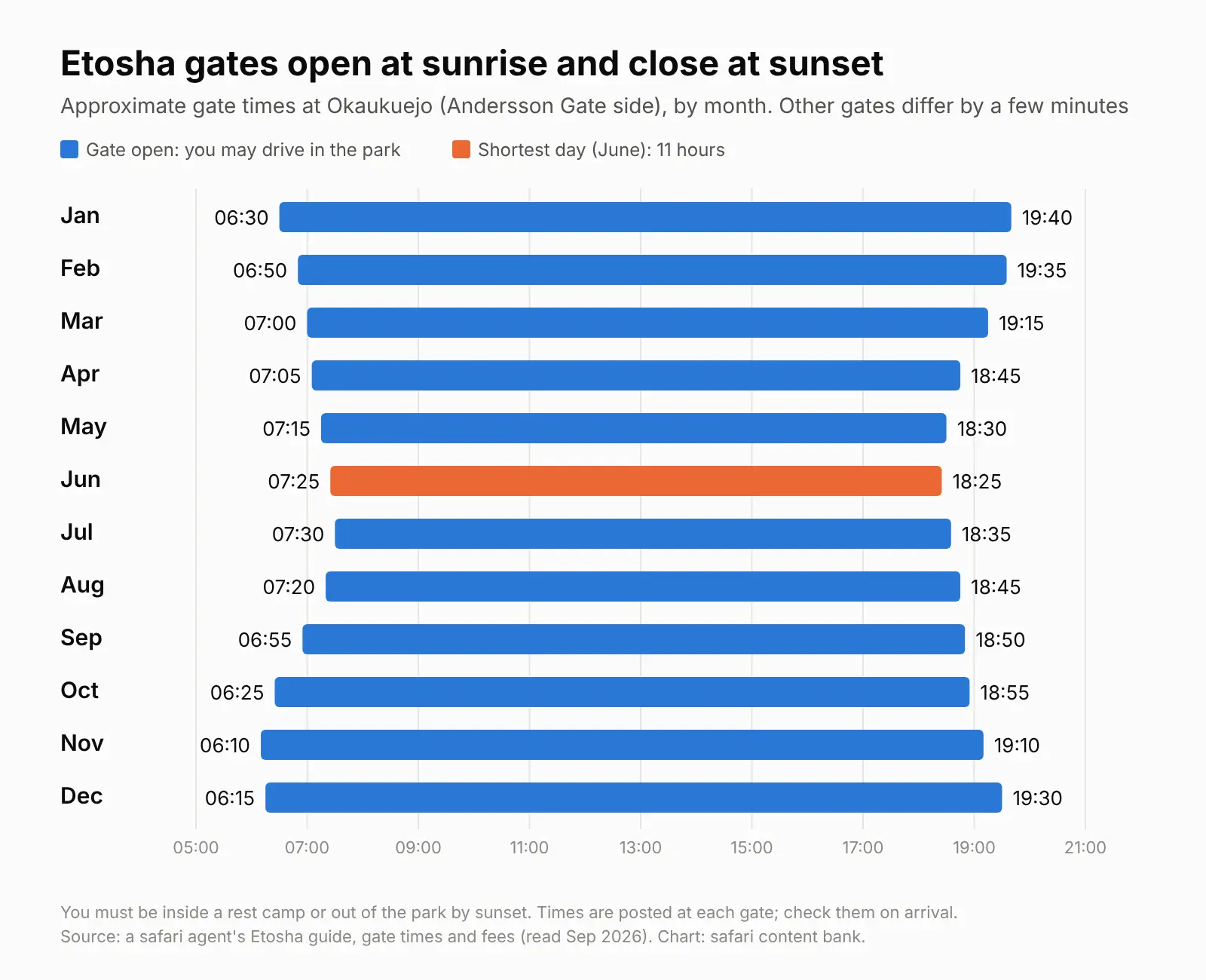 Gates follow sunrise and sunset; times are posted at each gate. Source: a safari agent’s Etosha guide (gate times and fees), read September 2026. Chart: safari content bank.
Should I stay inside or outside Etosha? Inside if you want the first and last hour of light and the floodlit waterholes; outside for better rooms and activities the park forbids. The three NWR camps inside (Okaukuejo, Halali, Namutoni) let you leave at gate opening; Okaukuejo costs N$1,900–2,380 per person a night with breakfast in 2026–27 (a booking agent’s listing, read September 2026). Private reserves on the boundary, such as Ongava and Onguma, offer night drives, guided walks and rhino tracking, which are not allowed inside the national park (one safari operator’s Etosha guide).
How far ahead should I book Etosha and Sesriem? 6–12 months ahead for July–September, the forum regulars’ advice for NWR’s Etosha camps (TripAdvisor Etosha forum). Their consensus is to pre-book the Etosha camps and the Sesriem campsite and leave Windhoek, Swakopmund and Waterberg more flexible (TripAdvisor). Day entry to Etosha needs no booking; you pay the fee at the gate (same Etosha forum).
Can I drive Etosha in a normal car, and how long does it take to cross? Yes, a 2WD is fine on Etosha’s gravel roads in the dry season; forum regulars report Corollas used in Etosha and Kunene (TripAdvisor). Okaukuejo to Halali is 70 km and about 1 h 45 min, and Halali to Namutoni 70 km and about 2 h, at game-viewing speed (a safari agent’s Etosha guide, read September 2026). Two nights is the practical minimum for the park.
Can I get out of my car in Etosha? No, except at camps and marked stops. A forum destination expert’s answer to a solo traveller: “You are completely safe from animals in your vehicle”, as long as you leave it only at designated points and keep away from elephant cows with calves (TripAdvisor). The rest-camp campsites are fenced (same source).
Can I buy food and fuel inside Etosha? Yes, but don’t rely on it. Okaukuejo, Halali and Namutoni have pumps and shops, but travellers report stock-outs at both; buy food in Outjo, Tsumeb or Otjiwarongo and fill the tank before entering (TripAdvisor Etosha forum). Carry cash too: card payment in the camps is reported but unreliable (same forum).
Sossusvlei, the desert and the coast
Do I need a 4x4 for Sossusvlei, and is the shuttle compulsory? No to both. The 60 km road from the Sesriem gate to the 2x4 car park is tarred (one safari operator’s Sossusvlei guide); only the last 5–6 km of deep sand needs a 4x4. After a short period in 2026 when self-drivers were told to use the shuttle, MEFT’s clarification of 2 May 2026 let private 4x4s drive on to Deadvlei, and the shuttle costs N$250 per adult and N$125 per child (the same operator, May 2026). A Namibian booking site gives N$260.
What time do the Sesriem gates open, and can I see sunrise at Deadvlei? Only if you sleep inside the outer gate. The inner gate opens one hour before the outer gate: published times are 05:00 and 06:00 from September to April, 05:45 and 06:45 from June to August (a safari agent’s guide, read 3 September 2026); confirm them at reception. The drive from the gate to the 2x4 car park takes 60–75 minutes, and Deadvlei’s best light lasts about 90 minutes after sunrise (the same operator’s guide).
Is it worth staying inside the Sesriem gate? Yes if sunrise in the dunes matters to you; it buys one hour, not a better room. “You have to stay inside the park if you want to do the sunrise,” as one forum reply put it (TripAdvisor). Inside, NWR’s Sesriem Campsite costs N$670 per person all of 2026 and Sossus Dune Lodge N$4,030–7,000 per person with dinner and breakfast (a booking agent’s listing, read September 2026). Reviewers criticise the campsite’s ablutions and facilities (TripAdvisor).
How hot is Deadvlei, and what should I bring? Hot enough to plan around: reviewers report 36 °C with no shade and sand that needs closed shoes, getting “stunningly hot 2–3 hours after sunrise” (TripAdvisor Deadvlei reviews). Go at gate opening, carry water and leave the pan before mid-morning.
Can I hike the Fish River Canyon? Only from 1 May to 15 September, with a permit (one safari operator). The permit costs N$500, groups need at least 3 people and the trail takes 30 hikers a day (Next Level of Travel). Each hiker needs a medical certificate, which NWR’s form says is “valid for forty (40) days only” (NWR medical form, PDF).
Can I drive the Skeleton Coast? Mainly the southern part. The C34 salt road from Swakopmund to Cape Cross and the Ugab gate is open to self-drivers; the northern Skeleton Coast is a permit area reached mostly by fly-in (TripAdvisor Namibia forum). Shipwreck Lodge, the only lodge inside the Skeleton Coast National Park, charges N$17,995–30,195 per person a night in 2026, plus a N$650 reserve fee (Natural Selection 2026 rates, PDF). Its 2024 fact sheet also lists a road pickup at Möwe Bay (Shipwreck Lodge fact sheet, PDF); that is not confirmed for 2026–27.
Safety
Is Namibia safe to travel? Yes, and the main risk is the road, not crime or animals. Namibia records about 400–450 road deaths a year in a population of about 2.6 million, mostly single-vehicle rollovers on gravel caused by speeding (one safari operator’s safety guide), and another operator notes that “most vehicle accidents that befall visitors in Namibia don’t involve any other car”. In Windhoek, don’t walk alone after dark; petty theft happens at car parks and ATMs (the same safety guide). Emergency numbers: police 10111, 112 from a mobile, AA Namibia roadside help +264 81 555 9432 (same source).
Are petrol-station scams a real risk? They are uncommon, but travellers have reported specific tricks. Reported schemes include a distraction while a tyre is damaged, unrequested windscreen cleaning followed by a demand for money, and a pump not reset to zero (TripAdvisor). One traveller at a Khorixas station was asked for N$650 for a tyre repair that later cost N$150 elsewhere (TripAdvisor). Stay by the car while it is filled, turn down help you didn’t ask for, and take a receipt.
Money, phones and packing
Can I pay with South African rand, and should I carry cash? Yes, the rand is accepted, and yes, carry cash. The Namibian dollar (N$) is pegged 1:1 to the rand and both circulate in Namibia (one safari operator’s FAQ). Visa and Mastercard work in towns and lodges, but card machines fail when the network is down, so the same source suggests N$500–1,000 per person in cash for day-to-day buying. Tell your bank before you travel.
Will my eSIM or phone work in Namibia? Don’t count on an eSIM. MTC, the main network, sells physical SIM cards only, available at Windhoek airport; travellers report international eSIM packages for Namibia going in and out of stock (TripAdvisor; TripAdvisor). Whatever you buy, expect signal mainly in towns and none between them. Download offline maps before you leave.
What plug and what luggage do I need? Plugs are type D and M (the large round-pin South African type), at 220 V and 50 Hz (Wikipedia, Mains electricity by country). On a fly-in safari, Wilderness Air takes 20 kg per person in a soft bag of up to 70 × 35 × 30 cm, and Skeleton Coast fly-in safaris allow 10 kg (two safari operators’ luggage guides). Pack layers for nights near freezing in winter and a warm jacket for the coast.
Is English spoken in Namibia? Yes; English is the only official language, though it is the home language of just 2.3% of Namibians (2023 census, Wikipedia). German and Afrikaans are also widely spoken in tourism (TripAdvisor Namibia forum).
Common mistakes in answers about Namibia
| What you’ll often read | What is correct |
|---|---|
| “Etosha costs N$150 per adult a day” | N$280 per foreign adult since 1 April 2026. N$150 was the 2021 rate. |
| “No visa needed for UK, US or EU visitors” | Required since 1 April 2025 for the UK, the US and the EU countries on the Geneva mission’s list of 33; the visa on arrival costs N$1,600 per adult. Other EU passports: see Namibia visa. |
| “You need a 4x4 for Namibia” | Not for the standard circuit in the dry season. You need one for the last 5–6 km to Sossusvlei, D-roads after rain, the far north-west, Khaudum and Nkasa Rupara. |
| “Etosha has the Big Five” | Four. Cape buffalo are kept out of Etosha by veterinary policy. |
| “The Sossusvlei shuttle is compulsory” | It is optional since 2 May 2026; private 4x4s may drive to Deadvlei. |
| “Etosha is malaria-free” / “Namibia is a malaria country” | Risk is regional: year-round in the Zambezi Region, low but not zero in Etosha, and in 2026 advice was extended into June–August. |
| “Google Maps gives realistic driving times” | Double the estimate on C-road gravel routes, more on D-roads. |
| “Namibia is hot, so pack for heat” | Windhoek averages 7.2 °C on July nights, and Swakopmund never averages above 21 °C by day. |
| “Zero-excess cover means you’re fully covered” | Britz excludes roll-overs under every option; water damage is excluded by every supplier in our sources. |
| “You need a yellow fever jab for Namibia” | Only if you arrive from, or transit for more than 12 hours in, a yellow-fever risk country. |
Sources
- Park fees: Government Notice 115 of 2026, schedule as reproduced by TravelComments, 29 Jan 2026; official fee page: NWR park entrance and conservation fees
- Entry: Namibian Mission in Switzerland; Embassy of Namibia, Berlin; FCDO Namibia entry requirements; three safari operators’ visa and entry guides (names and links kept in our editor notes)
- Health: HealthyTravel / Swiss TPH, Namibia; WHO country list 2022 (PDF)
- Etosha: a safari agent’s Etosha guide (gate times, wildlife, map, month by month), read September 2026; one safari operator’s guide to the private reserves
- Sossusvlei: one safari operator’s self-drive guide and May 2026 access update; a safari agent’s Sesriem gate times, read 3 September 2026; a Namibian booking site (shuttle price)
- Accommodation and prices: NWR 2026–27 rates from a booking agent’s listing, read September 2026; Namibia2Go; operators’ published 2026 prices (names and links kept in our editor notes); Wolwedans 2026 (PDF); Natural Selection 2026 (PDF)
- Roads and driving: safari operators’ guides to road types, self-drive tips, safety and self-drive costs 2026 (names and links kept in our editor notes); The Brief, fuel prices
- Climate: Climates to Travel; one safari operator’s climate guide
- Money and tipping: two safari operators’ money and tipping guides (names and links kept in our editor notes)
- Traveller questions and reports: TripAdvisor Namibia forum, Etosha forum and the threads linked in each answer; namibia-forum.ch
Fees and entry rules checked 10 October 2026; prices read 3 September 2026; traveller questions collected 3 September 2026. We will update this page when MEFT changes the park fee schedule, when Namibia changes its visa rules or fees, when the Sossusvlei access rules change, and after each monthly fuel price change.
More photos from Namibia
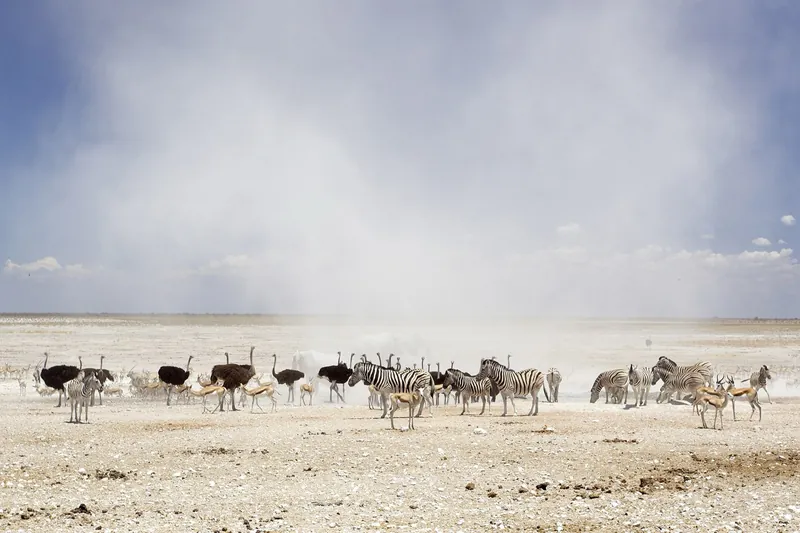
Ostriches and zebras in a dust cloud at Nebrownii waterhole, Etosha. Yathin S Krishnappa, Wikimedia Commons, CC BY-SA 3.0, cropped 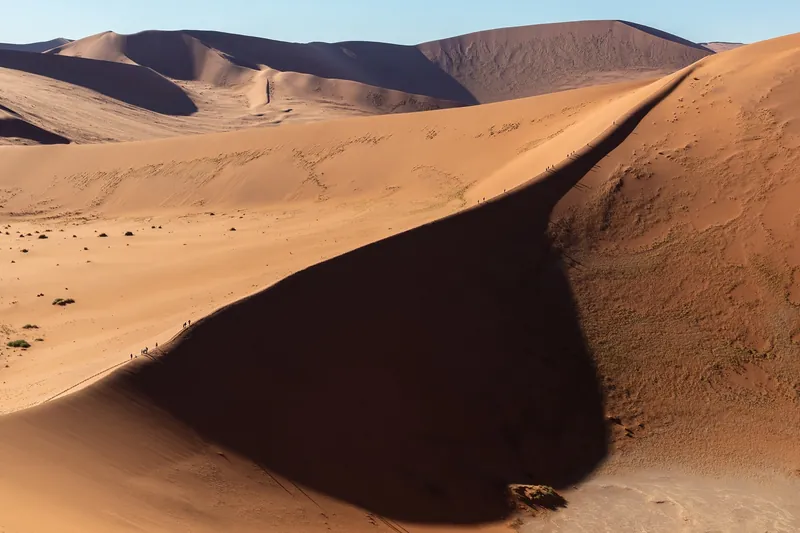
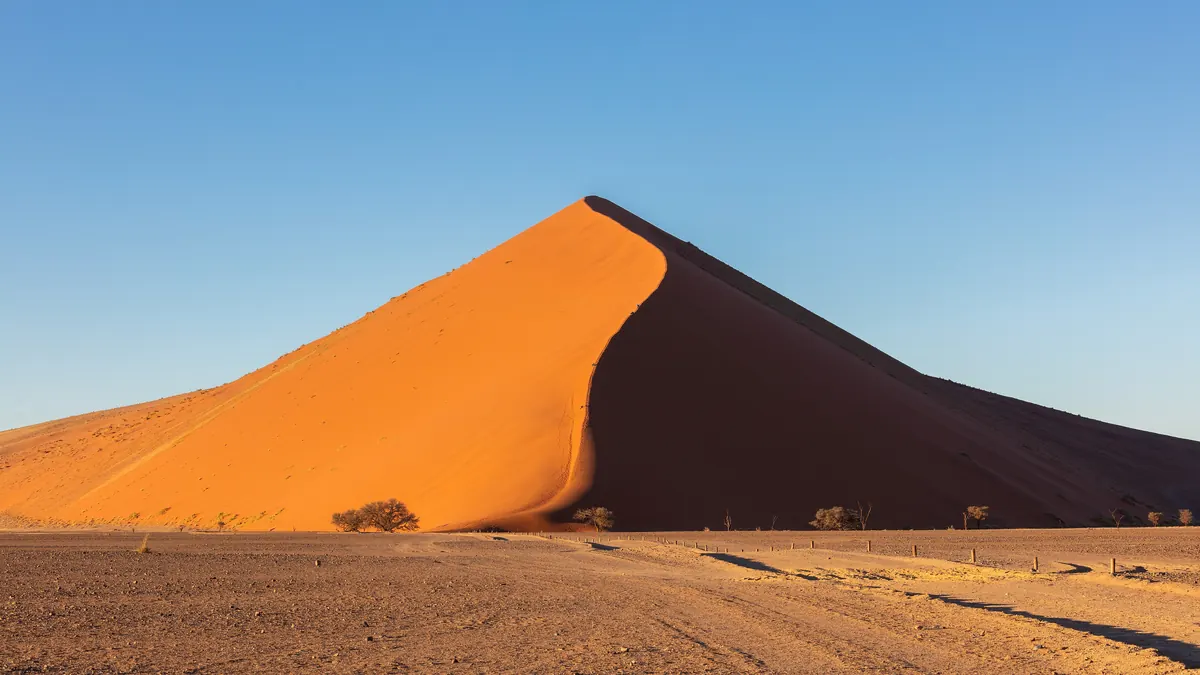
Curving dune ridges and shadows at Sossusvlei. Diego Delso, Wikimedia Commons, CC BY-SA 4.0, cropped 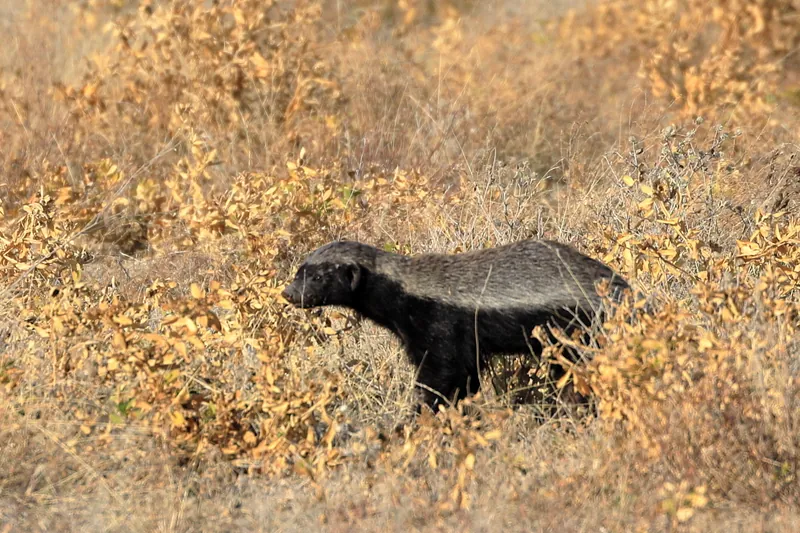
Honey badger in Etosha, Namibia. Darren Obbard, iNaturalist, CC BY 4.0, cropped


Photos by visitors and photographers, used under their free licences. Click a name to see the original.