 Experience


Last verified
Plan it: costs, fees and practical answers
- Park feesSerengeti entry is US$82.60 per adult per 24 h with VAT, US$70.80 from 15 March to 15 May (TANAPA 2023/24, last published). A night inside adds US$59–70.80.Read the answer
- Safari costA Serengeti safari costs about US$300 a day group camping, US$480–900 mid-range and US$870–2,400 luxury, with park fees (TANAPA 2023/24, last published).Read the answer
Short answer: Serengeti National Park (Tanzania) covers 14,763 km² of northern Tanzania. Entry is US$82.60 per adult per 24 hours with VAT (US$70.80 from 15 March to 15 May), and sleeping inside adds a concession fee, so park fees come to US$129.80–153.40 per night (last published tariff, 2023/24). Published 2026 camp rates run from US$250 to US$3,220 per person per night. The herds calve in the south around February and cross the Mara River from July to October.
Key facts
- Serengeti National Park covers 14,763 km² (UNESCO World Heritage List) and had 491,398 visitors in the 2024/25 financial year, up from 430,219 (The Citizen, 18 Dec 2025).
- Serengeti park fees are US$82.60 entry plus US$59 concession per adult per night (concession US$70.80 in July–September), from the last published TANAPA tariff, 2023/24.
- The road from Arusha to the Serengeti crosses the Ngorongoro Conservation Area, which charges its own US$70.80 per adult per 24 hours (NCAA). Arusha to Seronera is a 7–7.5 hour drive (a Tanzanian operator’s Serengeti guide).
- No night drives inside Serengeti National Park. TANAPA’s tariff names the parks that sell them, and the Serengeti is not among them (TANAPA, PDF).
- You cannot drive into the Serengeti from Kenya’s Masai Mara: the Bologonja border post has been closed since 1977 (The EastAfrican, 4 Apr 2017). See Masai Mara to Serengeti: fly via Migori and Tarime.
Serengeti areas at a glance
The Serengeti has five main areas, each best in different months: the southern plains and Ndutu in December–March, Seronera all year, the Western Corridor in May–July, the Mara River in the north in July–October, and the quieter east.
| Area | Herds usually there | Airstrips | Published rate, per person per night |
|---|---|---|---|
| Southern plains and Ndutu (Ndutu is in the Ngorongoro Conservation Area: NCAA fees) | December–March; calving around February | Ndutu | Lemala Ndutu Tented Camp: US$330 (1–19 Dec 2026) → US$825 (20 Dec 2026–31 Mar 2027) |
| Centre: Seronera (big cats all year, always busy) | Passing through in April–May and November | Seronera | Lemala Ewanjan: US$305 → US$595 (1 Jul–30 Sep 2026) |
| Western Corridor and Grumeti | May–July; Grumeti River crossings in the first half of June | Grumeti, Sasakwa | Singita Sabora / Faru Faru, private reserve outside the park: US$2,210 → US$3,220 |
| North: Kogatende, Lamai, Mara River | July–October; river crossings | Kogatende, Lamai | Lemala Mara Tented Camp (open June–October): US$330 → US$825 (1 Jul–30 Sep 2026) |
| East: Namiri, Nanyukie, Lobo (quieter) | Lobo in October–November | Lobo, Seronera | Lemala Nanyukie: US$585 → US$1,480; Namiri Plains: US$740 → US$2,250 |
Areas and months: one safari operator’s area guide and a camp operator’s migration guide, read 9 October 2026; timing “is entirely dependent upon the rainfall patterns each year” (the same safari operator’s migration guide). Rates and airstrips: sources in the sections below.
When to go to the Serengeti
Go in January–February for calving in the south, June–July for the Western Corridor and July–October for the Mara River; April is the wettest month, and April–May the cheapest.
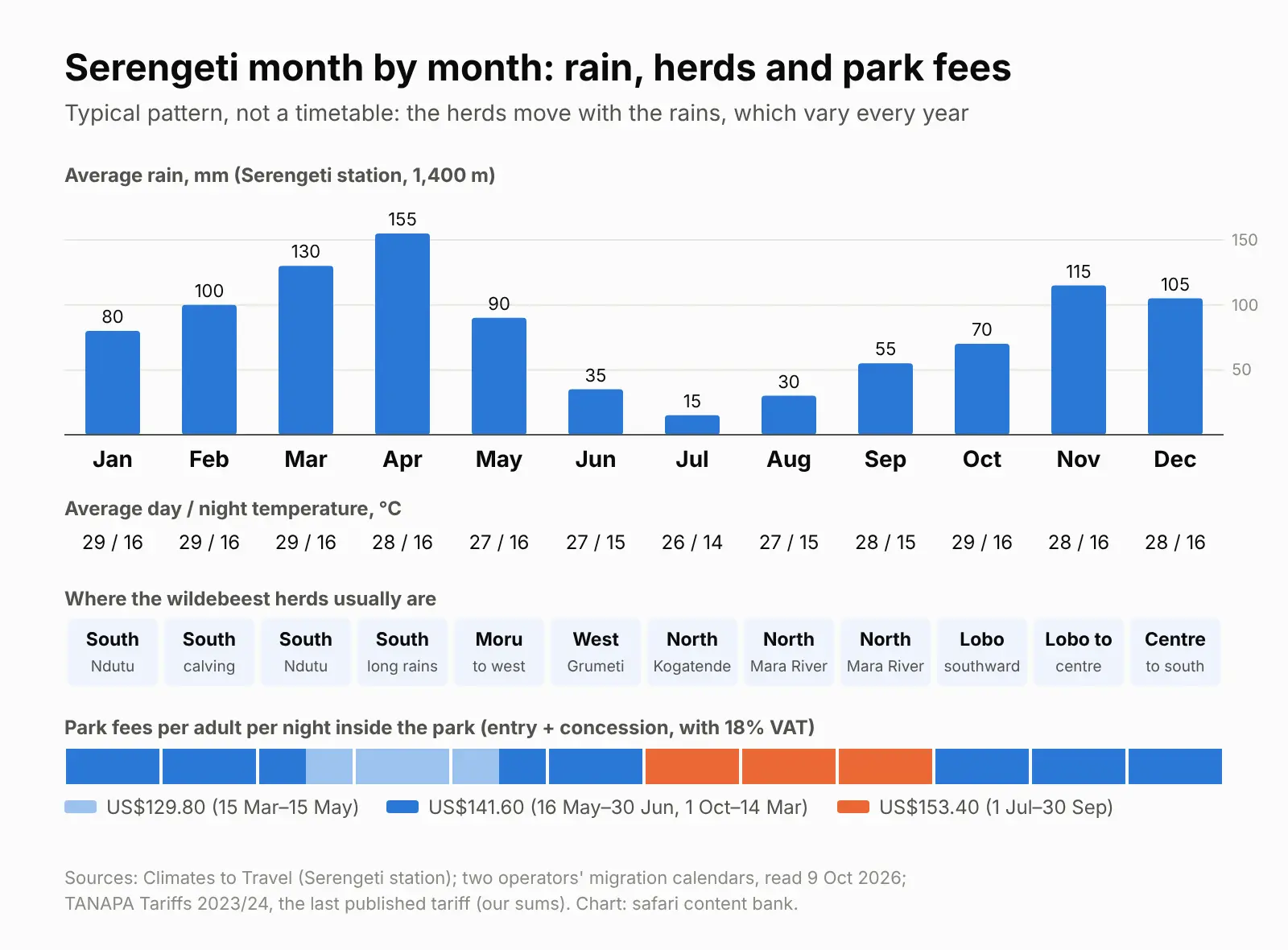 Rain and temperature: Climates to Travel, Serengeti station, 1,400 m. Herds: two operators’ migration calendars. Fees: our sums from TANAPA Tariffs 2023/24, the last published tariff.
- Calving, January–March. Most calves are born “in a short window around February” (one safari operator’s migration guide); a camp operator’s migration guide counts about 500,000 calves in two to three weeks. At the end of March 2023, TAWIRI found the lowest densities on the Ndutu plains: the herds had started to leave (TAWIRI, PDF).
- Long rains, March–May. April averages 155 mm. Entry drops to US$70.80 from 15 March to 15 May (last published tariff, 2023/24), and Namiri Plains is listed at US$740 in April–May against US$2,250 in June–September. A TripAdvisor destination expert warned March 2026 travellers of heavy rain “most of April” and plains away from Seronera that may be impassable (TripAdvisor).
- Dry season, June–October. July is the driest month (15 mm). The concession fee peaks from July to September, and every camp on this page that is open then charges its highest published rate in those months.
- Mara River crossings, July–October, at Kogatende and Lamai. Every reply in a July 2026 forum thread agreed: “No one can guarantee river crossing sightings on the Mara River” (TripAdvisor).
Nights are 14–16 °C all year. For both countries month by month: where the wildebeest herds are each month, Tanzania and Kenya. Two moments in detail: the calving season around Ndutu and the river crossings.
Wildlife: what the counts say
The two latest wildebeest counts are 1,366,109 and “fewer than 600,000”, made with different methods in different months. TAWIRI’s aerial point survey at the end of March 2023 found 1,366,109 (± 231,741 standard error) (TAWIRI, Table 3.2, PDF). A satellite study read by AI (Duporge et al., PNAS Nexus, 2025) covered about 4,000 km² in August 2022 and 2023 and counted fewer than 600,000 (Mongabay, 3 Oct 2025). Quote either figure with its method and date.
- Rhino: TANAPA sells special rhino viewing at Moru for US$118 per trip with VAT (last published tariff, 2023/24). Tanzania’s 2025 national census counted 285 black rhinos in the whole country, not only the Serengeti (The Star / Xinhua, 22 Sep 2026).
- Big cats: we found no dated lion or cheetah count for the park, so we print none.
Where to stay in the Serengeti, by price
A public campsite costs US$35.40 a night (last published tariff, 2023/24); published 2026 camp rates run from US$250 to US$595 at mid-range and up to US$2,250 at the top inside the park, and Singita’s Grumeti lodges outside it charge US$2,210–3,220.
| Tier | Example | Lowest → highest season, per person per night | Source |
|---|---|---|---|
| Camping | TANAPA public campsite | US$35.40 with VAT, pitch only (last published tariff, 2023/24) | TANAPA |
| Mid-range | Serengeti Wilderness Camp, east of Seronera | US$250 (Apr–May, 1 Nov–14 Dec) → US$400 (Jan–Feb, Jul–Sep) | A booking agent’s listing |
| Mid-range | Lemala Ewanjan, Seronera | US$305 (1 Mar–31 May 2027) → US$595 (1 Jul–30 Sep 2026) | Lemala |
| Upper | Lemala Nanyukie, east | US$585 (1 Mar–31 May 2027) → US$1,480 (1 Jun–30 Sep 2026) | Lemala |
| Luxury | Namiri Plains (Asilia), east | US$740 (Apr–May) → US$2,250 (Jun–Sep) | A booking agent’s listing |
| Private reserve | Singita Sabora / Faru Faru, Grumeti | US$2,210 (6 Jan–15 May) → US$3,220 (16 May–30 Sep), tax included, plus a US$177 wildlife fee per adult per night | Singita; rate sheet, PDF |
Per person sharing, read 9 October 2026. Lemala rates are full board with house drinks, without government levies, guide or vehicle; Namiri Plains excludes park and concession fees. Inside the park, add US$70.80–82.60 entry and US$59–70.80 concession per adult per night (last published tariff, 2023/24).
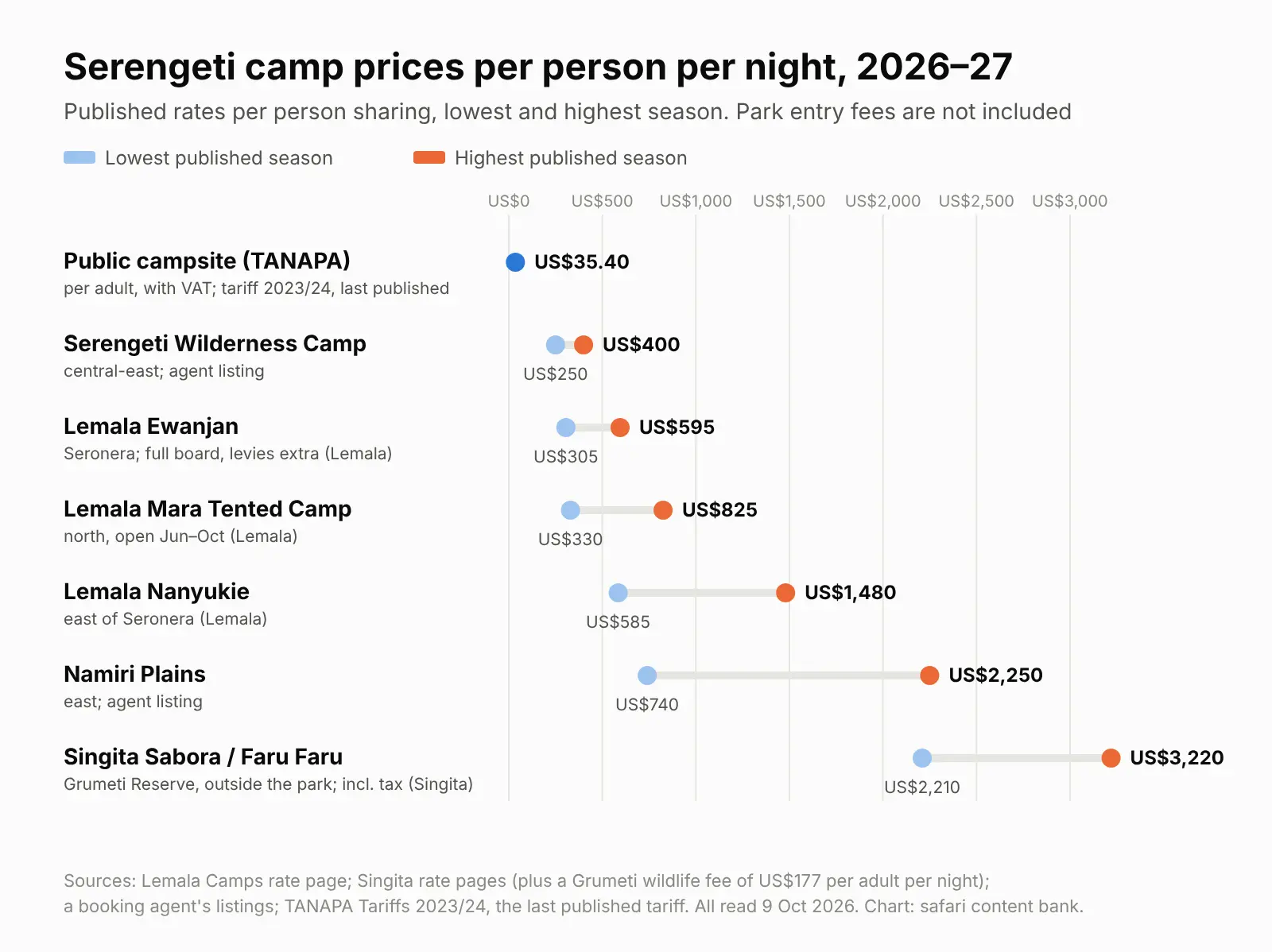 Published 2026–27 rates, read 9 October 2026. Sources: Lemala Camps; Singita; a booking agent’s listings; TANAPA Tariffs 2023/24.
- Outside the park, rules differ. Private concessions on its edge, Grumeti in the west and Klein’s in the north-east, sell night drives and walks at their own rates.
- Ndutu camps pay Ngorongoro fees: US$59 concession per night and US$70.80 entry per 24 hours (NCAA).
- Mobile camps move with the herds and pay the special campsite fee, US$59 or US$70.80 a night, instead of the concession fee (last published tariff, 2023/24).
Getting to the Serengeti
From Arusha you either drive through the Ngorongoro Conservation Area, 7–7.5 hours to Seronera, or fly to one of the park’s airstrips.
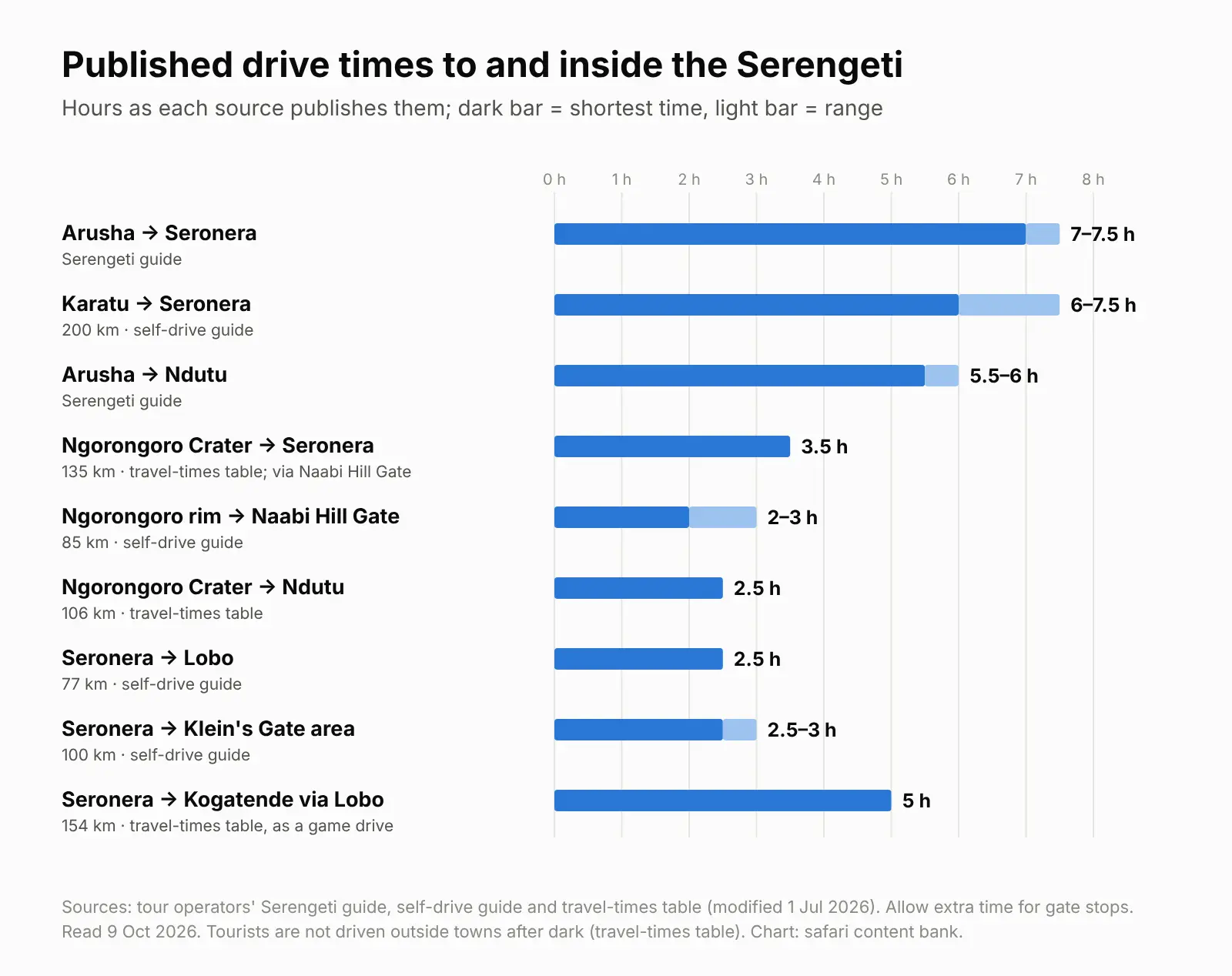 Times as published in a Tanzanian operator’s Serengeti guide, a self-drive operator’s guide and a Tanzanian operator’s travel-times table (modified 1 July 2026), read 9 October 2026.
- By road. Ngorongoro’s permit is single-entry per 24 hours, so returning the same way means paying US$70.80 again. Allow extra time for the stop at Naabi Hill Gate, where you enter the park. The last petrol station is in Karatu (a self-drive operator’s guide).
- Not after dark. Tourists are not driven outside towns after dark, so a same-day transfer needs a flight landing before 13:00 (a Tanzanian operator’s travel-times table).
- By air. Flightlink flies to Seronera, Kogatende and Fort Ikoma (Flightlink, PDF). Regional Air reinstated Lobo, Grumeti, Sasakwa, Fort Ikoma and Lamai in 2026 and also flies to Seronera and Ndutu (ATTA, 29 Jun 2026). Auric Air allows 20 kg including hand luggage (Auric Air). The fares in our sources disagree, so we print none.
What a Serengeti safari costs
Three-day group safaris in the Serengeti and Ngorongoro are published at US$900–1,220 per person, park fees included; a private 7-day northern circuit for two costs US$2,843–6,114 per person (one operator’s published price).
| Trip | Price per person | Included | Source |
|---|---|---|---|
| 3-day group safari, Serengeti and Ngorongoro | US$900 (camping, 4–7 per vehicle) to US$1,220 (lodges, up to 6) | Park entry fees, accommodation and meals | Published prices of two operators, read 9 October 2026 |
| 7-day private northern circuit, 3 nights in the Serengeti, 2 people | US$2,843 (mid-range, low season) to US$6,114 (luxury, peak) | Park fees included | One operator’s published price, read 9 October 2026 |
Operators’ published prices, land only, read 9 October 2026.
Serengeti and Ngorongoro entry fees, with the date each took effect:
| Fee | Amount | In force from | Source |
|---|---|---|---|
| Serengeti and Nyerere National Parks, non-East African adult, entry per day, 16 May–14 Mar | USD 70 + 18% VAT = USD 82.60 | 1 Jul 2023 (2023/24 tariff, last published) | TANAPA Tariffs 2023/24 |
| Serengeti and Nyerere National Parks, non-East African adult, entry per day, 15 Mar–15 May | USD 60 + 18% VAT = USD 70.80 | 1 Jul 2023 (2023/24 tariff, last published) | TANAPA Tariffs 2023/24 |
| Serengeti and Nyerere, concession fee per person per night inside the park | Jul–Sep USD 60 + VAT = USD 70.80; Oct–Jun USD 50 + VAT = USD 59 | 1 Jul 2023 (2023/24 tariff, last published) | TANAPA Tariffs 2023/24 |
| Ngorongoro Conservation Area, non-East African adult, entry per 24 h (single entry) | USD 70.80 (NCAA's page does not say whether VAT is included) | Undated official page, read 9 Oct 2026 | NCAA |
- Operators still bill the 2023/24 amounts: Singita’s 2026 rate sheet lists a Serengeti park fee of US$153.40 per adult per night for its Mara River camp at Lamai (Singita, PDF).
- All Serengeti fee lines, with children, campsites, vehicles and balloons: Serengeti park fees: US$82.60 per adult per 24 hours.
- The whole northern circuit, with visa and US$44 insurance: Tanzania safaris cost US$220–873 per person per day.
Common mistakes about the Serengeti
The usual errors are guaranteed migration dates, a single herd count, placing Ndutu inside the park, night drives and entry quoted without VAT.
| What you’ll often read | What is correct |
|---|---|
| “See the migration in [month], guaranteed” | Timing “is entirely dependent upon the rainfall patterns each year” (one safari operator’s migration guide). No one can date a river crossing. |
| “The Serengeti has [one number] wildebeest” | Two current counts: 1,366,109 (aerial, March 2023) and fewer than 600,000 (satellite, August 2022 and 2023). |
| “Ndutu is in the Serengeti National Park” | It is in the Ngorongoro Conservation Area: US$70.80 entry and US$59 concession (NCAA). |
| “Add a night drive in the Serengeti” | Not inside the park; only in private concessions outside it, such as Grumeti or Klein’s. |
| “Serengeti entry is US$70” | That is before VAT. You pay US$82.60 (last published tariff, 2023/24). |
Compare: Okavango Delta vs Serengeti, Serengeti vs Kruger, Serengeti vs Masai Mara, Serengeti vs Ngorongoro.
Frequently asked questions
Is April or May a good time for the Serengeti? It is the cheapest time and the wettest: April averages 155 mm of rain. Entry is US$70.80 instead of US$82.60 from 15 March to 15 May (last published tariff, 2023/24), and Lemala Ewanjan charges US$305 per person a night in March–May 2027 against US$595 in July–September 2026. Flying in avoids the longest muddy drives.
How many nights do you need in the Serengeti? Two to three per area you want to see. Seronera to Kogatende via Lobo is 154 km, published as a 5-hour game drive (a Tanzanian operator’s travel-times table), so moving between areas takes most of a day. A TripAdvisor destination expert suggests two nights in the centre and “2 or preferably 3 nights Northern Serengeti” (TripAdvisor).
Is Ndutu in the Serengeti? No. Ndutu is in the Ngorongoro Conservation Area, on the edge of the Serengeti plains, so you pay NCAA fees: US$70.80 entry per 24 hours and US$59 concession per night. It is the main calving area around February; one reviewer wrote that it “was common to see 15–20 vehicles at a single sighting” there in March 2026 (TripAdvisor).
Are there tsetse flies in the Serengeti? In parts. Guides on the TripAdvisor forum report none at Seronera but tsetse at Kusini, in the Western Corridor and towards Lobo (TripAdvisor). This is guide testimony, not an official map; more in Tanzania safety and health risks.
How long is the drive from Ngorongoro to Seronera? A Tanzanian operator’s travel-times table gives 135 km and 3.5 hours. On the way you stop at Naabi Hill Gate, where you leave the Ngorongoro Conservation Area and enter the park. The Ngorongoro rim to Naabi Hill Gate alone is 85 km and 2–3 hours (a self-drive operator’s guide).
Is mid-October a good time for the northern Serengeti? It is a gamble. By October the herds usually move south through Loliondo and Lobo (one safari operator’s migration guide), and a camp operator’s migration guide has only the tail end crossing back into Tanzania. Prices drop: Lemala Mara Tented Camp is US$560 per person a night in October 2026 against US$825 in July–September (Lemala).
Should I visit the Serengeti, the Masai Mara, or both? Choose by month: in a camp operator’s migration calendar the herds are on the Serengeti side from November to June and in both in August and September. The road crossing between them has been closed since 1977 (The EastAfrican), so switching sides means half a day of flying via Migori and Tarime (Safarilink). Narok County’s last published schedule (FY2025/26, which expired on 30 June 2026) set the Mara fee at US$100 per non-resident adult a day from 1 January to 30 June and US$200 from 1 July to 31 December (Narok County, PDF). No 2026/27 schedule had been published as of 9 October 2026; for July–December 2026, press reports (The Kenya Times, 6 Aug 2026, a secondary source) say US$200 still applies. Compare both countries in Kenya vs Tanzania: prices, fees and migration.
Sources
- TANAPA, Tariffs 2023/24 (PDF), the last published tariff, site checked 9 Oct 2026; NCAA, Tariffs, read 9 Oct 2026
- UNESCO World Heritage List, Serengeti National Park; The Citizen, 18 Dec 2025
- TAWIRI wildebeest census 2023 (PDF); Mongabay, 3 Oct 2025
- Seasons: one safari operator’s migration and area guides and a camp operator’s migration guide, read 9 October 2026; Climates to Travel
- Rates: Lemala; Singita, Sabora, Faru Faru, 2026 rate sheet (PDF); a booking agent’s listings (Serengeti Wilderness Camp, Namiri Plains); package prices: three tour operators’ published prices, read 9 October 2026
- Travel: a Tanzanian operator’s Serengeti guide; a self-drive operator’s Serengeti and Karatu notes; a Tanzanian operator’s travel-times table (modified 1 Jul 2026); ATTA, 29 Jun 2026; Flightlink (PDF); Auric Air; Safarilink, Mara to Serengeti; The EastAfrican, 4 Apr 2017
- Wildlife: The Star / Xinhua, black rhino census, 22 Sep 2026; Mara fees: Narok County FY2025/26 (PDF), the last published schedule, expired 30 Jun 2026; The Kenya Times, 6 Aug 2026 (press report, secondary)
- Traveller reports: TripAdvisor forum threads as linked in the text
Fees and prices checked 9 October 2026. We will update this page when TANAPA publishes a new tariff and when the camps above publish their 2027 rates.
What visitors say
4.8/5 · 155 reviews · Tripadvisor · read
What visitors praise
- Endless plains with huge numbers and variety of animals
- Big cats seen often, including kills and cubs
- The wildebeest and zebra migration and river crossings
- Animals relaxed and close to vehicles and camps
- Varied central landscapes with trees, hills and waterholes
What visitors criticise
- Crowds of vehicles jostling around sightings
- Game can be sparse in some areas depending on season and location
Tips visitors repeat
- Give it several days, as it is too big to see in a short trip
- A guide who knows where the animals are matters a lot
- Pick your area by season to follow the migration
Steady and very high: almost all recent reviews are 5 stars, only two 3-star visits in the sample.
Photos from Serengeti
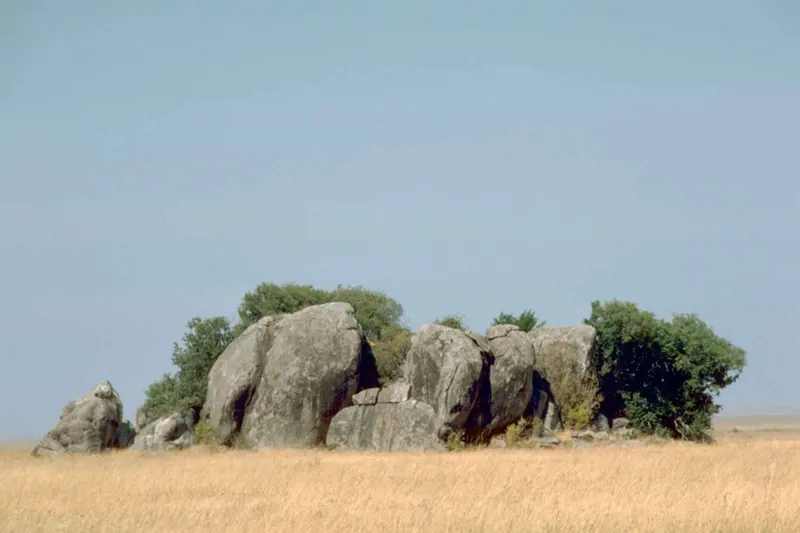
Granite kopje rising from the Serengeti grass. Gary M. Stolz (U.S. Fish and Wildlife Service), Wikimedia Commons, Public domain 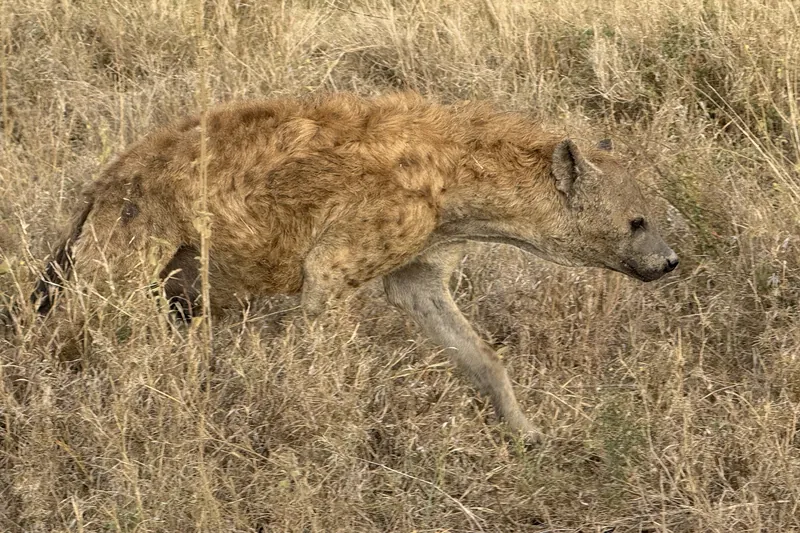
Spotted hyena in the Serengeti. Nicole Kearney, iNaturalist, CC BY 4.0, cropped 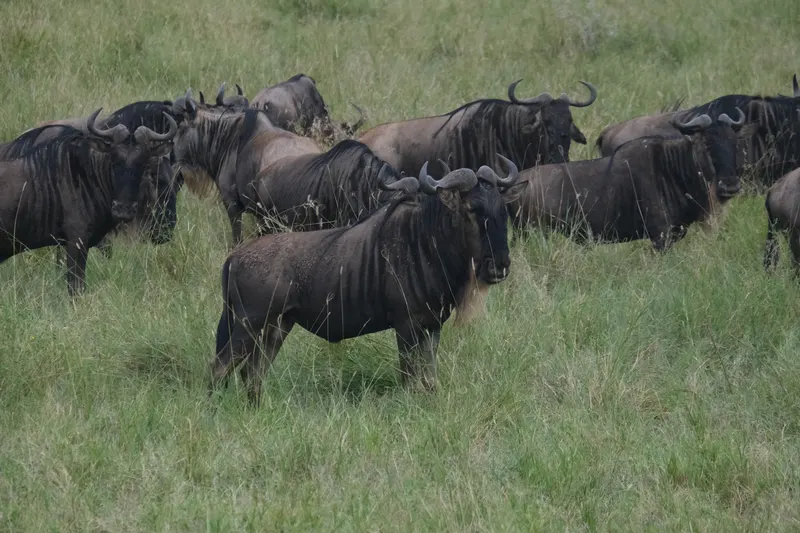
Wildebeest herd grazing on green grass in Serengeti National Park. Jack Christmas, iNaturalist, CC0 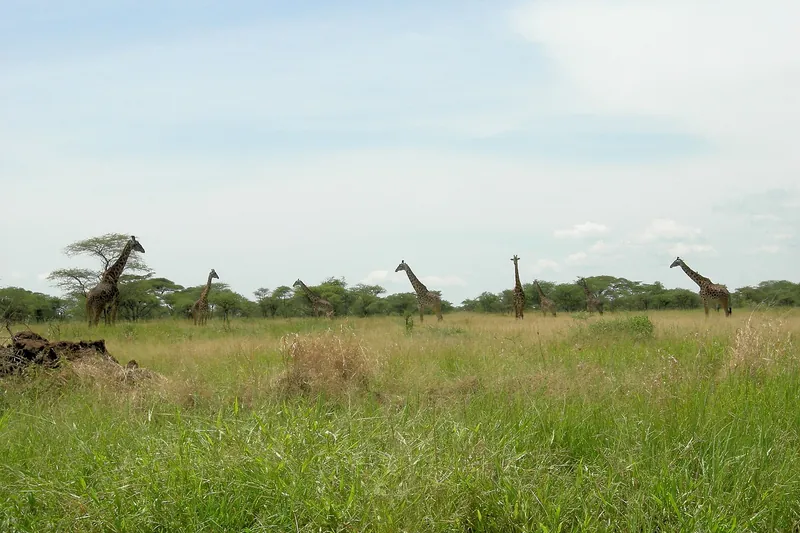
Giraffes on the green Serengeti plains. Joachim Huber, Wikimedia Commons, CC BY-SA 2.0, cropped 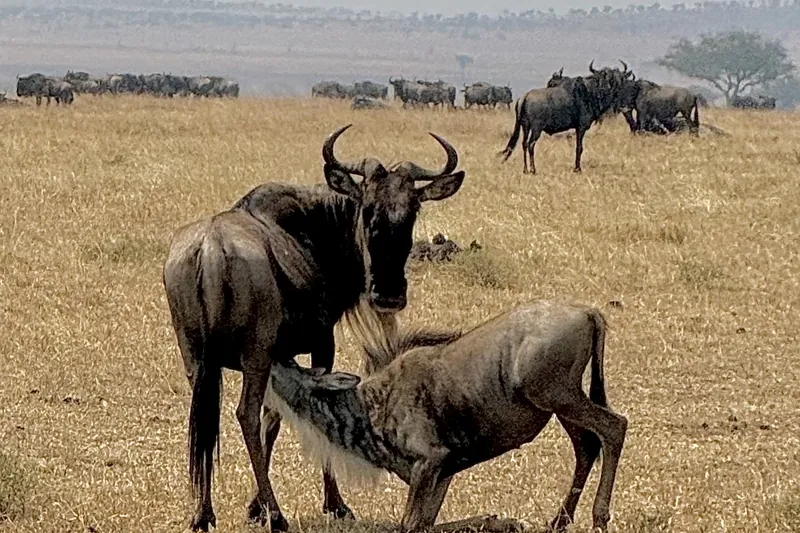
Wildebeest calf suckling from its mother in the Serengeti. Irene, iNaturalist, CC0 
Buffalo and zebra grazing under an acacia in the Serengeti. Richard Mortel, Wikimedia Commons, CC BY 2.0, cropped 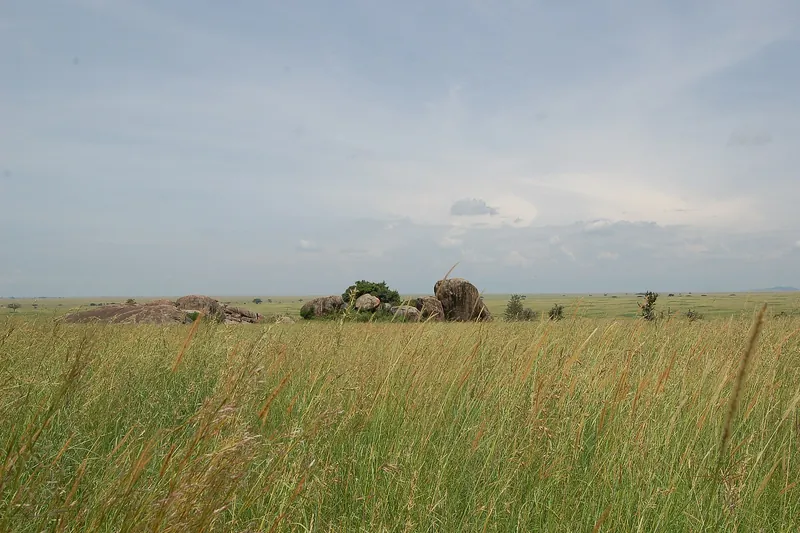
Rocky kopjes on the open Serengeti plains. Joachim Huber, Wikimedia Commons, CC BY-SA 2.0, cropped 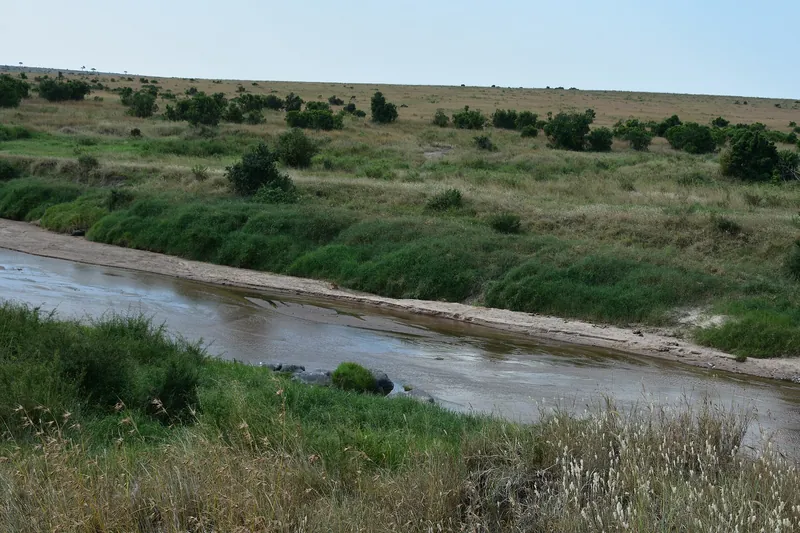
A river winding through the Serengeti. Richard Mortel, Wikimedia Commons, CC BY 2.0, cropped 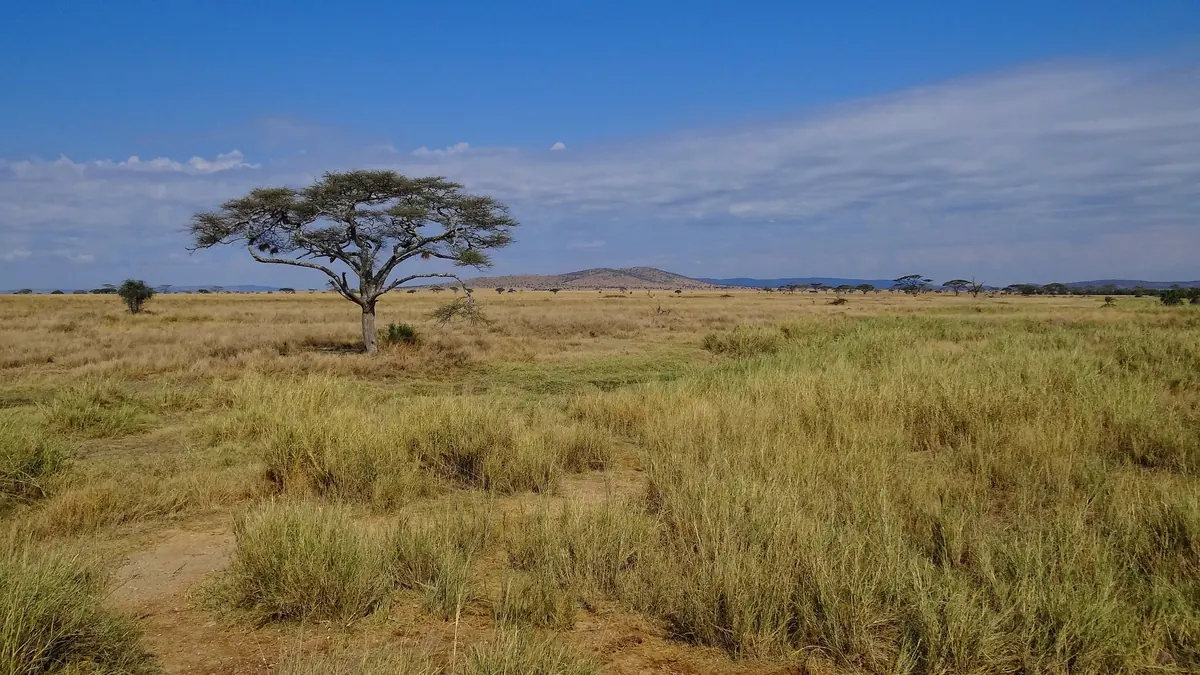
Lone acacia tree on the golden grass plains of the Serengeti. Bjørn Christian Tørrissen, Wikimedia Commons, CC BY-SA 3.0, cropped


Photos by visitors and photographers, used under their free licences. Click a name to see the original.
Ask for a quote
Tell us your dates and we send you a priced itinerary. Free, no obligation.
- Free quote, no obligation
- Trips run by licensed local operators