 Experience


Last verified · Next check due
Plan it: costs, fees and practical answers
- Is it safe?Tanzania safari risks checked 10 Oct 2026: malaria below 1,800 m all year, US$44 compulsory insurance, no road travel after dark, and the October 2025 unrest.Read the answer
- Park feesTanzania park fees per adult a day with 18% VAT: Serengeti US$82.60, Tarangire US$59, Ruaha US$35.40 (TANAPA 2023/24, last published). Ngorongoro US$70.80.Read the answer
- Safari costA Tanzania safari costs US$220–300 a day on a group camping trip, US$400–660 private mid-range and US$580–870 luxury. Park fees itemised, with sources.Read the answer
- Questions answered44 Tanzania safari questions answered: US$50 visa, US$44 compulsory insurance, Serengeti US$82.60 a day (2023/24 tariff), crater US$295 per vehicle.Read the answer
- VisaYes for UK, US, Canadian and most EU passports: US$50 single entry, online or on arrival; US citizens pay US$100. Zanzibar included; plus US$44 insurance.Read the answer
- Visitor insuranceYes. Since 1 Oct 2026 mainland Tanzania requires US$44 travel insurance per adult for 92 days (GN 256 of 2026); one policy, NIC or ZIC, covers mainland and Zanzibar.Read the answer
Short answer: A Tanzania safari costs US$220–873 per person per day in operators’ published 2026 prices, from group camping out of Arusha to private luxury lodges in peak season (checked 9 October 2026). Most trips drive Arusha → Tarangire → Ngorongoro Crater → Serengeti: those parks are in 56%, 74% and 84% of published Tanzania-only itineraries (our sample of 8 October 2026). Go in June–October, the dry season, or January–February for calving in the southern Serengeti.
Key facts
- No Tanzania National Parks (TANAPA) tariff newer than 2023/24 has been published. In that last published tariff a non-East African adult pays US$35.40–118 a day with 18% VAT, US$82.60 in the Serengeti (TANAPA Tariffs 2023/24, PDF, checked 9 October 2026).
- Ngorongoro Crater is run by the Ngorongoro Conservation Area Authority (NCAA): US$70.80 per adult per 24 hours plus US$295 per vehicle per descent (NCAA tariffs, undated, read 9 October 2026).
- Before the first game drive, a visitor with a UK passport or most EU passports pays US$94 and a US visitor US$144 in visa and compulsory government insurance, which has applied on the mainland since 1 October 2026 (e-visa guidelines, checked 24 October 2026; Ministry of Finance notice, late September 2026, republished by the Tanzanian Embassy in Italy; Clyde & Co, 16 Sep 2026; UK FCDO, updated 20 October 2026).
- Season moves camp prices more than location: Namiri Plains (Serengeti) is listed at US$740 per person a night in April–May and US$2,250 in June–September (a booking agent’s listing, read 9 October 2026).
- Tourists are not driven outside towns after dark, so a same-day transfer to a park needs a flight landing before 13:00 (one operator’s travel-time table, modified 1 July 2026).
- No road crosses from the Serengeti into Kenya’s Masai Mara: the Bologonja border post has been closed since 1977 (The EastAfrican, 4 Apr 2017).
Tanzania’s safari parks at a glance
Six parks carry most Tanzania safaris: the Serengeti, Ngorongoro Crater, Tarangire and Lake Manyara on the northern circuit from Arusha, and Ruaha and Nyerere in the south, reached from Dar es Salaam.
| Park | Best for | Adult park fee | Best months | Getting there |
|---|---|---|---|---|
| Serengeti National Park | Wildebeest migration; big cats at Seronera all year | US$82.60 a day (US$70.80, 15 Mar–15 May); US$129.80–153.40 a night inside | Jan–Feb calving in the south; Jun–Jul Western Corridor; Jul–Oct Mara River | Arusha → Seronera 7–7.5 h by road, or fly to a park airstrip |
| Ngorongoro Crater | Black rhino on the crater floor; Ndutu calving plains | US$70.80 per 24 h plus US$295 per vehicle per descent (NCAA) | Dec–Mar for calving at Ndutu, peak in February | Arusha via Lake Manyara and Karatu; Loduare Gate → crater rim 15 km, about 1 h |
| Tarangire National Park | Dry-season elephants and baobabs; night drives and walks | US$59 a day (US$53.10, 15 Mar–15 May); US$106.20 a night inside | Jun–Oct | Arusha → north gate 109 km, 2 h |
| Lake Manyara National Park | Groundwater forest, birds, canopy walkway; a half day en route to Ngorongoro | US$59 a day (US$53.10, 15 Mar–15 May); US$106.20 a night inside | Jun–Oct for mammals, Mar–May for birds | Arusha → park 120 km, 2 h 15 |
| Ruaha National Park | Walking safaris, fly camping, wild dogs; 20,226 km² | US$35.40 a day, all year; US$70.80 a night inside | Jun–Oct; most camps close mid-March to May | Dar es Salaam: about 2.5 h by air, or 600 km and at least 10 h by road |
| Nyerere National Park (Selous) | Boat safaris on the Rufiji, wild dogs; largest park, 30,893 km² | US$82.60 a day (US$70.80, 15 Mar–15 May); US$129.80–153.40 a night inside | Jun–Oct; most camps close mid-March to May | Fly from Dar es Salaam or Zanzibar; by road 175 km, about 4 h, in one published table |
Fees: TANAPA Tariffs 2023/24 (PDF), the last published tariff, with 18% VAT; NCAA tariffs, undated, VAT not stated; both read 9 October 2026. “A night inside” is entry plus concession, as summed on each park page. Seasons and travel times: the park pages, read 8–10 October 2026. All fees: Tanzania park fees.
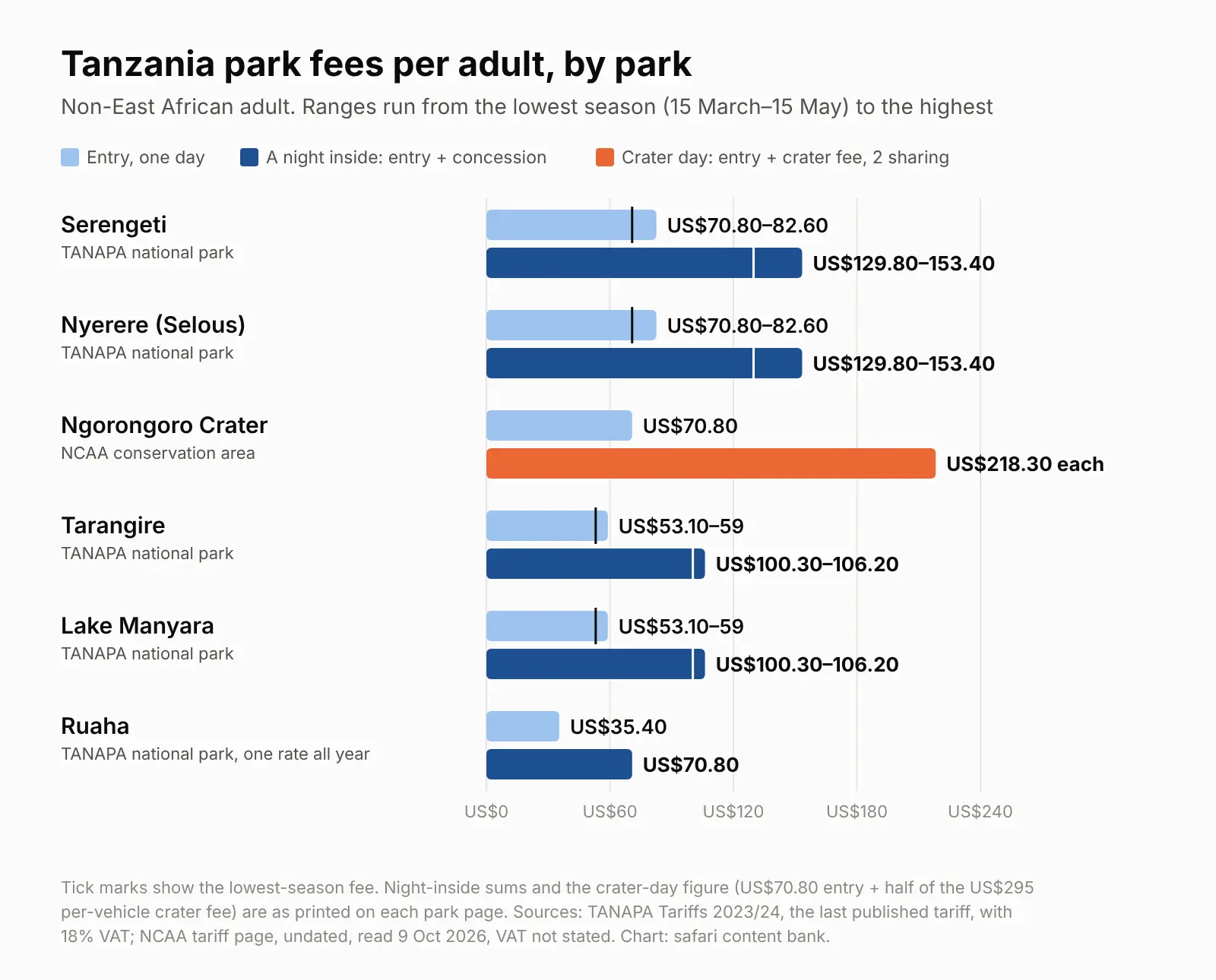 Lowest season (15 March–15 May) to highest. TANAPA Tariffs 2023/24, the last published tariff; NCAA, undated, read 9 October 2026. Chart: safari content bank.
What a Tanzania safari costs
A Tanzania safari costs US$220–873 per person per day in operators’ published 2026 prices, depending on group or private travel, lodge class and season (Tanzania safari cost, read 9 October 2026).
- Group camping from Arusha: US$220–300 per person per day, park fees included (published prices of two operators, read 9 October 2026).
- Private trips for two: US$406–656 per person per day at mid-range and US$578–873 at luxury level, low to peak season (one operator’s published 7-day prices, read 9 October 2026).
- Lodges and camps: US$125–2,250 per person per night before park fees, from a Karatu lodge in April–May to Serengeti luxury camps in peak season (lodge rate pages and agent listings, read 9 October 2026). Singita’s camps in the private Grumeti reserve, outside the park, list up to US$3,220 per person a night (Singita, read 9 October 2026).
- Park fees: two adults on a 6-day northern circuit pay US$1,463.20–1,616.60 in entry, concession and crater fees (our sums on Tanzania park fees, last published tariff, 2023/24).
- “From” prices assume a full vehicle in low season: two people in peak season pay 54–78% more.
When to go to Tanzania
June to October, the dry season, suits every park on this page; January–February brings calving in the southern Serengeti; from mid-March to May most southern camps close. Herd timing “is entirely dependent upon the rainfall patterns each year” (one safari operator’s migration guide, read 9 October 2026); see Great Migration month by month.
| Month | Serengeti and Ngorongoro | Tarangire and Lake Manyara | Ruaha and Nyerere | Park fees |
|---|---|---|---|---|
| Jan | Herds on the southern plains around Ndutu | Between seasons | Wetter and cheaper; Iringa 180 mm | |
| Feb | Calving, mostly “in a short window around February” | Rains return at Lake Manyara | Iringa 130 mm | |
| Mar | Long rains; by late March 2023 herds had started to leave Ndutu | Long rains; Manyara best for birds, March–May | Most camps close from mid-March | From 15 Mar: entry US$70.80 (Serengeti, Nyerere), US$53.10 (Tarangire, Manyara) |
| Apr | Wettest month, 155 mm; cheapest camps | Oliver’s Camp, Sanctuary Swala and the Tree Lodge closed | Most camps closed; Dar es Salaam 255 mm | |
| May | Herds pass Seronera, heading west | Long rains; Oliver’s Camp reopens 16 May | Most camps closed | 16 May: entry back to US$82.60 and US$59 |
| Jun | Western Corridor; Grumeti River crossings, first half of June | Peak season begins | Dry; camps reopen | |
| Jul | Mara River crossings begin; driest month, 15 mm | Peak | Peak dry season | Serengeti and Nyerere concession US$70.80 a night |
| Aug | Mara River crossings | Peak; forum regulars rate August–October best for Tarangire | Peak; Iringa 0 mm | |
| Sep | Mara River crossings | Peak | Peak | |
| Oct | Herds head south through Lobo and Loliondo; crossings least reliable | Last peak month | Last peak month | 1 Oct: concession back to US$59 |
| Nov | Short rains, 115 mm | Low camp rates from 1 November | Camp rates drop on 1 November | |
| Dec | Herds back around Ndutu | Low rates to about 20 December | Peak rates at Christmas and New Year at several camps |
Rain: Climates to Travel (Serengeti, Iringa and Dar es Salaam stations) and a Tanzania travel site. Herds: one safari operator’s migration guide, one camp company’s migration guide, TAWIRI 2023 (PDF). Camps: 2026 listings on each park page. Fees: TANAPA Tariffs 2023/24, the last published tariff; Ruaha has one rate all year. Read 8–10 October 2026.
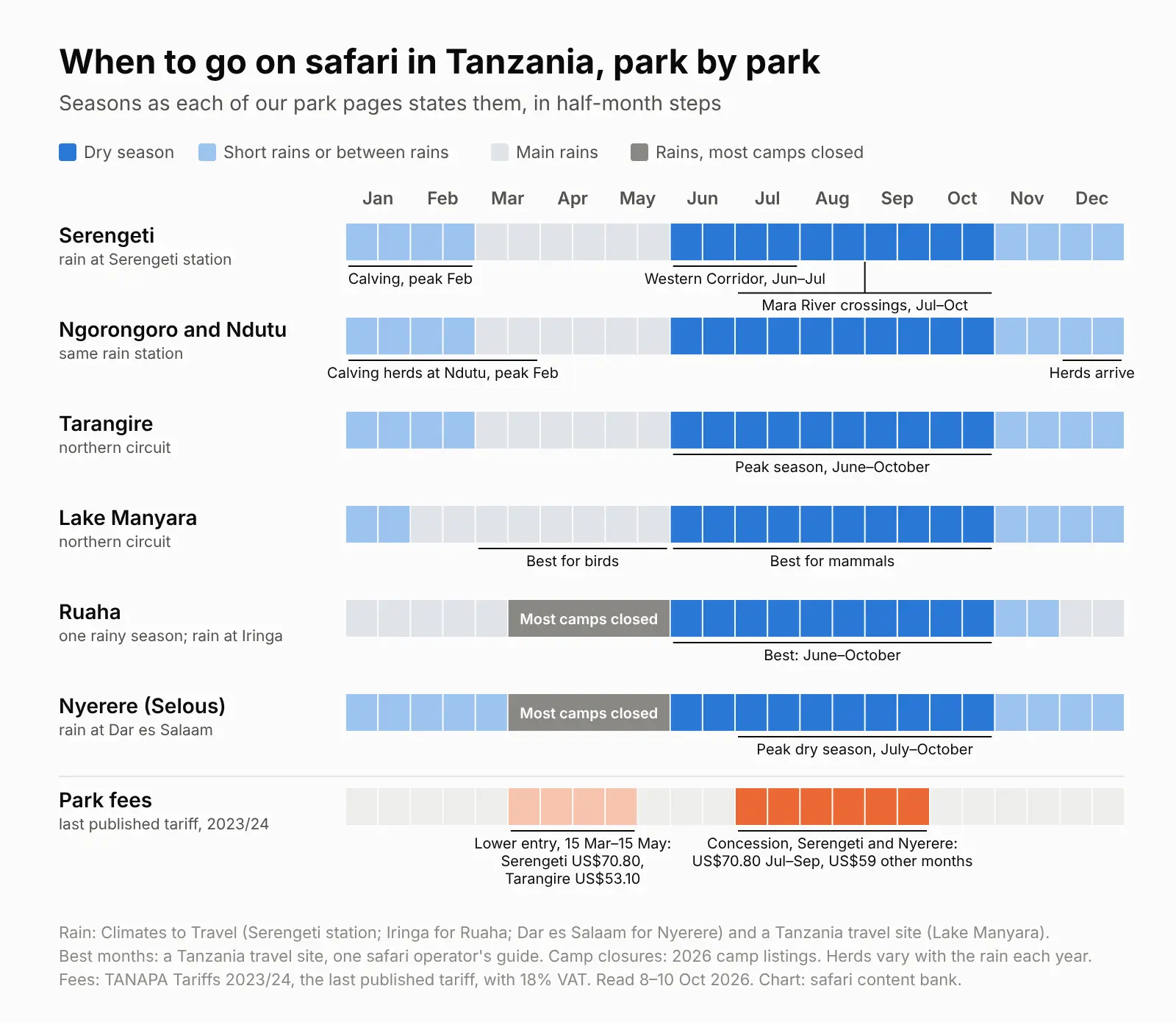 Seasons as each park page states them; fees from TANAPA Tariffs 2023/24, the last published tariff. Read 8–10 October 2026. Chart: safari content bank.
Getting there and getting around
Fly into Kilimanjaro International Airport (JRO) for the northern parks and Dar es Salaam for Ruaha and Nyerere; in the north you drive between parks, in the south you mostly fly.
- Northern circuit by road: Kilimanjaro airport → Arusha 55 km, 1 h 20; Arusha → Tarangire 109 km, 2 h; Tarangire → Lake Manyara 68 km, 1 h 20; Lake Manyara → Ngorongoro Crater 56 km, 1 h; crater → Seronera 135 km, 3 h 30 (one operator’s travel-time table, modified 1 July 2026), though travellers report 4 h 30–5 h for that last leg (TripAdvisor; Fodor’s). Arusha → Seronera in one go: 7–7.5 h (another operator’s getting-there page, read 9 October 2026).
- The Ngorongoro permit allows one entry within 24 hours, and the Serengeti road crosses the conservation area, so driving back out pays US$70.80 again (NCAA); flying out of a Serengeti airstrip avoids it.
- Flights to the Serengeti: Flightlink serves Seronera, Kogatende and Fort Ikoma (Flightlink, PDF); Regional Air’s own notice says it has resumed scheduled flights to Grumeti, Sasakwa, Fort Ikoma, Ndutu and Lamai, alongside Seronera, Lobo and Kogatende (Regional Air). Our sources disagree on fares, so we print none. Auric Air allows 20 kg including hand luggage (Auric Air).
- Southern parks: Dar es Salaam → Ruaha about 2.5 h by air, or 600 km and at least 10 h by road (a safari listing site’s getting-there page, read 9 October 2026). Dar es Salaam → Nyerere 175 km, about 4 h by road via Kisarawe (one published travel-time table), or US$150–220 one way on Coastal Aviation as a travel-guide site lists it (2 Jun 2026, secondary source).
The two circuits compared: Tanzania’s northern or southern circuit. Crossing to Kenya: Masai Mara to Serengeti.
Typical routes and published prices
Most published Tanzania safaris run 6–11 days (97 of 157 in our sample from 29 operators, captured 8 October 2026; median 9 days). Days 1–5 buy the three northern parks, days 6–10 Serengeti nights and a flight out, days 11–15 a beach or a second country.
| Route | Days | How the days split | Published price per person | Source |
|---|---|---|---|---|
| Group-joining northern circuit, from Arusha | 3–5 | Tarangire, 1–2 Serengeti nights, the crater on the way back; 3-day trips skip Tarangire | Camping: US$900 for 3 days, US$990 for 4, US$1,100 for 5; lodges: US$1,520 for 4 days; park fees included | Published prices of two operators, read 9 Oct 2026 |
| Private northern circuit | 6–8 | Tarangire → Ngorongoro → 2–3 Serengeti nights → Arusha by road or air | 7 days for two: US$2,843 (mid-range, low season) to US$6,114 (luxury, peak) | One operator’s published prices, read 9 Oct 2026 |
| Northern circuit + Zanzibar | 7–13 | About a week on safari, then 3–5 beach nights | US$1,762–6,374 on group trips; GBP 5,882–12,428 on private trips for two | Published prices of four operators, captured 8 Oct 2026 |
| Southern fly-in: Nyerere + Ruaha | 7–11 | Fly from Dar es Salaam, then by light aircraft between the parks; some end on Zanzibar | 10 days via Mikumi, Udzungwa, Ruaha and Nyerere: US$3,180 (6 people, low season) to US$5,587.59 (2 people, high season), with park fees and internal flights | One operator’s published prices, read 9 Oct 2026 |
Published prices, land only, without international flights, read 8–9 October 2026; operator names and links are kept in our editor notes. Some Zanzibar group trips charge park fees on top, and two of the group prices were discounted prices when read.
- Park fees in the south: three nights in each of Ruaha and Nyerere in July–September cost US$672.60 per adult (our sums on Ruaha, last published tariff, 2023/24).
- More: how many days a safari needs; Tanzania safari and Zanzibar.
Before you go: visa, insurance, health and safety
Most visitors need a US$50 visa and US$44 of government travel insurance, compulsory on the mainland since 1 October 2026; as of 11 November 2026 every traveller must also complete an online health form, and malaria applies to every Tanzania safari.
- Visa: US$50 single entry, 90 days; US citizens must buy the US$100 multiple-entry visa; one visa covers the mainland and Zanzibar (e-visa guidelines, checked 24 October 2026). Tanzania visa.
- Insurance: US$44 per adult for 92 days, compulsory for foreign visitors on the mainland since 1 October 2026 under Government Notice 256 of 2026, and in Zanzibar under ZIC’s separate scheme since 1 October 2024 (Ministry of Finance notice, late September 2026, republished by the Tanzanian Embassy in Italy; ZIC notice, 7 Oct 2026; Clyde & Co, 16 Sep 2026). Buy one policy, for your first port of entry: NIC for the mainland, ZIC for Zanzibar. EAC and SADC travellers are exempt from the mainland requirement, though the official wording differs on whether that means residents (NIC’s FAQ) or citizens (NIC’s product page and the Ministry of Finance notice); ZIC’s 7 October notice says the exemption is not automatic for Zanzibar, and ZIC lists a US$22 rate for EAC and SADC travellers. The UK FCDO says you need the government policy even if you already have a personal policy and may be refused entry without it; it can be bought online or at ports of entry on arrival, on the mainland and in Zanzibar (UK FCDO, updated 20 October 2026). Tanzania visitor insurance.
- Health: malaria risk all year below 1,800 m, including the Serengeti, Tarangire, Ruaha, Nyerere and Zanzibar; a yellow fever certificate is required from travellers aged 1 and over who arrive from Kenya or another risk country (WHO, PDF). As of 11 November 2026, every traveller must complete the free online Traveller’s Health Surveillance Form at afyamsafiri.moh.go.tz (Ministry of Health Travel Advisory No. 18 on Ebola, 17 October 2026); fill it in during the 24 hours before you arrive and keep the QR code or reference number for port health officers, or you will have to complete it at the airport, which can cause delays (U.S. Embassy in Tanzania, 3 Nov 2026). Arrivals are temperature-screened at airports, land borders and seaports, and high-risk travellers are monitored for 21 days (Ministry of Health; Xinhua, 18 Oct 2026). The Ministry of Health reported no confirmed Ebola case in Tanzania as of 22 October 2026 (The Chanzo, 22 Oct 2026). Since 11:59 pm US Eastern time on 3 November 2026, everyone flying to the United States, US citizens included, must sign a statement that they have not been in DR Congo in the previous 21 days, and anyone who has been there, even only to change planes, cannot board; the order runs to 18 December 2026 unless amended (US CDC attestation order, amended 28 October 2026; Federal Register 2026-22211, 30 October 2026; checked 11 November 2026).
- Safety: the first anniversary of the 2025 election, 29 October 2026, passed without reported demonstrations; Dar es Salaam was quiet under a heavy police presence and no airport closures or flight cancellations were reported (AFP via The Standard, 29 Oct 2026; Africanews, 29 Oct 2026). The UK FCDO says demonstrations, and violent responses from the security forces, could happen at any time, advises staying away from all demonstrations, rallies and large crowds, and notes that internet access has been limited during past protests; filming protests is illegal (FCDO safety and security, updated 30 October 2026). On 6 November 2026 a Dar es Salaam court sentenced opposition leader Tundu Lissu to four years for incitement; we found no reports of protests afterwards (Human Rights Watch, 6 Nov 2026). Checked 11 November 2026. Protests after the 29 October 2025 election stranded passengers at airports (Africanews, 3 Nov 2025). The US State Department has rated Tanzania Level 2, “Exercise increased caution”, since 16 October 2026, lowered from the Level 3 advisory of 31 October 2025, and still says to reconsider travel to the Mozambique border area of Mtwara Region (State Department). Check the FCDO and US State Department advice before booking and the week you travel. Is a Tanzania safari safe?
- Operators: commercial safari vehicles need a TALA licence: how to check a safari operator’s licence. The 44 most-asked traveller questions: Tanzania safari questions.
Common mistakes about Tanzania safaris
Four claims about Tanzania safaris are wrong: the Serengeti fee, the crater fee, the “cheap” south and night drives in the Serengeti.
| What you’ll often read | What is correct |
|---|---|
| “Serengeti entry is US$70” | That is before VAT: US$82.60 (US$70.80 from 15 March to 15 May), last published tariff, 2023/24. |
| “The crater fee is per person” | It is US$295 per vehicle per descent, so six people sharing pay US$49.17 each, on top of US$70.80 entry per adult (NCAA). |
| “The south is the cheap alternative” | Park fees for a night inside Nyerere are the same as in the Serengeti, US$129.80–153.40; in Ruaha US$70.80 (last published tariff, 2023/24). |
| “Add a night drive in the Serengeti” | Not sold inside Serengeti National Park or in the Ngorongoro Conservation Area; TANAPA sells them in Tarangire, Lake Manyara, Ruaha and Nyerere at US$59 per adult (last published tariff, 2023/24). |
Fees: TANAPA Tariffs 2023/24 (PDF), the last published tariff, with 18% VAT; NCAA tariffs, undated; both read 9 October 2026. The per-person crater sum is ours.
Compare: Tanzania vs Botswana, Tanzania vs Rwanda, Tanzania vs South Africa, Tanzania vs Uganda, Tanzania vs Zambia, Kilimanjaro and safari.
Frequently asked questions
How much does a Tanzania safari cost per day? US$220–873 per person per day in operators’ published 2026 prices, read 9 October 2026. Group camping from Arusha costs US$220–300 with park fees included; private trips for two run US$406–656 at mid-range and US$578–873 at luxury level. Add a US$50 visa (US$100 for US citizens), US$44 insurance, tips and international flights.
How many days do you need for a Tanzania safari? Seven to ten days for the northern circuit: forum regulars say “7-10 days is ideal” (TripAdvisor). The same thread says “5-6 days still works, but it can feel a bit packed”. The median published Tanzania itinerary in our sample of 157, which includes beach and multi-country trips, is 9 days.
When is the best time to go on safari in Tanzania? June to October, the dry season, for Tarangire, Lake Manyara, Ruaha and Nyerere. In the Serengeti, go in January–February for calving and July–October for Mara River crossings. March–May brings the long rains: entry is lower from 15 March to 15 May (last published tariff, 2023/24), but most southern camps close.
Which parks should a first Tanzania safari include? The Serengeti, Ngorongoro Crater and Tarangire, which appear in 84%, 74% and 56% of the published Tanzania-only itineraries in our 8 October 2026 sample. Lake Manyara is the usual fourth stop (30%). Ruaha and Nyerere each appear in 13 of the 150 itineraries with a stated route (9%).
Do I need a visa and insurance for Tanzania? Yes. Most visitors need a US$50 single-entry visa, online or on arrival; US citizens must buy the US$100 multiple-entry visa. Since 1 October 2026 visitors to the mainland also need the government’s US$44 travel insurance per adult, valid 92 days; Zanzibar’s separate scheme has applied since 1 October 2024. East African Community citizens need no visa. EAC and SADC travellers are exempt from the mainland insurance, though official sources differ on whether that means residents or citizens; in Zanzibar the exemption is not automatic, and the Zanzibar Insurance Corporation lists a US$22 rate for EAC and SADC travellers.
Can I combine a Tanzania safari with Kenya’s Masai Mara? Yes, but not by road across the Serengeti border: the Bologonja crossing has been closed since 1977, so switching sides means half a day of flying via Migori and Tarime (Safarilink), or a full day by road round through Isebania–Sirari, as forum regulars describe it (TripAdvisor). Entering Tanzania from Kenya needs a yellow fever certificate for travellers aged 1 and over, and traveller reports say a Tanzanian single-entry visa is used up when you leave. Kenya has required its own visitor health policy for arrivals since 5 October 2026 (Kenya visitor insurance). Both countries compared: Kenya vs Tanzania.
Sources
- Fees: TANAPA, Tariffs 2023/24 (PDF), the last published tariff, checked 9 Oct 2026; NCAA, tariffs, undated, read 9 Oct 2026
- Entry, health and safety: Tanzania e-visa guidelines; Ministry of Finance, inbound travel insurance notice, late September 2026, republished by the Tanzanian Embassy in Italy; ZIC, public notice, 7 Oct 2026; Clyde & Co, inbound travel insurance, GN 256 of 2026, 16 Sep 2026; UK FCDO, entry requirements, updated 20 Oct 2026, and safety and security and travel advice, updated 30 Oct 2026; Ministry of Health, Travel Advisory No. 18, 17 Oct 2026; Afya Msafiri portal; U.S. Embassy in Tanzania, health surveillance form, 3 Nov 2026; Xinhua, 18 Oct 2026; Daily News; The Chanzo, 22 Oct 2026; US State Department, Tanzania travel advisory, Level 2 since 16 Oct 2026, and country information; US CDC, attestation order, amended 28 Oct 2026; Federal Register 2026-22211, 30 Oct 2026; WHO country list (PDF); Africanews, 3 Nov 2025, and 29 Oct 2026; AFP via The Standard, 29 Oct 2026; Human Rights Watch, 6 Nov 2026
- Seasons: Climates to Travel; a Tanzania travel site; one safari operator’s and one camp company’s migration guides; TAWIRI 2023 census (PDF)
- Travel: one operator’s travel-time table; another operator’s getting-there page; Flightlink (PDF); Regional Air; Auric Air; a safari listing site’s getting-there page; a travel-guide site’s Coastal Aviation guide (secondary); Safarilink; The EastAfrican
- Prices: a booking agent’s listing (Namiri Plains), Singita and the lodge sources on each park page; tour operators’ published 2026 package prices (names in our editor notes); our sample of 157 Tanzania itineraries from 29 operators, captured 8 Oct 2026; TripAdvisor and Fodor’s threads, as traveller reports
Park fees and prices checked 9–10 October 2026; visa fees checked 24 October 2026; insurance rules, health requirements and safety advice checked 11 November 2026. We will update this page when TANAPA publishes a new tariff, when the insurance rules change and when the park pages publish 2027 camp rates.
Photos from Tanzania
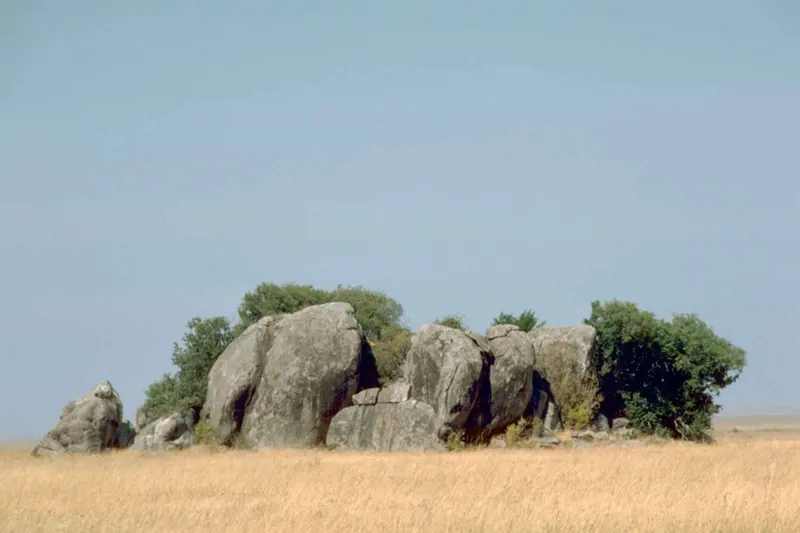
Granite kopje rising from the Serengeti grass. Gary M. Stolz (U.S. Fish and Wildlife Service), Wikimedia Commons, Public domain 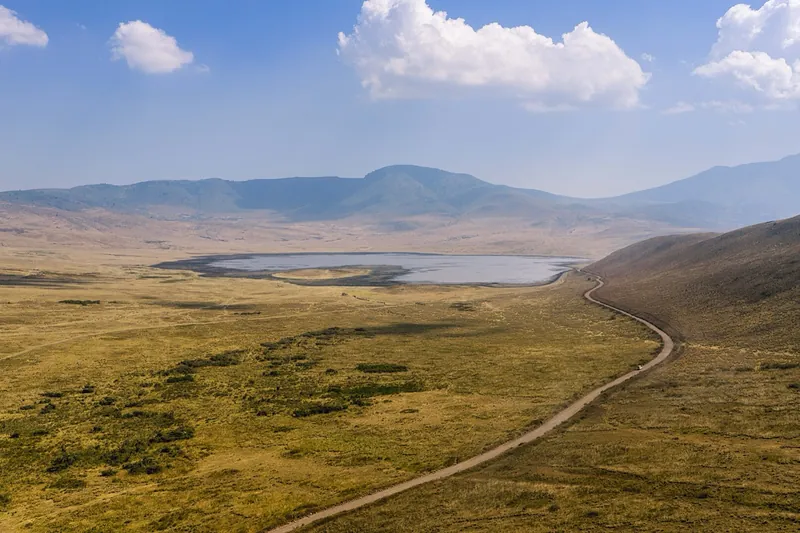
Road winding down into the Ngorongoro Crater and its lake. Arnold Tibaijuka, Wikimedia Commons, CC BY-SA 4.0, cropped 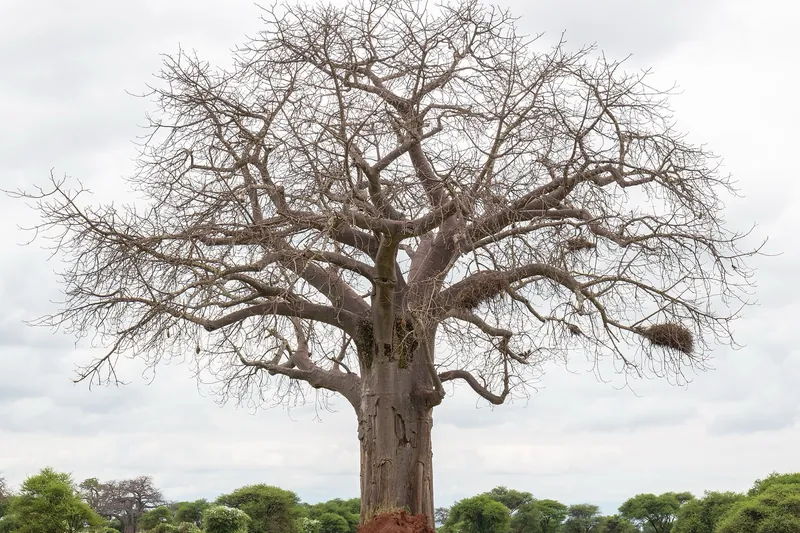
Baobab tree in Tarangire National Park. Diego Delso, Wikimedia Commons, CC BY-SA 4.0, cropped 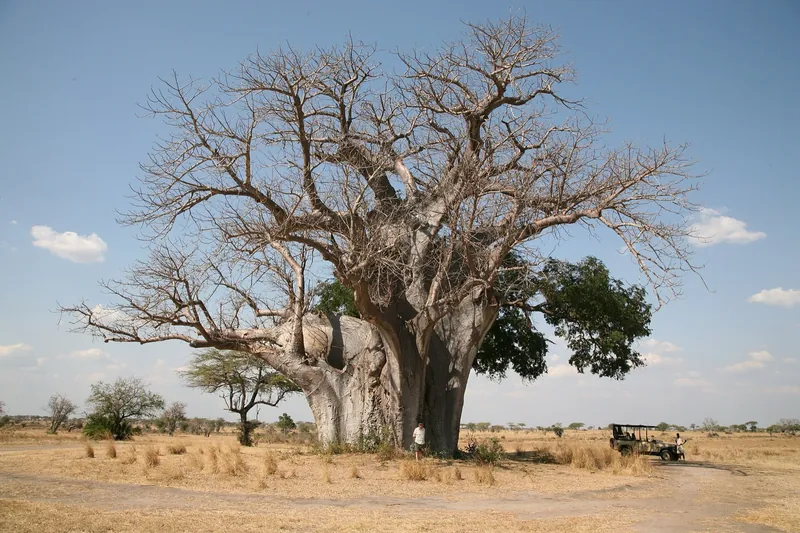
Baobab tree near the Sand River in Nyerere (Selous). Jenny Varley, Wikimedia Commons, CC BY-SA 2.0, cropped 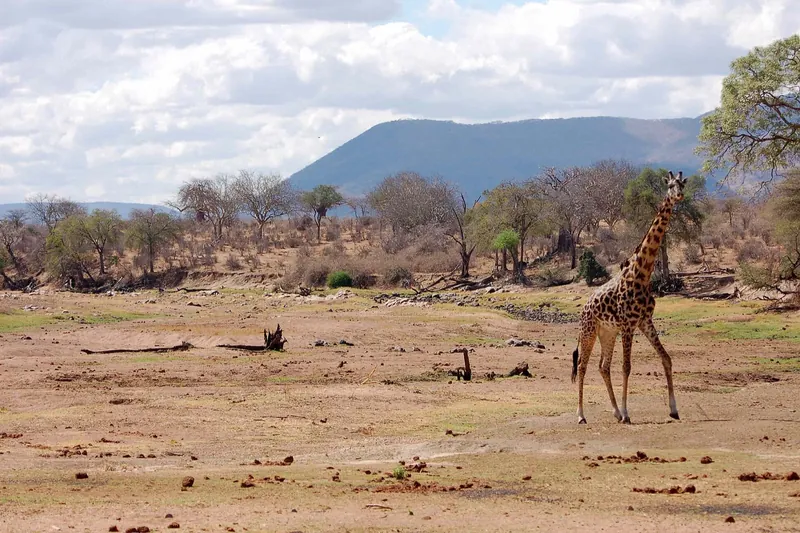
Giraffe crossing the dry Great Ruaha River. Paul Shaffner, Wikimedia Commons, CC BY 2.0, cropped 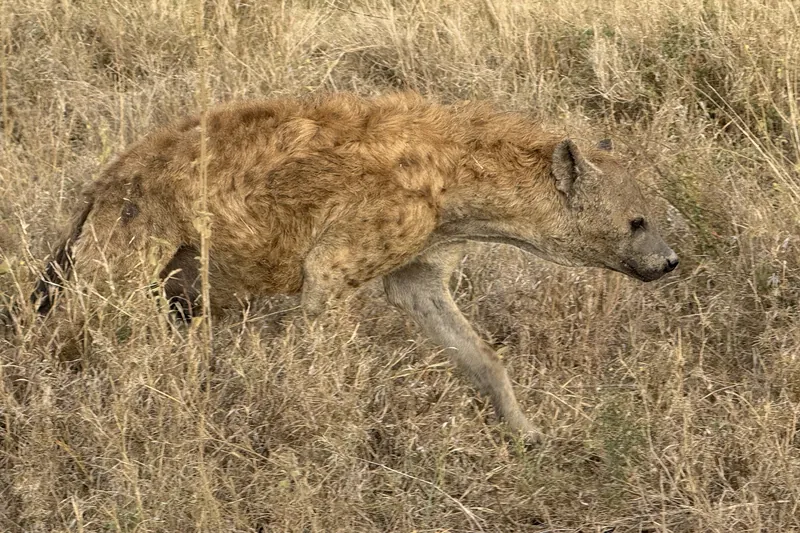
Spotted hyena in the Serengeti. Nicole Kearney, iNaturalist, CC BY 4.0, cropped 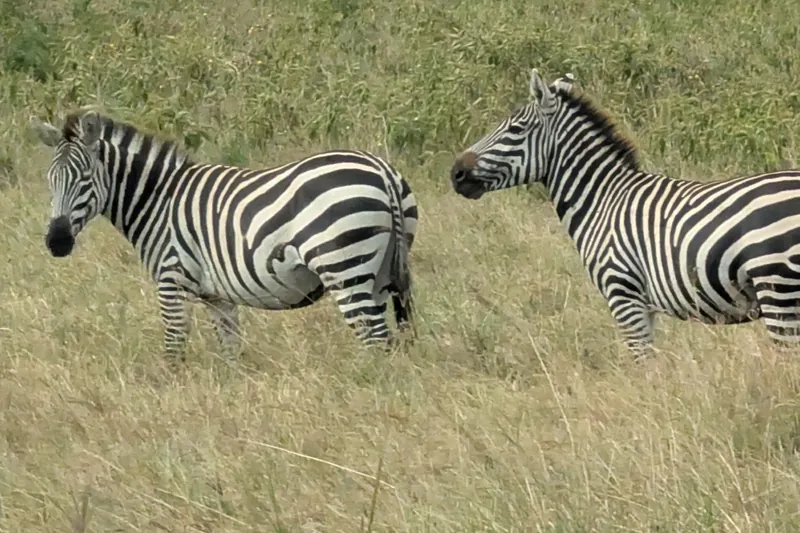
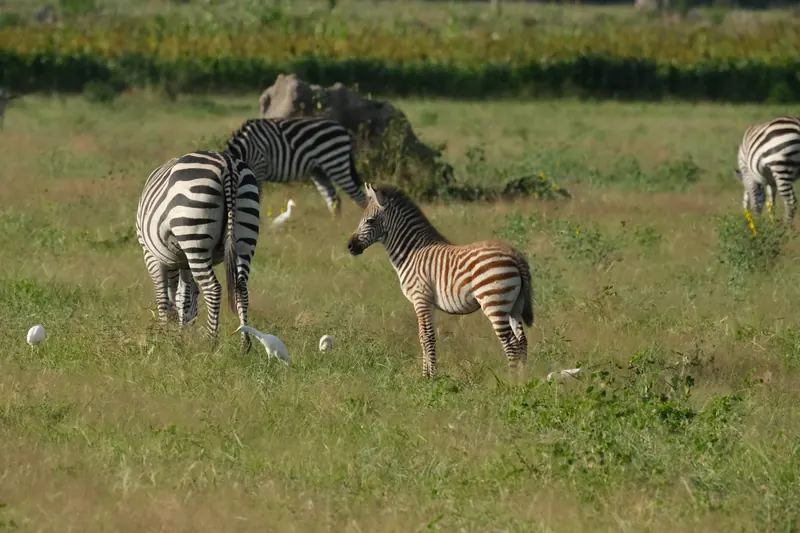
Plains zebra in the Ngorongoro Conservation Area. Christine Stone, iNaturalist, CC0 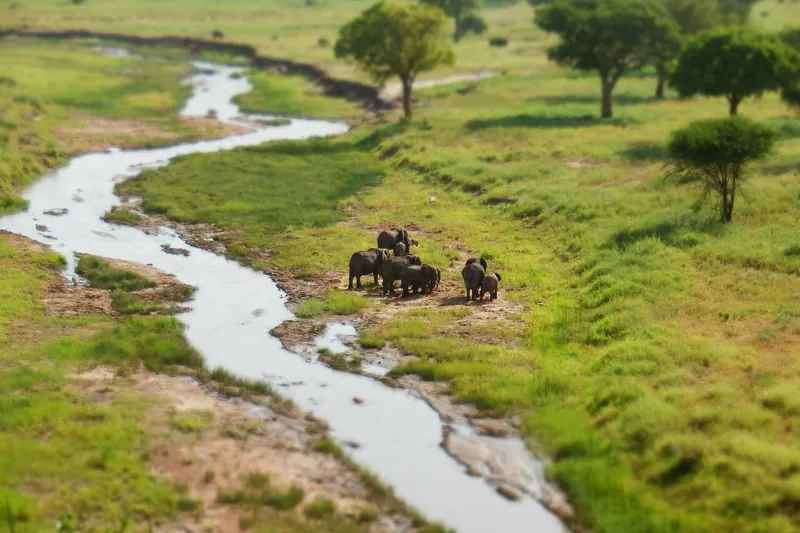
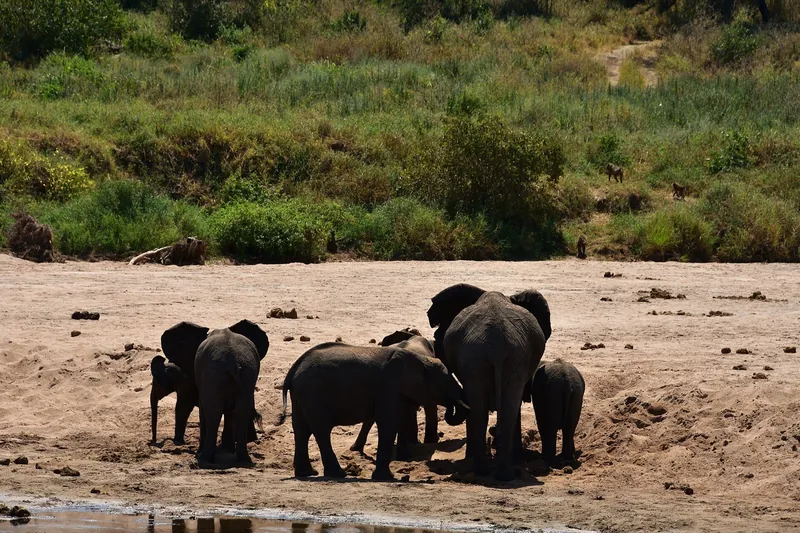
Elephant herd beside the Tarangire River. Fadez, Wikimedia Commons, CC BY-SA 3.0, cropped 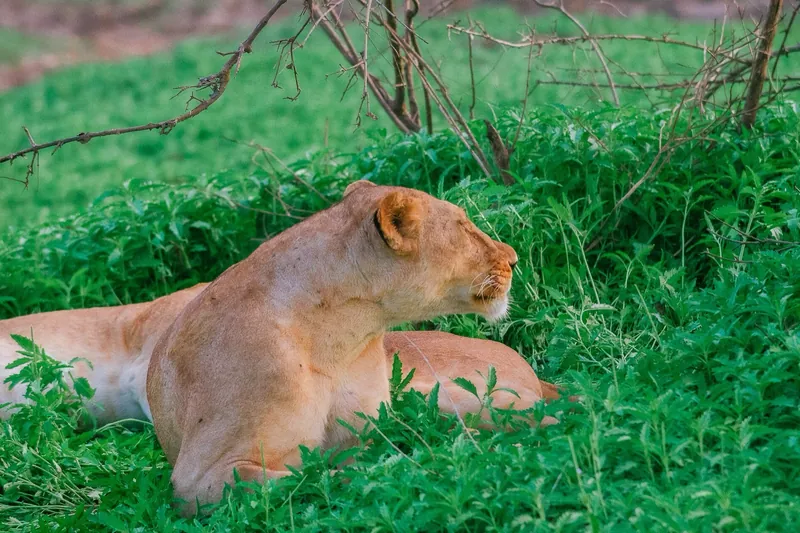
Lioness lying in green grass in Nyerere National Park. Erasmus Kamugisha, Wikimedia Commons, CC BY-SA 4.0, cropped

Photos by visitors and photographers, used under their free licences. Click a name to see the original.
Ask for a quote
Tell us your dates and we send you a priced itinerary. Free, no obligation.
- Free quote, no obligation
- Trips run by licensed local operators