 Experience
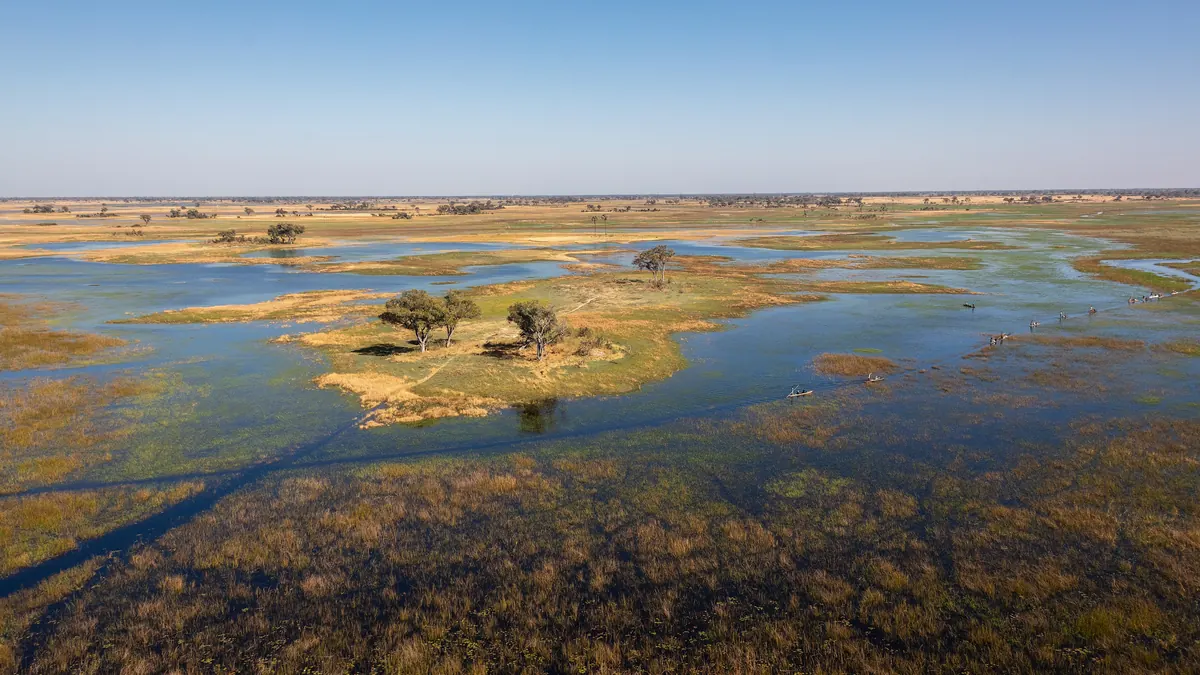


Last verified · Next check due
Plan it: costs, fees and practical answers
Short answer: The Okavango Delta (Botswana) floods in the dry season: water is highest in most of the Delta from about May to August (one safari operator). Fly-in camps publish US$530–5,345 per person per night (2024–2026 rate cards). Moremi’s last published park fee is P270 a day for non-residents (DWNP, 1 April 2022); no official current tariff is published, so confirm it with DWNP or your operator. A light-aircraft seat from Maun to Kwara costs US$250 before taxes (Kwando, 2024).
Key facts
- The water comes from Angola, not from Botswana’s rain. Rain falls on the Angolan highlands from October to April (a Botswana safari operator’s flood explainer), and the flood takes up to six months to reach the Delta’s far edges (one safari operator’s flood guide).
- The flooded area roughly doubles each year, from 6,000–8,000 km² at low water to about 15,000 km² at high water (IntechOpen review).
- Moremi Game Reserve is the only formally protected part of the Delta (Africa Geographic), and night drives and walking safaris are not permitted inside it (one safari operator’s Moremi guide).
- Every camp group in our sources charges its top rate in the May–October dry season; Wilderness and Great Plains also charge it over Christmas. Mombo costs US$5,345 a night from June to October and US$3,062 from January to March (Wilderness).
- Most camps are reached only by light aircraft. Mack Air lists 35 airstrips in the Delta, Moremi and Khwai area (Mack Air), with a 20 kg luggage limit.
Where to stay in the Okavango Delta: camps by price (2026)
Fly-in camps publish US$530–5,345 per person per night; self-drivers camp in Moremi for US$40–50 a night plus the park fee. Camp rates include meals and activities. Campsite bookings, permits and the booking order for self-drivers are on how to self-drive Moremi and Chobe.
| Tier | Camps (group) and land | Per person per night, low → top season | Added on top |
|---|---|---|---|
| Self-drive camping | Moremi campsites, last published rates: Xakanaxa and South Gate US$40, North Gate US$50 | US$40–50 | P10 levy; DWNP park fee (P270 a day in the last published schedule); a 4x4 |
| Entry fly-in | Moremi Crossing (Kwando), Gunn’s concession, US$530–850; Camp Moremi, Camp Xakanaxa (Desert & Delta), inside Moremi, US$645–1,160 (1–4 nights) | US$530–1,160 | Kwando levy US$20; flights. Desert & Delta includes park fees and levies |
| Classic concession camp | Little Sable, Mokolwane (Natural Selection), US$660–1,445; Splash, 4 Rivers (Kwando), US$690–1,750; Kwara (Kwando), US$820–2,100; Sable Alley, Mbamba (Natural Selection), US$995–1,995 | US$660–2,100 | Levy US$20–60; flights |
| Premium concession camp | Duke’s, Duke’s East (Natural Selection), US$1,195–2,295; Duba Explorers (Great Plains), US$1,356–2,511 | US$1,195–2,511 | Levy US$60–100 |
| Top end | Vumbura Plains (Wilderness), US$2,018–3,945; Duba Plains (Great Plains), US$2,150–3,950; Mombo (Wilderness), inside Moremi, US$3,062–5,345; Singita Elela, first season from 11 December 2026, US$3,100–4,635 incl. 14% VAT | US$2,018–5,345 | Premium drinks; Great Plains levy US$100 |
Operators’ rate cards and Wilderness camp pages: Natural Selection 2026, Wilderness 2026–27, Singita 2026–28, Great Plains 2025, Kwando and Desert & Delta 2024, the latest from those groups in our sources. Campsites: a safari operator’s campsite sheet. Read 10 October 2026.
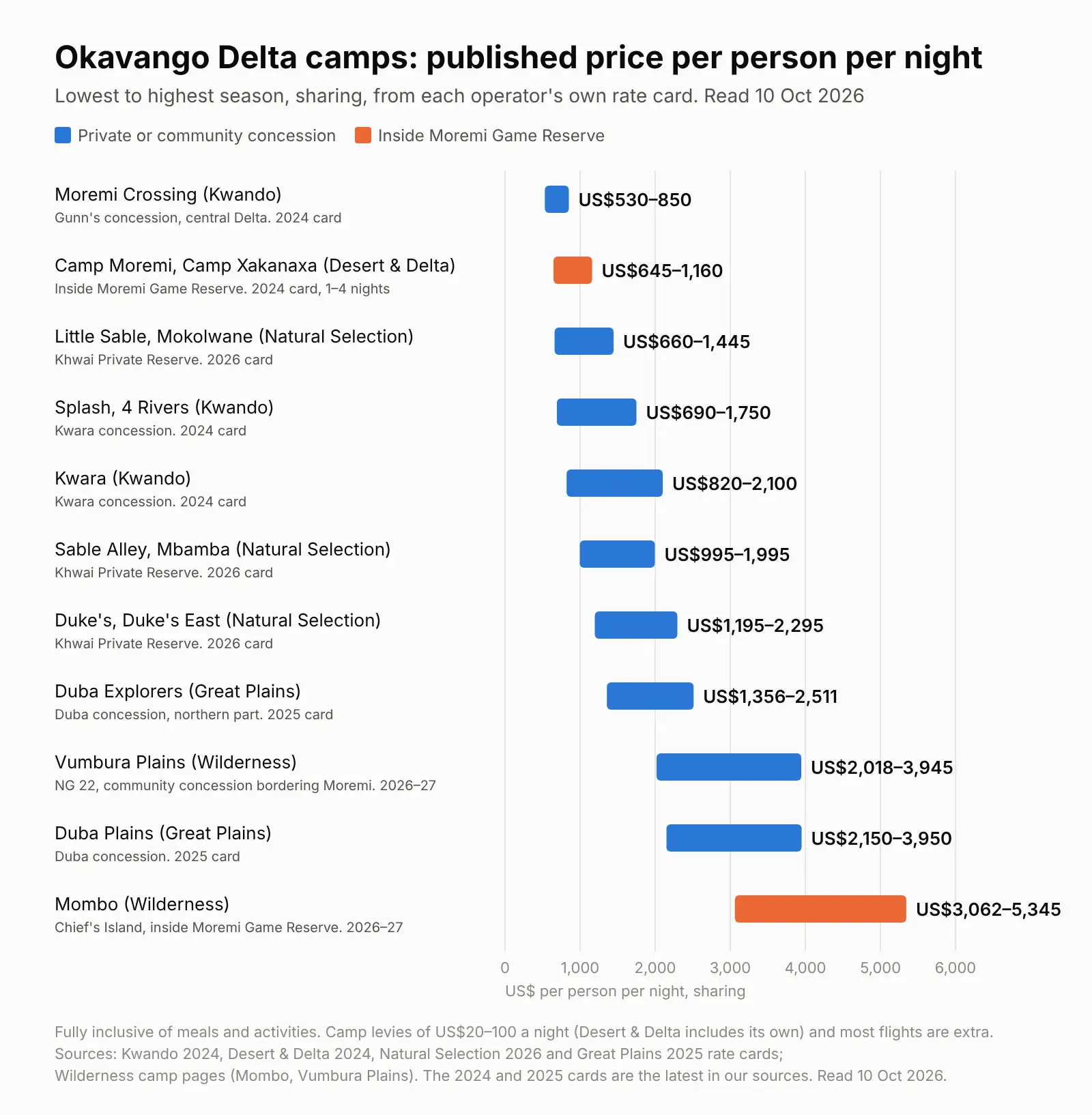 Per person sharing, before levies and most flights. Sources: operators’ rate cards and camp pages, as above. Read 10 October 2026.
What the Okavango Delta is
The Okavango Delta is an inland delta in north-west Botswana, where the Okavango River spreads out and evaporates instead of reaching the sea. UNESCO inscribed it in 2014 as the 1,000th World Heritage Site, covering 2,023,590 ha, with 1,061 plant and 482 bird species (UNESCO).
- One river, three names: the Cubango in Angola, the Kavango in Namibia and the Okavango in Botswana, with a basin of about 700,000 km² (OKACOM).
- 96% of the water that enters evaporates or is transpired by plants; 2% flows out and 2% soaks away (IntechOpen review).
- Four zones: the Panhandle entry channel, the permanent swamp, the seasonal swamp and the occasional swamp (same source).
When to go: the flood calendar and price seasons
June to October is high season: the bush is dry, the Delta holds its flood until about August, and every camp group in our sources charges its top rate in some or all of these months. January to March is cheapest, when Botswana’s own rain falls and Delta water is low.
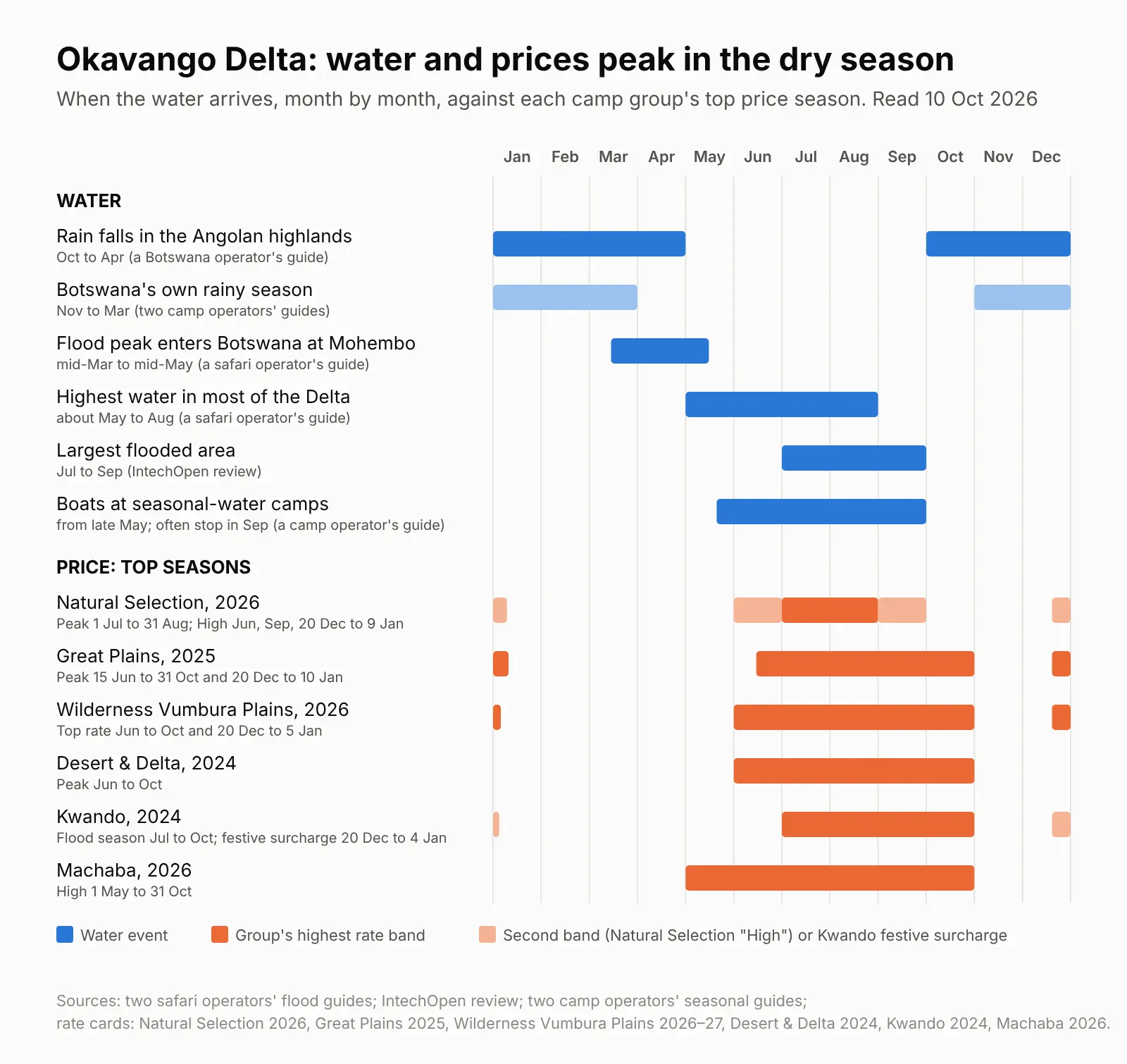 Sources: two safari operators’ flood guides; IntechOpen review; two camp operators’ seasonal guides; operators’ 2024–2026 rate cards. Read 10 October 2026.
- January to March: Mombo is US$3,062, Kwara US$820 (Kwando’s lowest, “5 Rivers” rate) and Little Sable US$660 from 10 January. Seasonal camps run no boats in January and February (two camp operators’ seasonal guides).
- April and May: the flood arrives. Machaba’s High season starts on 1 May; Kwando’s April–June rate puts Moremi Crossing at US$675, against US$850 from July. Boating resumes in late May (one camp operator’s seasonal guide).
- June to October: top rates. October is the hottest month, above 40°C at times (two camp operators’ seasonal guides), and by October “some water activities may no longer be possible” in some areas (Africa Geographic).
- November and December: Natural Selection and Great Plains drop to Shoulder from 1 November, then charge holiday rates from 20 December; Kwando adds a US$150 festive surcharge.
Moremi Game Reserve or a private concession
Pick by activity: Moremi keeps vehicles on its tracks and in daylight, while the concessions around it let their guests drive off-road, at night and walk. Botswana Tourism says “off-roading and night driving [are] prohibited” in the parks and reserves and allowed on private concessions “in moderation” (Botswana Tourism).
| Moremi Game Reserve | Private or community concession | |
|---|---|---|
| Night drives, off-road, walking | None: no night drives or walking (one safari operator’s Moremi guide); no off-road driving (Botswana Tourism) | Allowed (the same operator’s Delta guide) |
| Who drives there | Anyone with a park ticket, including self-drivers | Camp guests; the Khwai community concession also admits self-drivers (a safari travel company’s Khwai guide) |
Sources: Botswana Tourism, one safari operator’s Moremi and Delta guides (read September 2026) and a safari travel company’s Khwai guide, as cited in each cell.
Mombo (US$3,062–5,345 per person a night) is on Chief’s Island in Moremi Game Reserve, where Botswana Tourism says night driving is prohibited; ask the camp what it offers on your dates. Our page on where night drives, walking and off-road driving are allowed covers each area.
Mokoro and boat trips
A mokoro, a shallow canoe poled by a guide, needs water, so pick a camp on permanent water if poling matters. Seasonal floodplains have boats only from about late May to September (one camp operator’s seasonal guide). Water levels rise and fall by about 0.2 m a year in the permanent swamp and by more than 1.5 m in the seasonal swamp (IntechOpen review).
- Expect quiet and birds, not big game: mokoro trips focus on “silence and birdlife rather than large animals”, one forum regular says (TripAdvisor forum).
- Minimum age for mokoro trips: 12 at Kwando, 8 at Great Plains (their rate cards).
- The Panhandle is boat country. One safari operator’s travellers there saw sitatunga on 31% of trips, Botswana’s best rate, and leopard on 0% (its Panhandle sightings, read September 2026).
Wildlife: what Delta travellers actually see
More than 90% of one safari operator’s Delta travellers saw elephant, hippo and lion; 73% saw leopard, 61% wild dog and 9% white rhino. Figures are the share who saw each animal at least once on their trip.
| Animal | Okavango Delta reserves | Moremi Game Reserve |
|---|---|---|
| Elephant | 99% | 99% |
| Hippo | 98% | 100% |
| Lion | 93% | 91% |
| Leopard | 73% | 76% |
| Wild dog | 61% | 65% |
| Cheetah | 56% | not in our sources |
| White rhino / black rhino | 9% / 1% | black rhino 4% |
Sources: one safari operator’s Okavango Delta reserves and Moremi pages, read September 2026; its Botswana dataset holds 11,679 sightings from 1,356 groups since May 2018.
Getting there: Maun, light aircraft and 20 kg
Fly to Maun, then take a light aircraft to the camp’s airstrip; by road you reach only Moremi’s track circuit, Khwai and the Panhandle. Maun took 42,112 tourist air arrivals in 2024, 34.3% of all tourist air arrivals in Botswana (Statistics Botswana).
- Fares: Moremi Air from Maun to Kwara, Splash or 4 Rivers is US$250 a seat, plus US$25 Maun departure tax and other airport taxes (Kwando, 2024). Desert & Delta charges US$284–594 a seat one way, plus US$20 departure tax on legs from Maun or Kasane (2024). Great Plains includes air from Maun or Kasane on stays of two nights or more.
- Timing: Botswana Tourism lists Maun’s port hours as 07:30–16:30 (Botswana Tourism), while the April 2025 immigration ports list gives 06:00–22:00; confirm the last transfer time with your camp.
- From Namibia by road: the Mohembo border, at the top of the Panhandle, opens 06:00–18:00 (Botswana Tourism; Botswana immigration ports list, April 2025); see Namibia self-drive distances and drive times.
| Operator | Weight per person | Bag | Size or excess rule |
|---|---|---|---|
| Ker & Downey | 20 kg incl. camera and hand luggage | Soft, no wheels or frames | 65 × 40 × 30 cm |
| Mack Air | 20 kg incl. hand luggage | Soft-shell | 70 × 42 × 30 cm |
| Great Plains | 20 kg | Soft | 70 × 35 × 30 cm |
| Kwando (Moremi Air) | 20 kg incl. cameras and hand luggage | Soft-sided | Excess: 50% of the seat rate up to 15 kg, 100% for 15–40 kg |
Sources: Ker & Downey; Mack Air; Great Plains 2025 and Kwando 2024 rate cards. Read 10 October 2026.
Passengers over 100 kg (Kwando) or 115–120 kg (Great Plains) may need to buy a second seat.
What an Okavango safari costs, with fees and levies
Add US$20–100 a night in levies and US$250–594 per flight sector to the camp rate, unless included; self-drivers pay Moremi’s park fee (P270 a day in the last published schedule) plus US$40–50 per person per night for a campsite.
| Group (rate card) | Park fees in the rate | Levy per person per night | Flights |
|---|---|---|---|
| Natural Selection (2026) | Included | US$60, ages 6+ | Not listed in the rate |
| Wilderness (Mombo, Vumbura) | Included | Not listed | Ask |
| Desert & Delta (2024) | Included, with levies and 14% VAT | Included | US$284–594 a seat |
| Great Plains (2025) | Concession camps | US$100, plus a conservation levy | Included on 2+ nights |
| Kwando (2024) | Concession camps | US$20 | US$250 a seat, Maun to Kwara, Splash or 4 Rivers |
Sources: rate cards and camp pages listed below. Read 10 October 2026.
Season moves the bill most. On Kwando’s 2024 card, three nights at Kwara in July, with levies and a Maun return seat, cost US$6,300 + US$60 + US$500 = US$6,860 per person before flight taxes; at the lowest (5 Rivers) rate from 15 November, US$2,460 + US$60 + US$500 = US$3,020.
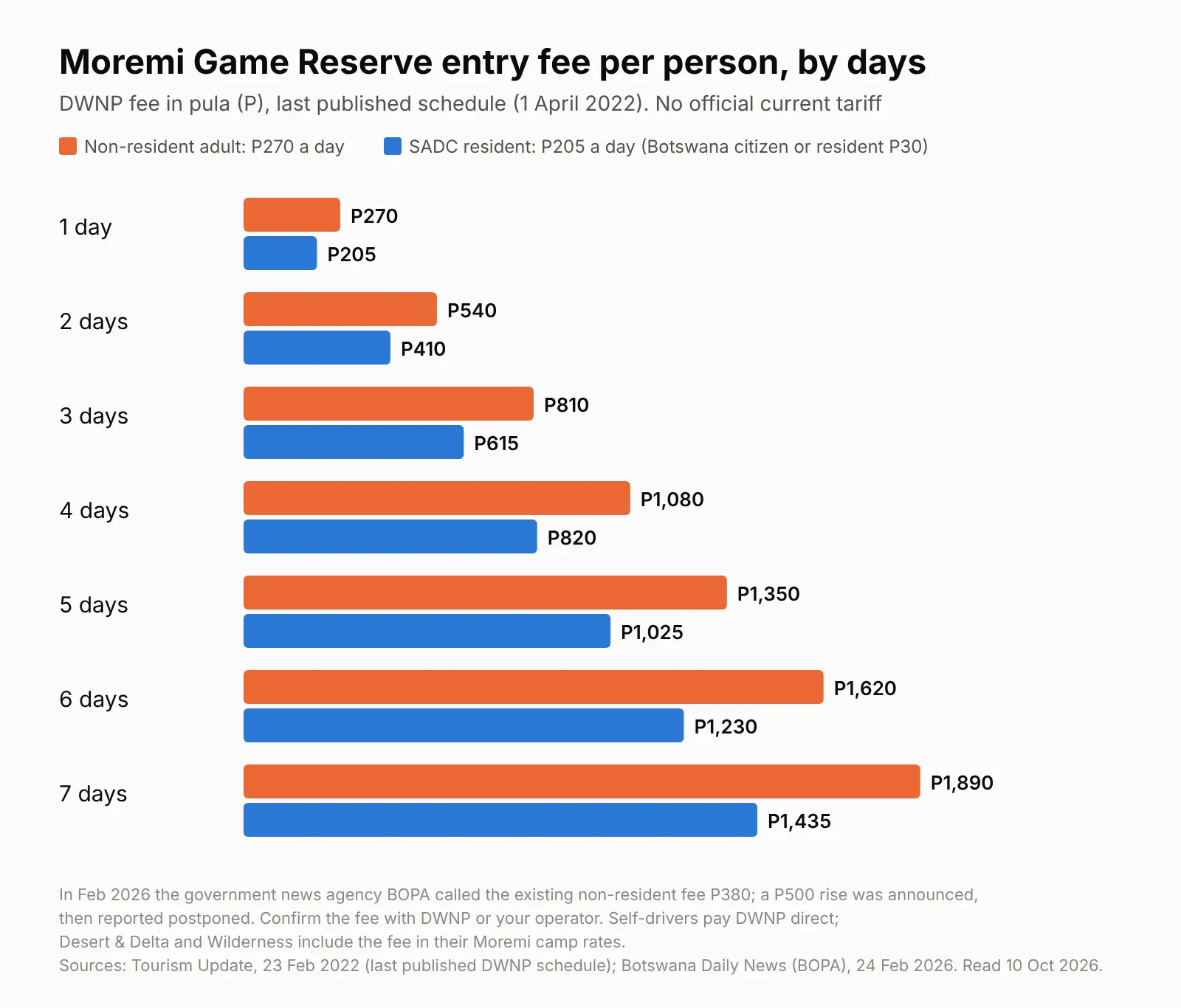 Last published DWNP schedule (1 April 2022), not a confirmed current fee. Sources: Tourism Update, 23 February 2022; Botswana Daily News (BOPA), 24 February 2026. Read 10 October 2026.
Moremi’s park fee in the last published DWNP schedule, with its date and source:
| Fee | Amount | In force from | Source |
|---|---|---|---|
| Chobe National Park and Moremi Game Reserve (DWNP), non-resident adult, per person per day | BWP 270 (SADC residents BWP 205; Botswana citizens and residents BWP 30) | Last published DWNP schedule, 1 April 2022 (via Tourism Update). In Feb 2026 the government news agency BOPA called the existing non-resident fee P380; a P500 rise was announced, then reported postponed. No official current tariff: confirm with DWNP or your operator | Tourism Update, 23 Feb 2022 (DWNP fee schedule) |
No official current tariff is published. In February 2026 the government news agency BOPA described the existing non-resident fee as P380 and reported a rise to P500 from 1 April 2026 (Botswana Daily News). The rise was then reported postponed; on 5 May 2026 Gabz FM reported the delay as two years (Gabz FM). Confirm the fee with DWNP or your operator before you travel. Campsite booking, 4x4 rental and other parks’ fees are on our Botswana safari cost page.
Common mistakes about the Okavango Delta
| What you’ll often read | What is correct |
|---|---|
| “The Delta is wettest in the rainy season” | It floods in the dry season. Water is highest in most areas from about May to August; Botswana’s rain falls November to March. |
| “January suits a mokoro trip” | Water is low; seasonal camps run no boats in January and February (two camp operators’ seasonal guides). |
| “Every Delta camp runs night drives” | Not necessarily. Mombo, Camp Moremi and Camp Xakanaxa are in Moremi Game Reserve, where Botswana Tourism says night driving is prohibited. |
| “The Delta is a Big Five trip” | Rhino is rare: 9% of one safari operator’s Delta travellers saw white rhino, 1% black. |
Compare: Okavango Delta vs Serengeti, Water vs land camps, Okavango Delta vs Kruger, Etosha vs Okavango Delta.
Frequently asked questions
When is the water highest where I’m actually staying? It depends on where the camp sits on the flood’s path. The peak enters Botswana at Mohembo between mid-March and mid-May and can take up to six months to reach the far edges (one safari operator’s flood guide). Ask the camp about its water in your month.
Will a water camp actually show me the big cats I’m coming for? Not reliably, going by traveller reports. Forum respondents on one TripAdvisor thread doubted that a water-focused camp suited a traveller set on big cats, and mokoro trips centre on birds and quiet rather than large animals. Ask the camp whether it runs game drives on dry ground in your month.
Is December a bad time for the Delta? No, but water is low and the rains have started, so boating is limited at some camps. Rates are lower until 19 December; from 20 December most groups in our sources charge holiday rates.
Why do prices at the same camp double between seasons? Because the rate cards in our sources split the year into three to five seasons, and every group charges its top rate in the May–October dry season. Kwara’s top rate is 2.6 times its lowest (US$820 to US$2,100), Little Sable’s 2.2 times (US$660 to US$1,445). Season dates differ by group.
What is the park entry fee and is it included in my safari price? The last published DWNP schedule (1 April 2022) charges non-residents P270 per person per day in Moremi; in February 2026 the government news agency called the existing non-resident fee P380, so confirm it with DWNP or your operator. Natural Selection, Wilderness and Desert & Delta include park fees in their rates; self-drivers pay DWNP separately. Camp levies of US$20–100 a night are usually extra.
What are my chances of seeing a cheetah in the Delta? 56% of one safari operator’s travellers to the Okavango Delta reserves saw one, against 43% across Botswana, 44% in Kwando-Linyanti and 14% in Chobe. Each figure is the share of that operator’s own client groups who saw a cheetah at least once during their stay, read in September 2026.
Sources
- Flood: IntechOpen review; Africa Geographic; OKACOM; UNESCO; two safari operators’ flood guides and two camp operators’ seasonal guides, read 10 October 2026 (names and links in our editor notes)
- Rules: Botswana Tourism; one safari operator’s Moremi and Delta guides, read September 2026; a safari travel company’s Khwai guide
- Wildlife: one safari operator’s traveller sightings for the Delta, Moremi, the Panhandle, Botswana, Kwando-Linyanti and Chobe, read September 2026 (name and links in our editor notes)
- Rates: Natural Selection 2026; Wilderness Mombo, Vumbura Plains; Great Plains 2025; Kwando 2024 and Desert & Delta 2024 rate cards; Machaba 2026; Singita Elela; a safari operator’s campsite sheet
- Travel: Statistics Botswana, TSAR 2024; Botswana Tourism, Ports of Entry; Botswana immigration ports list, April 2025 (PDF); Mack Air; Ker & Downey
- Fees: Tourism Update, 23 Feb 2022 (last published DWNP schedule); Botswana Daily News (BOPA), 24 Feb 2026; Gabz FM
- TripAdvisor threads: mokoro, water camps and December
More: the Botswana safari hub, Chobe National Park, on the same DWNP fee line as Moremi, common Botswana safari questions answered and Namibia vs Botswana costs.
Prices and fees checked 10 October 2026. We will update this page when DWNP publishes a new fee schedule or an official current tariff, when Kwando, Desert & Delta and Great Plains publish newer rate cards, and when camps move to 2027 rates.
What visitors say
4.8/5 · 998 reviews · Tripadvisor · read
What visitors praise
- Gliding through lily-covered channels in a mokoro dug-out canoe
- Peaceful, silent water landscapes unlike any other safari
- Scenic flights over the Delta showing herds from the air
- Big game including leopard, lions, wild dog, elephants and hippos
- Bush walks and wild island camping
What visitors criticise
- No recurring complaints in the sample
- The odd mention of heat on mokoro trips and very basic facilities at wild campsites
Tips visitors repeat
- Try a mokoro trip, ideally deeper in the Delta rather than near Maun
- A short scenic flight from Maun is widely recommended
- Mokoro trips can be booked directly with the local community trust outside Maun to save on fees
- Combine water activities with game drives
Steady and very high: almost all 5 stars from 2022 to 2026.
Photos from Okavango Delta
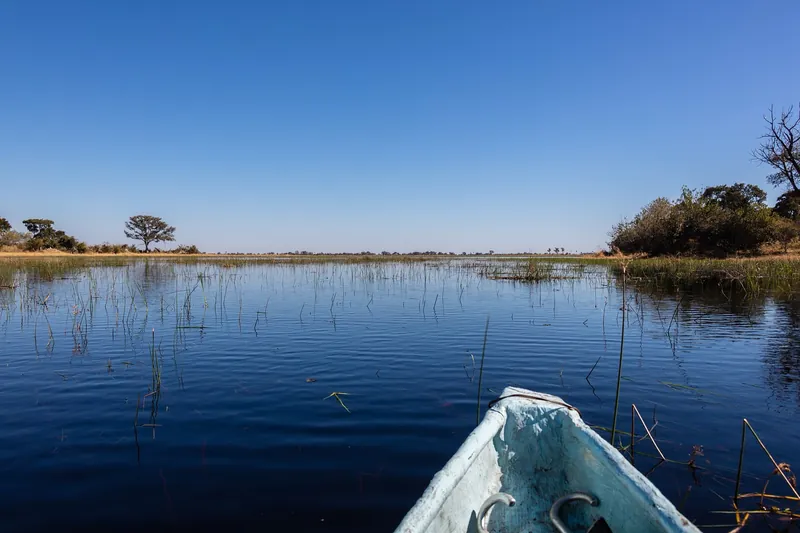
Mokoro bow on a calm Okavango Delta lagoon. Diego Delso, Wikimedia Commons, CC BY-SA 4.0, cropped 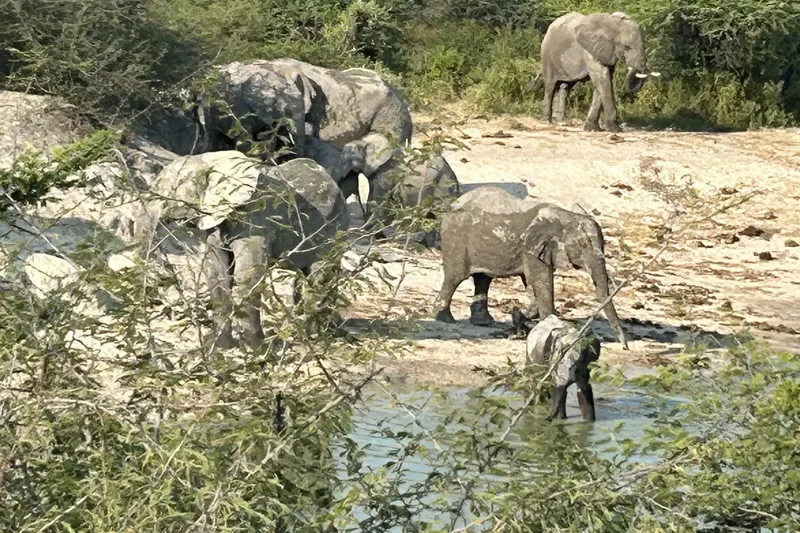
Elephant herd drinking at a waterhole in the Okavango region. Riana Fourie, iNaturalist, CC0 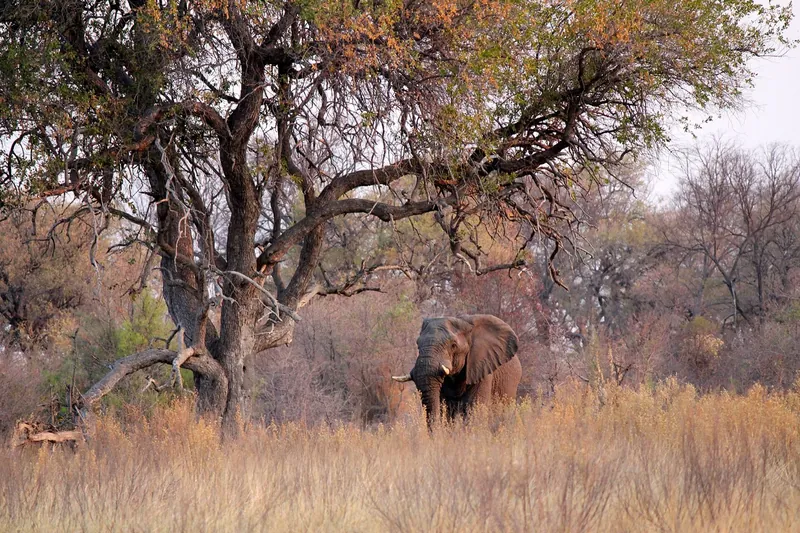
Elephant among the trees in the Okavango Delta. Ross Huggett, Wikimedia Commons, CC BY 2.0, cropped 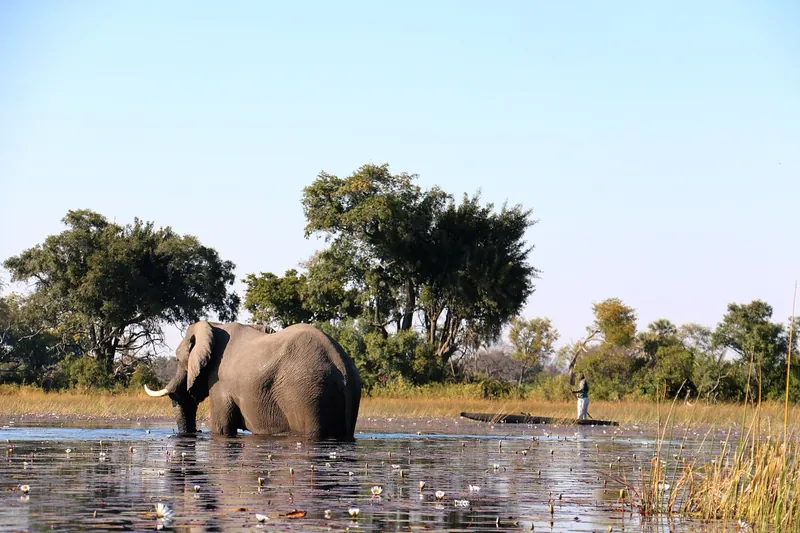
Elephant wading through an Okavango Delta channel. Hp.Baumeler, Wikimedia Commons, CC BY-SA 4.0, cropped 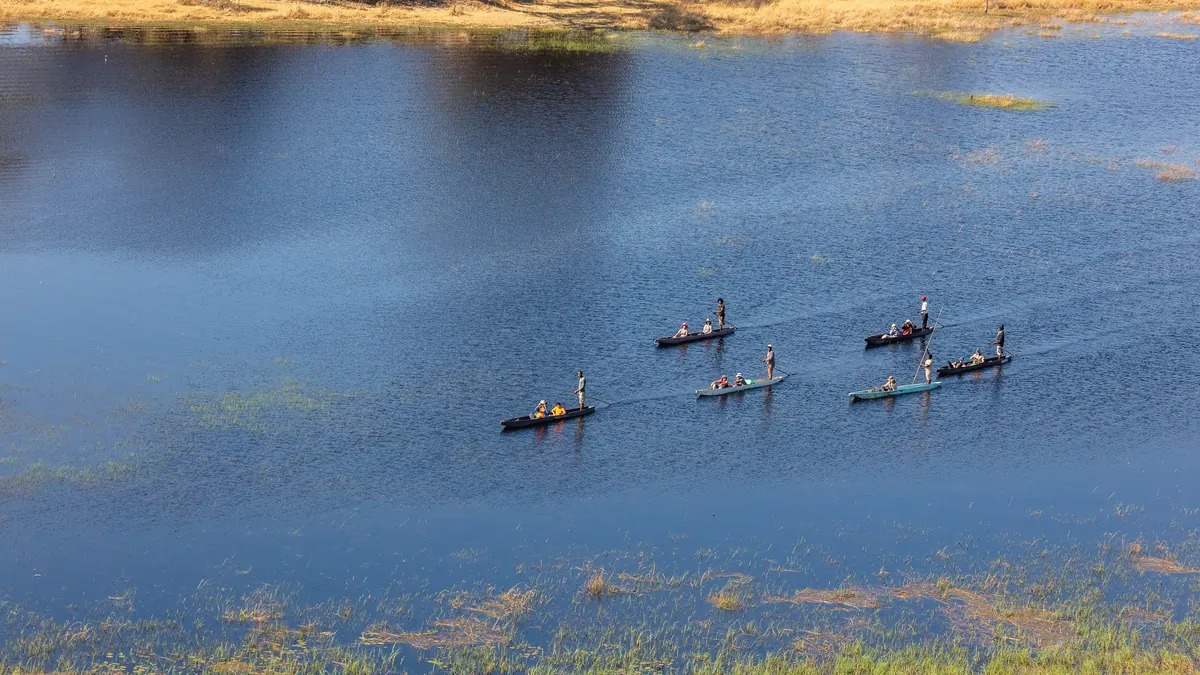
Aerial view of mokoro canoes crossing an Okavango Delta lagoon. Diego Delso, Wikimedia Commons, CC BY-SA 4.0, cropped 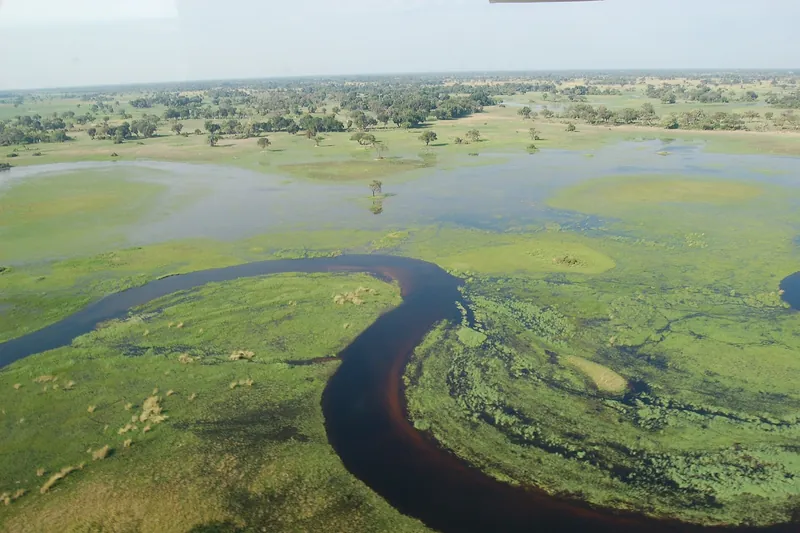
Aerial view of a river bend in the Okavango Delta. Joachim Huber, Wikimedia Commons, CC BY-SA 2.0, cropped 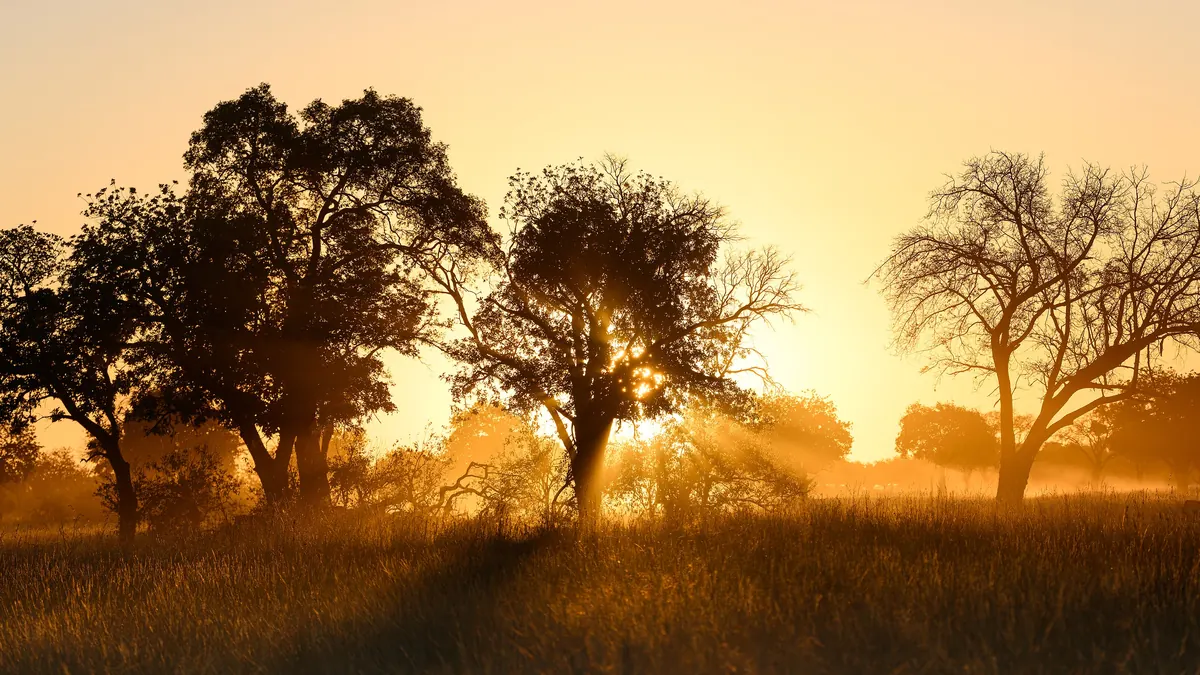
Golden sunset through trees in the Okavango Delta. Eric Kilby, Wikimedia Commons, CC BY-SA 4.0, cropped 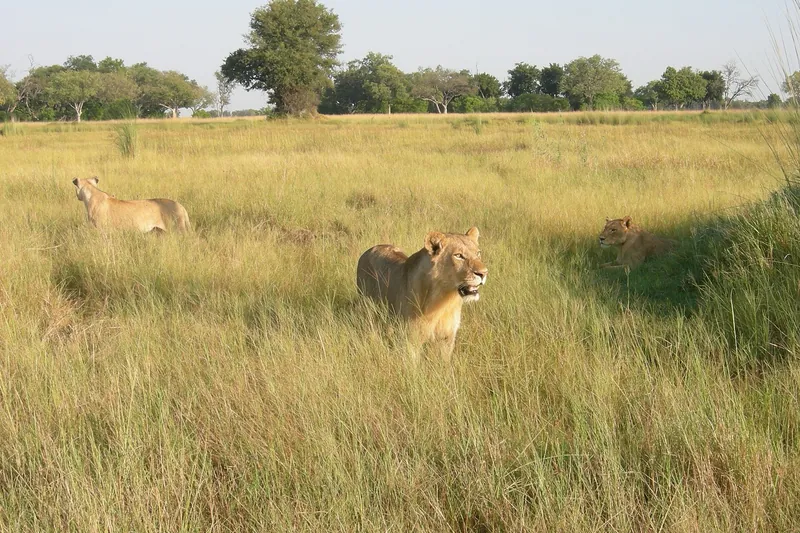
Lionesses in long grass in the Okavango Delta. Joachim Huber, Wikimedia Commons, CC BY-SA 2.0, cropped 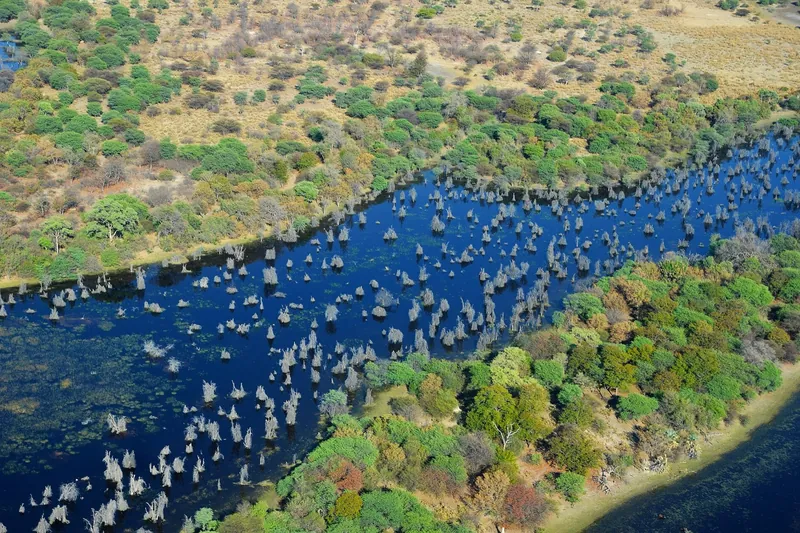
Aerial view of a flooded channel and islands, Okavango Delta. Pavel Špindler, Wikimedia Commons, CC BY 3.0, cropped


Photos by visitors and photographers, used under their free licences. Click a name to see the original.
Ask for a quote
Tell us your dates and we send you a priced itinerary. Free, no obligation.
- Free quote, no obligation
- Trips run by licensed local operators