 Experience


Last verified · Next check due
Plan it: costs, fees and practical answers
Short answer: Hwange National Park (Zimbabwe) is the country’s largest park, about 14,650 km², and Main Camp is 200 km, up to 3 hours by road from Victoria Falls (a safari booking site’s getting-there guide). International adults pay US$12 a day if they sleep inside the park and US$24 as day visitors (ZimParks Tariff 2026). Camps are listed at US$445–1,250 per person per night for 2026, and game gathers at the pumped waterholes from July to October.
Key facts
- Most of Hwange’s waterholes are pumped. Beyond a few seeps the park has almost no natural year-round surface water, so in the dry season large herbivores gather at borehole-fed pans (Wikipedia).
- The park fee halves if you sleep inside: US$12 a day against US$24 for a day visitor, plus US$3 or US$10 a day for a foreign-registered vehicle (ZimParks Tariff 2026, PDF).
- Night drives are allowed only on Hwange’s private concessions (a safari booking site’s Hwange page).
- Zimbabwe’s share of the Kavango-Zambezi (KAZA) conservation area, which includes Hwange, held 65,028 elephants in the 2022 aerial survey, against 57,398 in the IUCN’s 2016 status report (KAZA, results released 31 Aug 2023).
- Hwange bookings are growing at one large agent: the agent reports its Hwange bed nights up about 21% from FY2024 to FY2026 (Tourism Update, 5 Oct 2026).
Where to stay in Hwange: camps by price (2026)
Hwange’s lodges and tented camps are listed at US$445–1,250 per person per night for 2026, mostly on a booking agent’s site. ZimParks camping costs US$23 a site for up to 3 people, or US$35 a person at a bush camp. Every camp in our sources charges its top rate from July to October.
| Tier | Camp and area | Per person per night, low → peak | Included or extra | Source |
|---|---|---|---|---|
| Public campsite | ZimParks: Main Camp, Sinamatella, Robins | US$23 per site, up to 3 people (2026) | Pitch only; park fee extra | ZimParks 2026 |
| Public bush camp | ZimParks bush camp | US$35 (2026) | Pitch only; park fee extra | ZimParks 2026 |
| ZimParks chalets and lodges | Main Camp, Sinamatella | 2023 tariff: US$50–200 per unit; no 2026 rate in our sources | Accommodation only; park fee extra | ZimParks 2023 (PDF) |
| Mid-range, park boundary | Bomani Tented Lodge (Imvelo), Ngamo | US$445 (Jan–Apr, Nov–Dec) → US$670 (May–Oct), 2026 | Park fee not stated | A booking agent’s listing |
| Upper mid-range, inside the park | Camp Hwange (Wild Expeditions Africa), north | US$550 (Jan–Mar) → US$724 (Apr–Jun) → US$1,080 (Jul–Oct), 2026 | Owner’s 2025 card adds US$30 park and community fees per person a night | A booking agent’s listing; owner’s 2025 card (PDF) |
| Exclusive-use camp | Muddy Teak (Wild Expeditions Africa), minimum 4 guests, open 1 May–30 Nov | US$630 (Nov) → US$1,100 (Jul–Oct), 2025 | Not stated | owner’s 2025 card (PDF) |
| Private concession, south-east | Verney’s Camp (Machaba), 10 rooms, 10,000 ha concession | US$838 (Apr–May, Nov–10 Jan) → US$1,250 (Jun–Oct), 2026 | Levies included | A booking agent’s listing |
Per person sharing. The booking agent’s Bomani and Camp Hwange listings were read 8 October 2026 and its Verney’s listing in October 2026. ZimParks and Wild Expeditions Africa are the owners’ own tariffs. For 2027, the agent lists Bomani at US$500–735 and Verney’s at US$718–1,313.
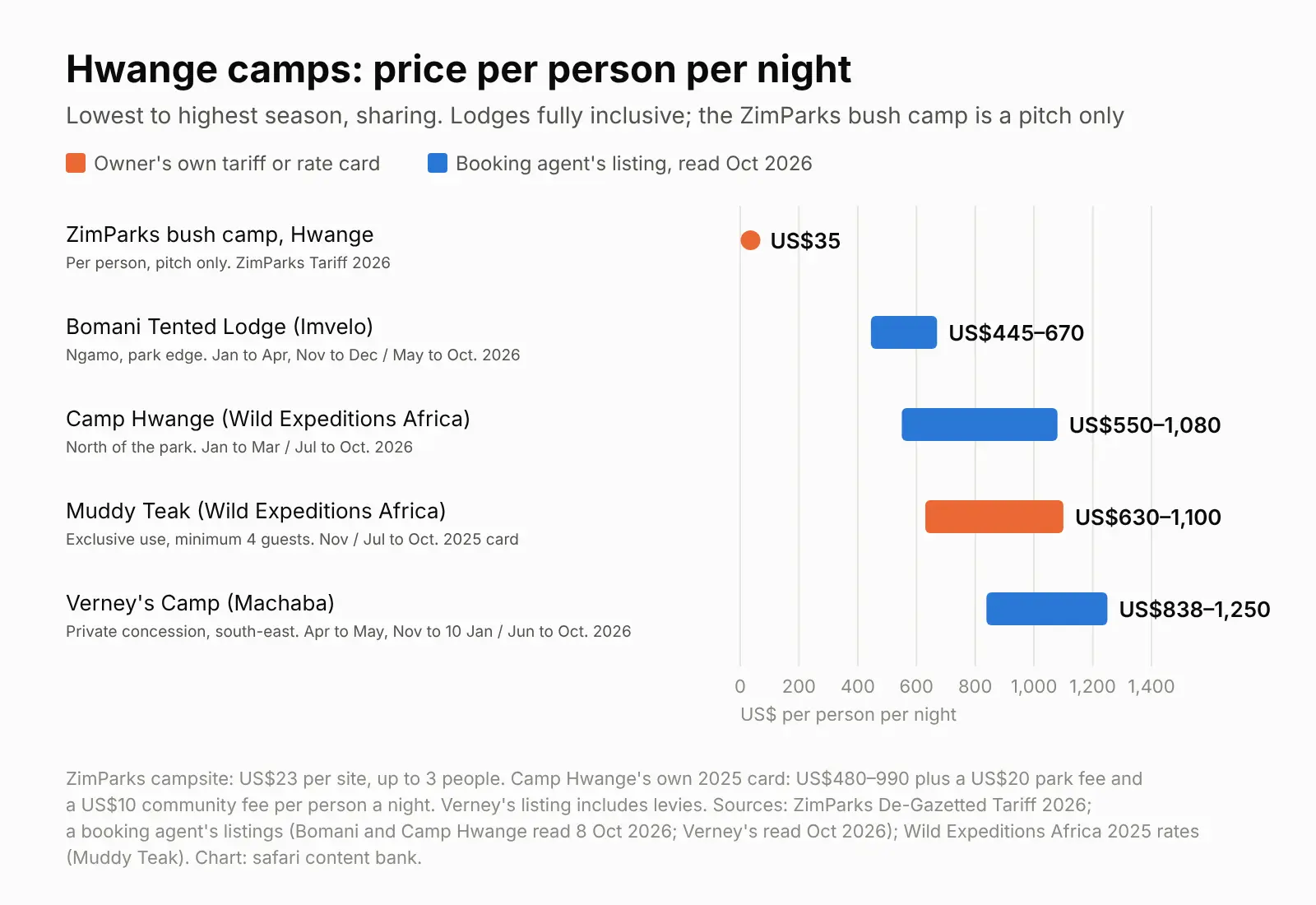 Lowest and peak rates. Sources: ZimParks Tariff 2026; a booking agent’s listings, read October 2026; Wild Expeditions Africa 2025 rates. Chart: safari content bank.
- No usable rates are in our sources for Linkwasha, Little Makalolo, the Somalisa camps, The Hide, Nehimba or the value lodges outside the park on Dete Vlei (Ivory Lodge, Khulu Bush Camp, Sable Valley). Davison’s agent page quotes two sets of rates, so we print neither.
- Solo travellers: one safari agent lists Somalisa as charging no single supplement from 1 January to 31 March and in December.
Main Camp, Sinamatella, Robins or Linkwasha: which part of Hwange
Main Camp and Dete give the easiest road access and ZimParks prices. The north has hills and permanent dams. The south-east, around Linkwasha, has grassy vleis, pans and the largest group of private camps. ZimParks runs three entry areas: Main Camp, Sinamatella and Robins (one safari operator’s Hwange guide).
| Area | What is there | Airstrip | Where to stay |
|---|---|---|---|
| Main Camp and Dete | ZimParks camp; Painted Dog Conservation’s visitor centre at Dete, beside the gate | Hwange Main; Umtshibi | ZimParks chalets and campsite; Ivory Lodge, Khulu, Sable Valley (outside the park); The Hide (concession on the eastern boundary) |
| North: Sinamatella and Robins | Stony hills, mopane; Mandavu and Masuma dams hold water all year | Shumba; Robins (Sinamatella strip not in use) | ZimParks camps; Camp Hwange, Nehimba, Camp Chitubu; Deteema Springs, Daka |
| South-east: Linkwasha, Makalolo, Ngamo | Kalahari sand, teak woodland, grassy vleis, pans, some pumped all year | Linkwasha; Manga; Bomani | Linkwasha, Little Makalolo, Davison’s (Wilderness); Somalisa camps, Verney’s; Bomani, Camelthorn (Imvelo) |
| Far south | Among the most remote country | Libuti | Jozibanini (Imvelo) |
Sources: one safari operator’s Hwange guide (landscape, camps); Mack Air (airstrips), read 9 October 2026. The guide calls the northern access through Hwange town “much less easy and pleasant”.
Private concessions or the public park: self-drive, walking and night drives
The public park suits self-drivers on ZimParks campsites; the private concessions add night drives and guided walks, at lodge prices.
| Public park (ZimParks) | Private concessions | |
|---|---|---|
| Self-drive | Yes. Main roads take a normal car; minor roads need high clearance, deeper areas a 4x4, especially November–March | Not in our sources; camps run their own game drives |
| Night drives | No | Yes |
| Walking | Not in our sources | Yes, e.g. Wilderness’s camps, with Zimbabwe professional guides |
| Park fee | US$12 a day staying inside, US$24 as a day visitor | Billed by the camp, each its own way |
Sources: a safari booking site’s Hwange page and getting-there guide; Wilderness journal, 17 Jul 2026; ZimParks Tariff 2026.
- Walking: Wilderness’s professional guides in Hwange (Linkwasha and Little Makalolo) say walks follow old elephant paths; dry-month walks bring big-game encounters, green-season walks colour and insects. More on walking safaris.
- Self-drivers: ZimParks takes bookings 12 months ahead, payable in US dollars (Wild Zambezi, an article first published in 2017). The UK FCDO advises against driving at night in Zimbabwe (FCDO).
Elephants and the pumped waterholes
Hwange’s game viewing is waterhole viewing: in the dry season, elephant and other large herbivores concentrate at the pumped pans. Natural water is limited to a few seeps and the rain-filled pans around Shumba (Wikipedia); in the north, the Mandavu and Masuma dams hold water all year (one safari operator’s Hwange guide).
- Elephant: we print no Hwange-only count, because the figures in circulation disagree and cite no survey. The KAZA figure of 65,028 covers all of Zimbabwe’s KAZA area.
- Antelope: sable and roan are Hwange specialities; giraffe, buffalo, kudu, eland and waterbuck are common (the same guide).
- Kalahari species: Hwange is Zimbabwe’s only protected area with gemsbok and brown hyena (Wikipedia).
- Wild dog: one of Africa’s larger surviving populations (Wikipedia); see where to see wild dogs.
- Rhino: very scarce in Hwange (a safari booking site’s Hwange page).
- Scenery: the same booking site’s expert reviewers rate Hwange’s scenery 3.29 out of 5 and its wildlife 4.57.
Hwange park fees in 2026
ZimParks charges international adults US$24 a day as day visitors and US$12 a day if they sleep inside Hwange, under its 2026 tariff. SADC residents pay US$18 and US$10. ZimParks published the tariff in February 2026 for the 2026 tariff year; the conservation-fee table carries no effective date and does not say whether VAT is included.
| Fee | Amount | In force from | Source |
|---|---|---|---|
| Hwange National Park, Main Camp (row as labelled in the ZimParks 2026 tariff), international adult, conservation fee per day | USD 24 day visitor; USD 12 if staying overnight in the park (SADC USD 18 / 10; local USD 5 / 3) | ZimParks Tariff 2026 (tariff year 2026, published February 2026); the conservation-fee table does not say whether VAT is included; Robins, Sinamatella and Kazuma Pan are not listed separately in our sources | ZimParks De-Gazetted Tariff 2026 |
| Foreign-registered car, pickup or 4x4, per vehicle per day (Hwange, Mana Pools, Zambezi, Matobo, Chizarira, Kariba, Nyanga, Chewore) | USD 10 day visitor; USD 3 if staying overnight (locally registered USD 5 / 2) | ZimParks Tariff 2026 (tariff year 2026, published February 2026) | ZimParks De-Gazetted Tariff 2026 |
| Hwange National Park camping, SADC and international visitors | USD 23 per site per night (up to 3 people); bush camp USD 35 per person per night | ZimParks Tariff 2026 (tariff year 2026, published February 2026) | ZimParks De-Gazetted Tariff 2026 |
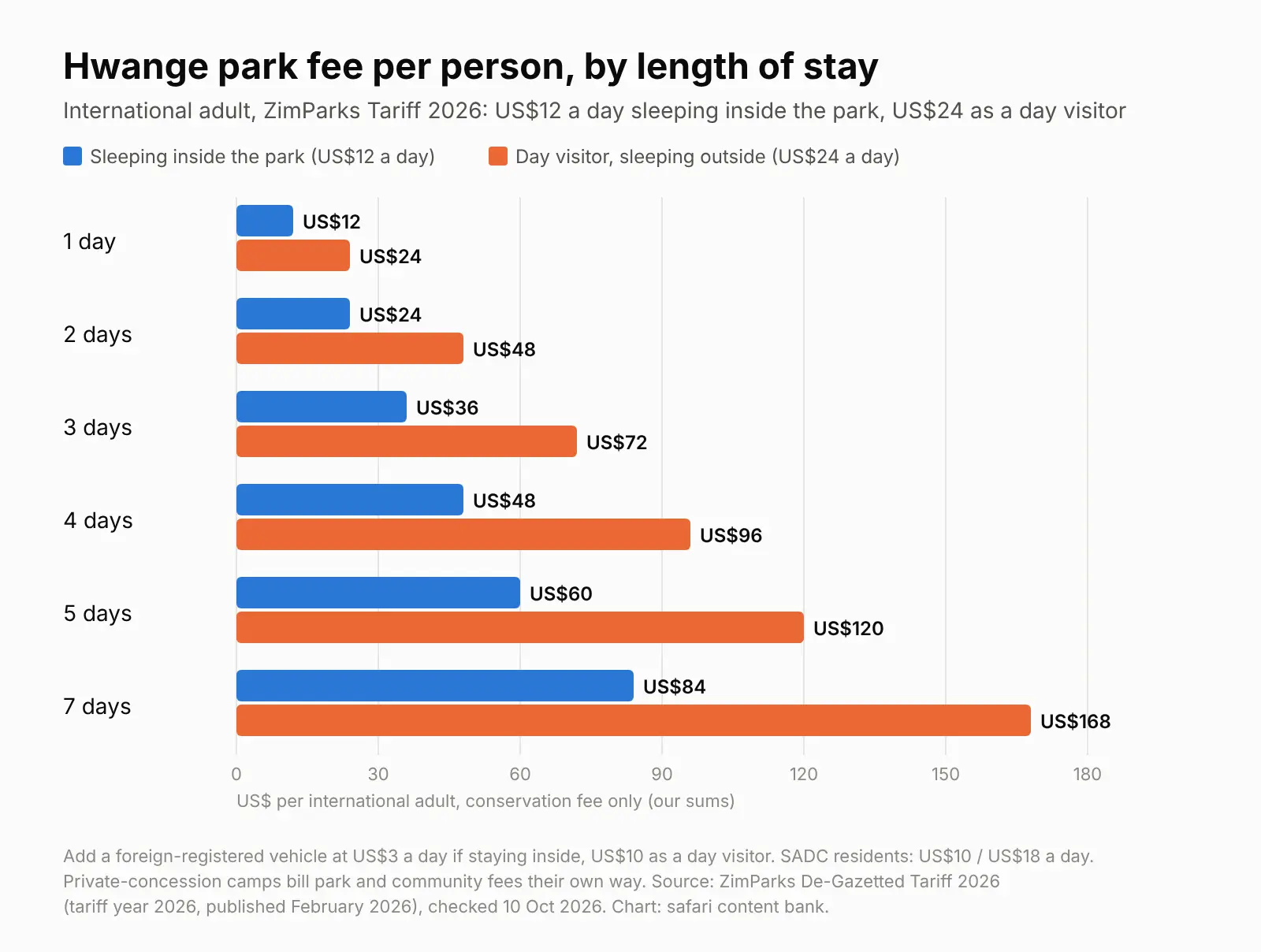 Our sums from the ZimParks De-Gazetted Tariff 2026, checked 10 October 2026. Vehicle and camping fees not included. Chart: safari content bank.
Three days staying inside the park cost one international adult US$36 in conservation fees; driving in each day from outside costs US$72 (our sums). A foreign-registered car adds US$9 or US$30. Private-concession camps bill park and community fees their own way: Camp Hwange’s 2025 card adds a US$20 park fee and a US$10 community fee per person a night, and Verney’s listing includes levies. Full budget: Hwange safari cost; visas and other parks: Zimbabwe safari cost.
When to go: dry season or green season
Go from July to October for the most game at the waterholes, at peak prices. November to March costs least, but game disperses and one safari operator advises avoiding January to March.
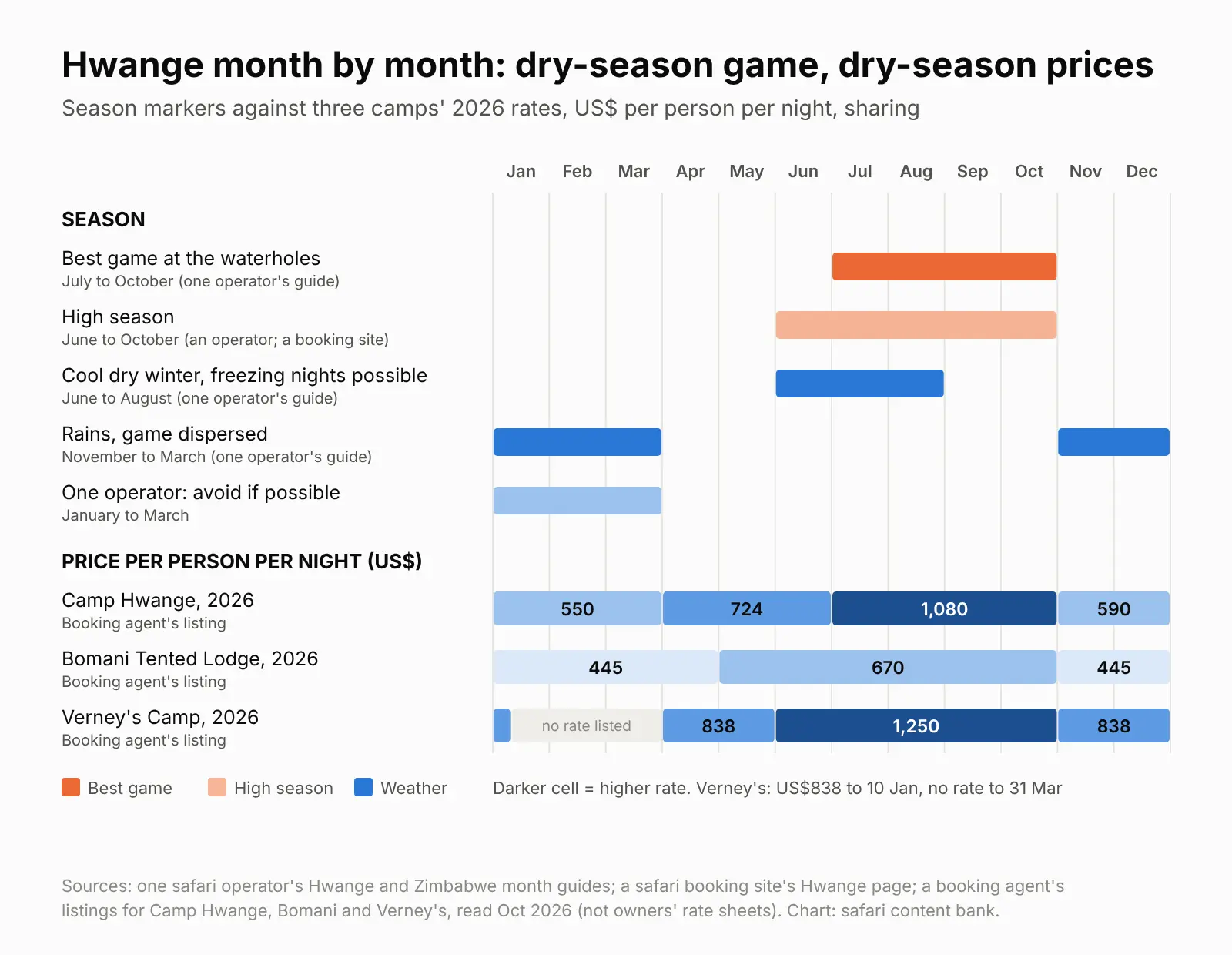 Sources: one safari operator’s Hwange and Zimbabwe month guides; a safari booking site’s Hwange page; a booking agent’s listings, read October 2026. Chart: safari content bank.
- August is rated “the very best” month and September is the most popular; September can book a year ahead (one safari operator’s Hwange guide).
- Late July and early August nights can fall to freezing (the same guide); see the safari packing list.
- The green season halves some rates: Camp Hwange is listed at US$550 a night in January–March against US$1,080 in July–October 2026. Some remote camps close in December (the same guide). See green season safaris.
- Pairing with the Falls: Victoria Falls flows hardest around April and lowest around November (Victoria Falls: Zimbabwe or Zambia).
Getting there from Victoria Falls: road or light aircraft
Drive 200 km, up to 3 hours on tar, from Victoria Falls to Main Camp, or fly to one of the park’s airstrips. Mack Air, flying from Victoria Falls, does not publish seat rates online.
| Route | Distance and time | Note | Source |
|---|---|---|---|
| Victoria Falls → Main Camp, by road | 200 km, up to 3 hours | Tar; deeper camps need a 4x4, especially November–March | A safari booking site’s getting-there guide |
| Victoria Falls → camps deeper in, by road | 3–6 hours, by camp | Deteema Springs, in the north-west, is about 3 hours | One safari operator’s Hwange guide |
| Victoria Falls → park airstrips, by air | “Minutes away” (one safari operator’s Hwange guide) | Eight strips (see the area table); 20 kg per person including hand luggage, soft bags; then a camp transfer, about 45 minutes from Manga to Verney’s | Mack Air; transfer: a booking agent’s listing |
| Pretoria → Victoria Falls, Rovos Rail | 3 nights, about 1,400 km | Stops in Hwange for a game drive | Rovos Rail |
Checked 9–10 October 2026.
- The Falls themselves: Victoria Falls and Victoria Falls safari cost. Adding Botswana: Chobe day trip from Victoria Falls.
Common mistakes about Hwange
| What you’ll often read | What is correct |
|---|---|
| “Hwange costs US$20 a day” | That is the 2023 tariff. In 2026 it is US$24 for day visitors and US$12 if you sleep inside (ZimParks). |
| “Hwange is an easy day trip from Victoria Falls” | Main Camp is 200 km, up to 3 hours each way, and day visitors pay double the overnight fee. |
| “Hwange has 1,000 lions” | An aggregator figure. No research survey in our sources supports it. |
| “A lodge near Hwange is in the park” | Ivory Lodge, Khulu Bush Camp and Sable Valley are outside the park on Dete Vlei; Bomani is on the boundary. |
| “Come in January–March for big game” | Game disperses in the rains; one safari operator advises avoiding January–March. |
Compare: Chobe vs Hwange, Hwange vs Mana Pools.
Frequently asked questions
How far is Hwange from Victoria Falls? Main Camp is 200 km from Victoria Falls, up to 3 hours by tar road (a safari booking site’s getting-there guide). Camps deeper in take 3–6 hours (one safari operator’s Hwange guide). Mack Air flies to the park’s airstrips but does not publish fares online.
Can you do Hwange as a day trip from Victoria Falls? You can, but it is up to 3 hours each way to Main Camp and you pay the US$24 day-visitor fee instead of US$12 (ZimParks Tariff 2026). Replies in a 2026 TripAdvisor thread called it poor value because vehicle and per-person fees both apply. Replies in a second 2026 thread added that staying overnight gives you the dawn and dusk drives.
How cold does it get in Hwange in July? Cold at night: in late July and early August temperatures can fall to freezing (one safari operator’s Hwange guide), and a traveller in a 2026 TripAdvisor thread wrote “it was freezing at night”. Pack warm layers for early drives in open vehicles (the same guide).
Hwange or Chobe: which is better for four or five days? Pick one rather than splitting the time, forum regulars advise, because overnight stays beat day trips. Hwange is quieter and needs no border crossing from Victoria Falls (TripAdvisor, Aug 2026); Chobe adds river cruises (see Chobe National Park).
Is US$2,600 per person for five nights in Hwange realistic? Yes at a mid-range camp outside peak season: that is US$520 a night, and five nights at Bomani Tented Lodge cost US$2,225 from November to April or US$3,350 from May to October at 2026 listed rates (our sums). Forum replies in 2026 agreed and mentioned green-season 4-for-3 offers, which may not recur. Check whether transfers and the park fee are included.
Can I catch a morning flight at Victoria Falls on the day I leave a Hwange camp? Often not: camp vehicles cannot move inside the park before it opens, and one forum reply put The Hide to Victoria Falls Airport at 3.5–4 hours. Replies advised a later flight, a night in Victoria Falls first, or a charter (TripAdvisor, Sept 2026).
How much are Hwange park fees in 2026? US$24 per international adult per day as a day visitor and US$12 if you sleep inside the park (ZimParks Tariff 2026). SADC residents pay US$18 and US$10. A foreign-registered vehicle adds US$10 a day, or US$3 if you stay inside.
Sources
- ZimParks, De-Gazetted Tariff 2026 (PDF), tariff year 2026, published February 2026, checked 10 Oct 2026; 2023 tariff (PDF) (chalets and lodges only)
- Park and wildlife: Wikipedia (secondary); one safari operator’s Hwange guide; a safari booking site’s Hwange page and getting-there guide; KAZA elephant survey 2022; Wilderness journal, 17 Jul 2026; Tourism Update, 5 Oct 2026
- Rates: a booking agent’s listings for Bomani, Camp Hwange and Verney’s, read October 2026 (Bomani and Camp Hwange on 8 Oct); Wild Expeditions Africa 2025 (PDF); one safari agent’s list of camps with no single supplement
- Travel: Mack Air, read 9 Oct 2026; Rovos Rail; Wild Zambezi; UK FCDO
- Traveller reports (forum posts, not fact): TripAdvisor, Hwange costs (Jun–Aug 2026), Chobe vs Hwange (Aug 2026), The Hide to Victoria Falls Airport (Sept 2026)
Prices and fees checked 10 October 2026. We will update this page when ZimParks publishes its 2027 tariff and when camps move to 2027 rates in January 2027.
What visitors say
4.6/5 · 567 reviews · Tripadvisor · read
What visitors praise
- Enormous elephant numbers at the waterholes
- Lions with cubs, leopard, cheetah and painted dogs all reported
- Few other visitors for a park so close to Victoria Falls
- Varied scenery and rich birdlife
- Tidy, well-kept state camps
What visitors criticise
- Corrugated, poorly maintained roads
- Some days are very quiet with few sightings
- Guiding quality varies
Tips visitors repeat
- Allow about three days, as the park is huge
- A good vehicle with clearance helps on the gravel roads
- It is a straightforward drive of around two hours from Victoria Falls on good tar
- Game concentrates at the few remaining waterholes late in the dry season
Steady and high: mostly 5 stars from 2021 to 2025, but reviews have slowed to only a handful per year.
Photos from Hwange National Park
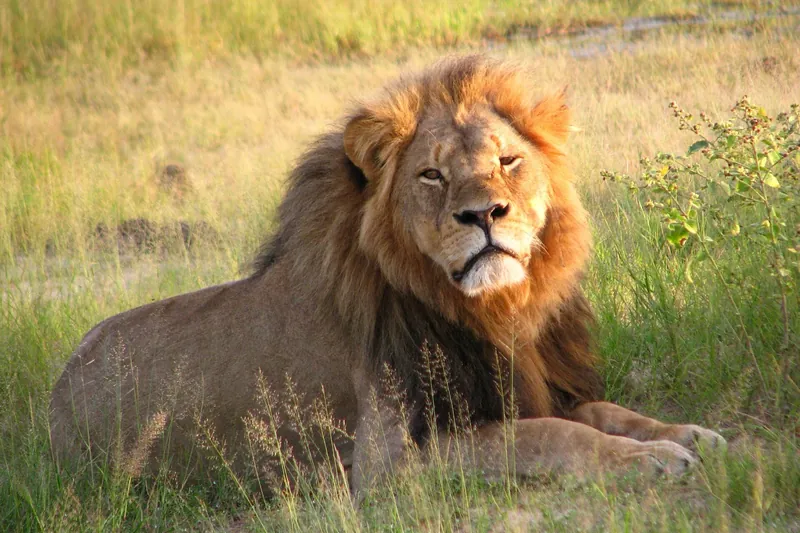
Male lion resting in Hwange National Park. Daughter#3, Wikimedia Commons, CC BY-SA 2.0, cropped 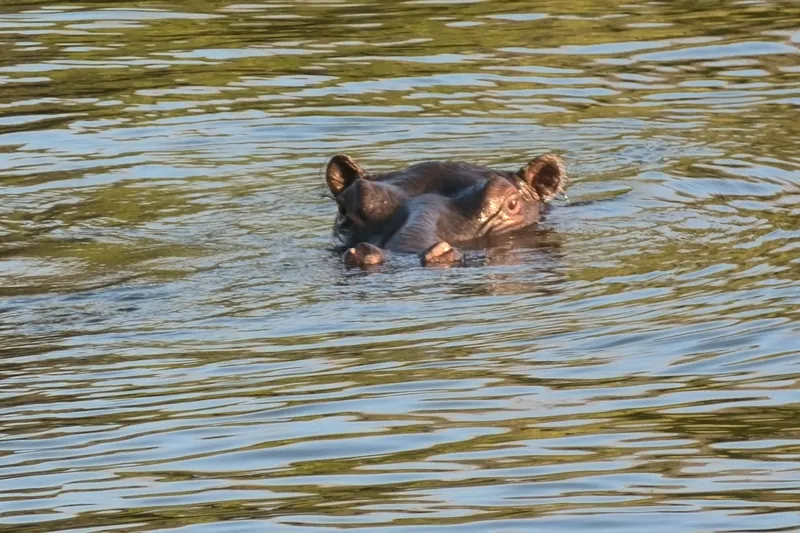
Hippopotamus in the Hwange area, Zimbabwe. Elias, iNaturalist, CC BY 4.0, cropped 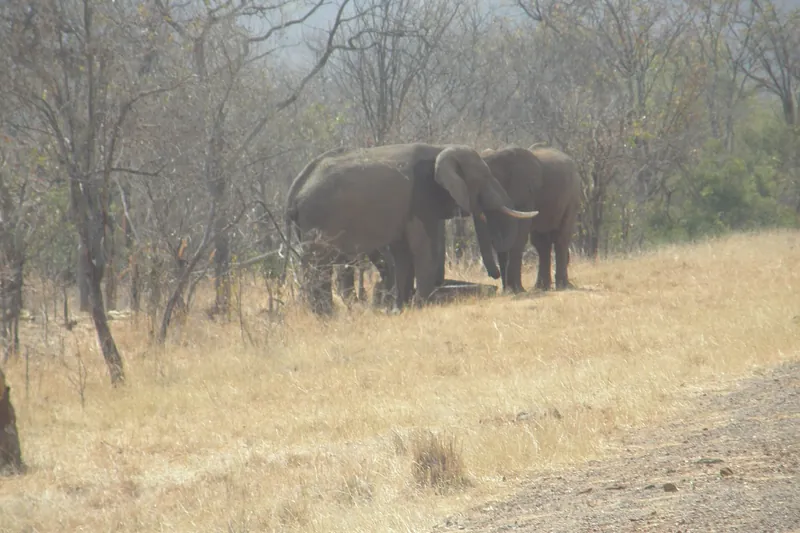
Elephants among the trees in Hwange National Park. Kevin Stroup, Wikimedia Commons, CC BY 3.0, cropped 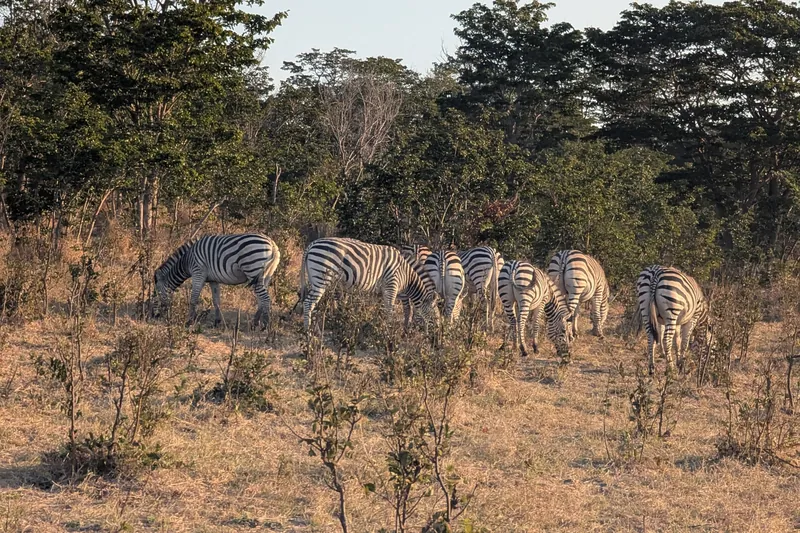
Plains zebra in the Hwange area, Zimbabwe. Elias, iNaturalist, CC BY 4.0, cropped 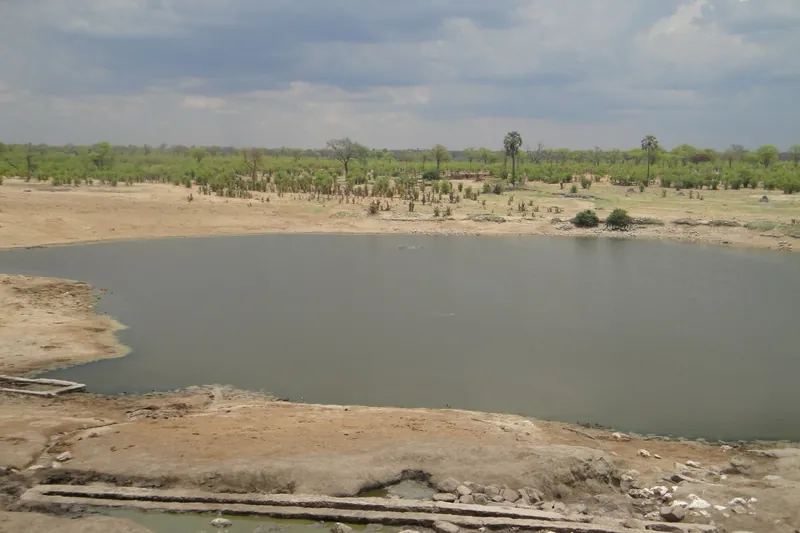
Masuma Dam in Hwange National Park. Babakathy, Wikimedia Commons, CC0 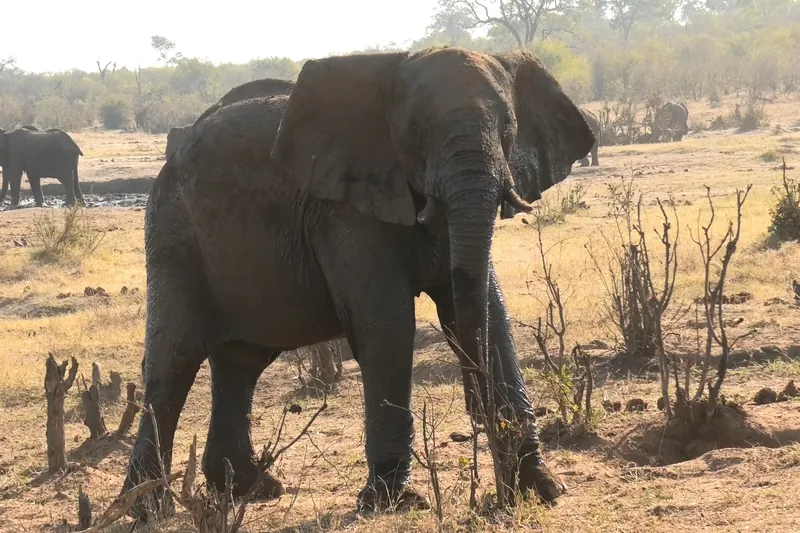
Elephants on a dry pan in the Hwange area, Zimbabwe. Elias, iNaturalist, CC BY 4.0, cropped 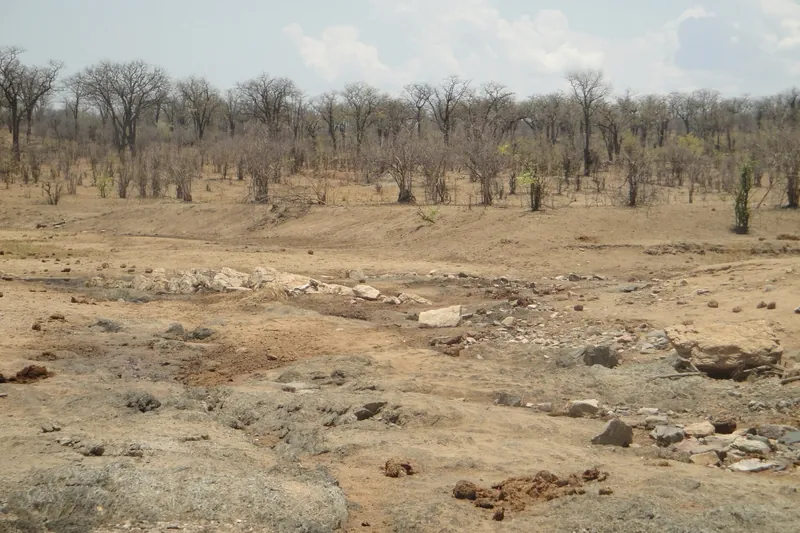
Tshakabika springs in Hwange National Park. Babakathy, Wikimedia Commons, CC0 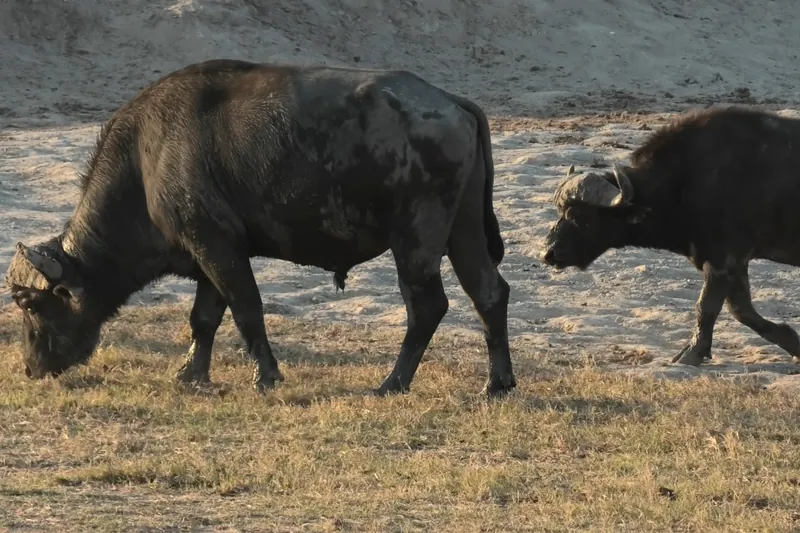
Two buffalo on a dry pan in the Hwange area, Zimbabwe. Elias, iNaturalist, CC BY 4.0, cropped


Photos by visitors and photographers, used under their free licences. Click a name to see the original.
Ask for a quote
Tell us your dates and we send you a priced itinerary. Free, no obligation.
- Free quote, no obligation
- Trips run by licensed local operators