 Experience

Last verified · Next check due
Plan it: costs, fees and practical answers
Short answer: Nyerere National Park, the former northern Selous Game Reserve in southern Tanzania, became a national park in 2019 and covers 30,893 km². Entry is US$82.60 per adult per day with VAT (US$70.80 from 15 March to 15 May). With the concession fee for a night inside, park fees are US$129.80–153.40 a night (last published tariff, 2023/24). Camps list US$410–1,375 per person a night for 2026–27, and most close from mid-March to May.
Key facts
- Nyerere was carved out of the northern Selous Game Reserve in 2019 and is run by Tanzania National Parks (TANAPA) (Wikipedia); the rest of the Selous Game Reserve, to the south, stays under the Tanzania Wildlife Management Authority (TAWA).
- Nyerere is on the Serengeti’s fee line: US$82.60 entry plus US$59–70.80 concession per adult per night with VAT (last published tariff, 2023/24).
- Boat safaris, walks, night drives and fly camping are all on TANAPA’s tariff for Nyerere; a boat safari adds US$23.60 per person with VAT.
- Most camps close from mid-March to the end of May (2026 listings).
- The Selous holds about 800 African wild dogs, one of Africa’s strongholds, in an IUCN assessment (IUCN via CMS, PDF).
What you do in Nyerere, and what each activity costs
Beyond game drives, TANAPA’s tariff prices boat safaris, walks with an armed ranger, night drives, fly camping and sport fishing in Nyerere, each with its own fee on top of entry.
| Activity | TANAPA fee, with 18% VAT | Notes |
|---|---|---|
| Boat safari on the Rufiji and its lakes | US$23.60 per person | Best in the eastern lakes (one safari operator) |
| Walking safari | US$23.60 short (1–4 h), US$29.50 long (over 4 h), per adult | “In the company of an armed ranger” (a Tanzania travel site); see walking safaris |
| Guide or ranger fee | US$47.20 per group per day | US$23.60 in most TANAPA parks |
| Night game drive | US$59 adult, US$29.50 child | Not sold in the Serengeti |
| Fly camping | US$59 per adult per night | Sand Rivers, Impala and Rufiji River Camp run fly-camps; Impala’s and Sand Rivers’ take adults only |
| Sport fishing | US$29.50 per person per day | 07:00–17:00 only |
Source: TANAPA Tariffs 2023/24 (PDF), the last published tariff; none later by 9 October 2026. Lakes and fly-camps: one safari operator’s Nyerere guide, read 9 October 2026.
Nyerere or Selous: what changed in 2019
In 2019 the northern, photographic part of the Selous Game Reserve became Nyerere National Park under TANAPA; the south stayed a game reserve under TAWA, where hunting is licensed.
- Tanzania’s largest national park. At 30,893 km², Nyerere overtook Ruaha (20,226 km²) as the largest of Tanzania’s national parks (Wikipedia, Ruaha).
- UNESCO keeps the old name. The World Heritage Site “Selous Game Reserve” is on the In Danger list; Tanzania filed a state of conservation report on it in 2026 (UNESCO, PDF).
- Still off the main circuit. Nyerere appears in 13 of the 150 published Tanzania itineraries with a stated route in our dataset (9%), the Serengeti in 131 (87%). In the south “on rencontre moins de monde sur les pistes”, you meet fewer people on the tracks, a French forum post said in May 2026 (Routard).
Wildlife: wild dog, elephant and lion
Nyerere’s draw is wild dog and the river: an IUCN assessment counts about 800 African wild dogs in the Selous, in larger packs than in Kruger or the Mara.
- Wild dog. Packs typically hold 8–9 adults in the Selous, against 4–5 in Kruger and the Maasai Mara (Wikipedia, citing Kingdon 1988). Our sources hold no published sighting rate for Nyerere. Other strongholds: where to see wild dogs.
- Elephant. More than 100,000 in the mid-1970s, about 13,000 in 2013 (Wikipedia).
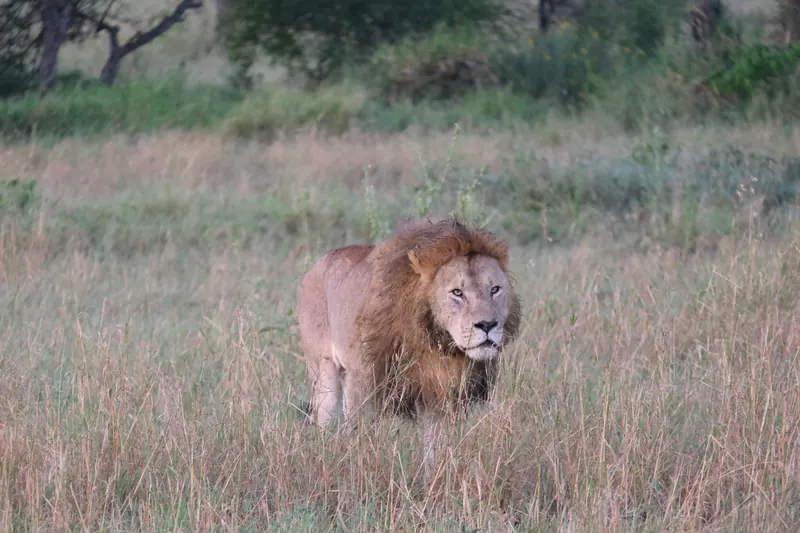
- Lion. In 2012 the researcher Craig Packer named the Selous one of four strongholds with more than 1,000 lions each, with Kruger, the Okavango and the Serengeti (PBS, 6 Sep 2012).
- Birds. About 440 species (a Tanzania travel site).
When to go to Nyerere
Go from June to October, when Dar es Salaam averages 25–70 mm of rain a month; November to mid-March is quieter and cheaper, and from mid-March to May most camps are shut.
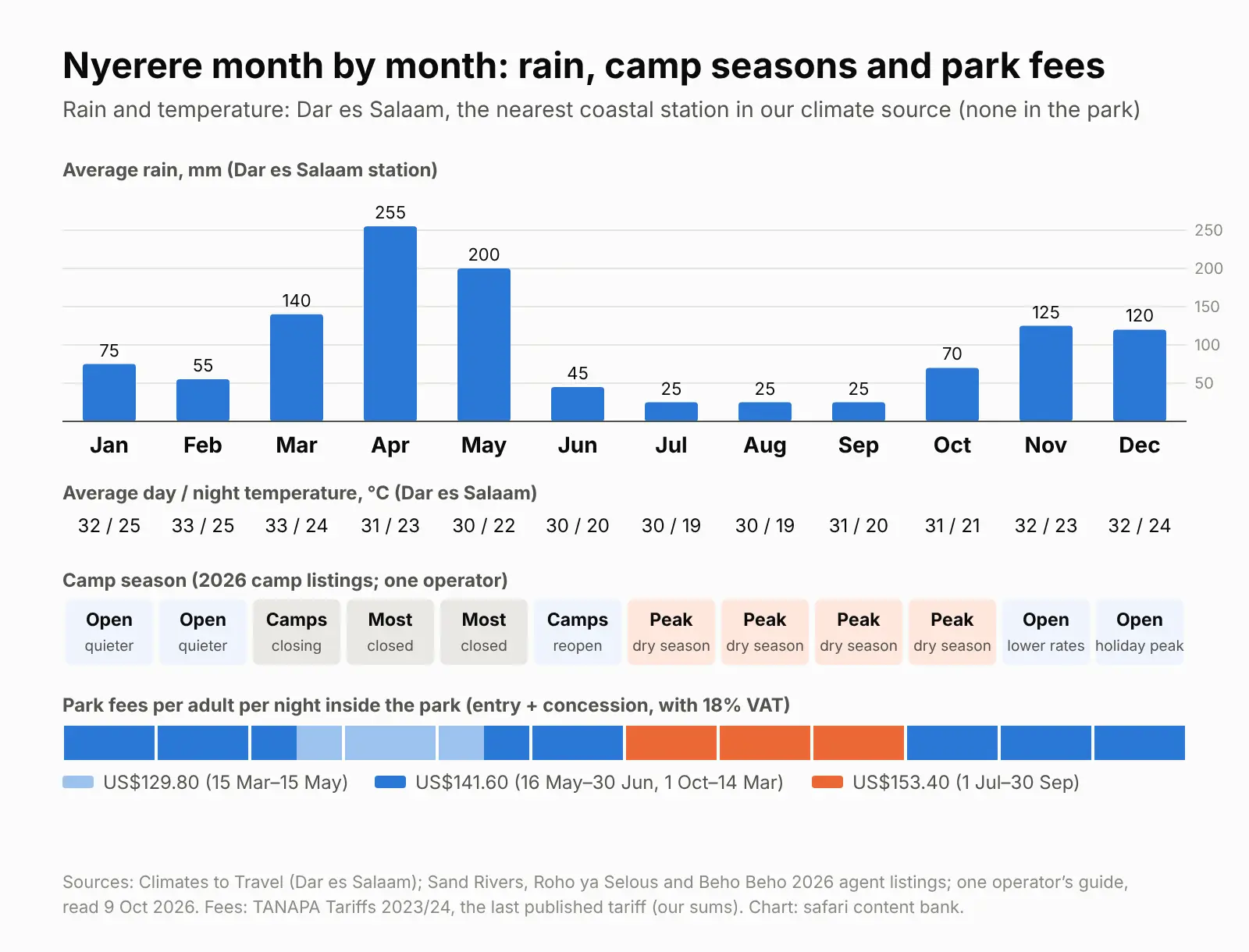 Rain and temperature: Climates to Travel, Dar es Salaam station. Camp seasons: 2026 agent listings and one operator’s guide, read 9 October 2026. Fees: our sums from TANAPA Tariffs 2023/24, the last published tariff.
- June–October. One safari operator calls July–October the peak dry season, with higher prices. Park fees peak at US$153.40 a night from July to September.
- November to mid-March. Quieter and cheaper, in the same operator’s words. On 1 November Sand Rivers drops from US$950 to US$625 per person a night and Rufiji River Camp from US$480 to US$410 (2026 listings).
- Mid-March to May. April is the wettest month (255 mm at Dar es Salaam). The same operator says many camps close in April and May, when roads are impassable; Sand Rivers shuts March–May, Roho ya Selous and Beho Beho 15 March–31 May. More: green-season safaris.
Where to stay in Nyerere, by price
Published 2026–27 rates run from US$410 per person a night at Rufiji River Camp to US$1,375 at Beho Beho; all these camps are inside the park, so park fees apply every night.
| Tier | Camp | Lowest → highest rate, per person per night | Rate covers | Source |
|---|---|---|---|---|
| Mid-range | Rufiji River Camp (Foxes) | US$410 (June, 1 Nov–23 Dec, 5 Jan–31 May) → US$480 (1 Jul–31 Oct, 24 Dec–4 Jan) | Full board, 2 shared game drives | A booking agent’s listing |
| Mid-range | Selous Impala Camp | US$535 (1 Nov–14 Dec) → US$682 (1 Sep–31 Oct) | Meals, some activities; July–August not listed | Another booking agent’s listing |
| Upper | Sand Rivers Selous (Nomad) | US$625 (1–14 Jun, Nov–Feb) → US$950 (15 Jun–31 Oct) | Full board, shared activities, most drinks | A booking agent’s listing |
| Luxury | Roho ya Selous (Asilia) | US$950 (June, 1 Sep–19 Dec, 6 Jan–14 Mar) → US$1,210 (Jul–Aug, 20 Dec–5 Jan) | Full board, house drinks, game drives; park fees excluded | A booking agent’s listing |
| Luxury | Beho Beho | US$1,375, one rate 1 Jun 2026–14 Mar 2027 | Drinks, walks, boat trips, drives | A booking agent’s listing |
| Exclusive use | Kiba Point (Nomad), 4 cottages | US$2,200 → US$3,700 a night for the whole camp | Private guide and activities | A booking agent’s listing |
Per person sharing unless stated, read 8–9 October 2026. All are agent listings; no camp’s own rate sheet is in our sources. Add US$129.80–153.40 per adult per night in park fees unless the camp includes them (last published tariff, 2023/24).
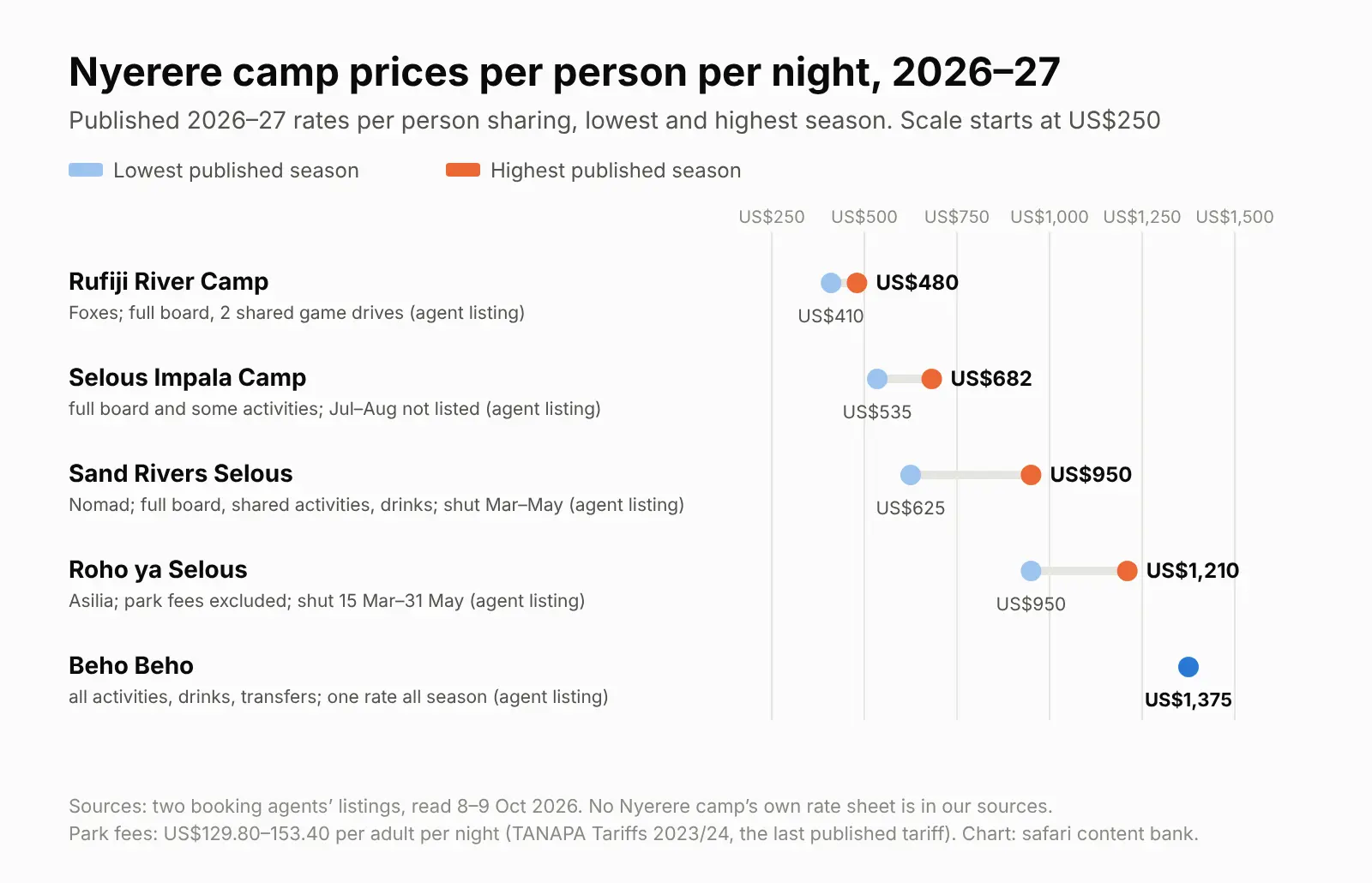 Published 2026–27 rates, read 8–9 October 2026. Sources: two booking agents’ listings.
- East or west. One safari operator’s Nyerere guide puts the best game near Lakes Manze and Nzerakera in the east; Sand Rivers and Kiba Point sit alone on the Rufiji in the west, and Beho Beho is on hills with no water frontage (read 9 October 2026).
Getting to Nyerere
You fly from Dar es Salaam or Zanzibar to one of the park’s airstrips, or drive: one published travel-time table gives 175 km and 4 hours from Dar es Salaam via Kisarawe, and other published distances and times differ by gate.
- By air. Airstrips include Mtemere, Matambwe, Sumbazi, Kiba, Beho Beho and Siwandu (Wikipedia). Safari Air Link charges a US$30 supplement for “Selous Upper” (Stiegler’s, Sumbazi) (2026–27 rates, PDF). Auric Air allows 20 kg including hand luggage (Auric Air).
- Fares. A travel-guide site lists Coastal Aviation’s Dar es Salaam–Nyerere fare at US$150–220 one way, 10–15% more from June to October (2 Jun 2026; secondary source).
- By road. One published travel-time table gives 175 km and 4 hours via Kisarawe; other published distances and times differ by gate and route. On the road to the eastern Mtemere gate, a self-drive operator’s guide describes “long gravel sections, such as 90 km from Kibiti to Nyerere”, and calls the park roads “very challenging in the rainy season”. Mikumi National Park to Nyerere is 355 km, 7 hours (same table).
- By train. The SGR runs from Dar es Salaam to Morogoro, the town on the approach to the north-western Matambwe gate; we found no confirmed timetable, fare or onward transfer to the park. Self-drive vehicle fees are in the fee table below.
Combining Nyerere with Ruaha or Zanzibar
Published itineraries pair Nyerere with Ruaha, which has lower park fees, and end on Zanzibar, with light-aircraft hops between them.
- Ruaha’s entry fee is US$35.40 per adult per day, against US$70.80–82.60 in Nyerere (last published tariff, 2023/24). Ruaha River Lodge lists US$350–420 per person a night (a booking agent’s listing, read 8–9 October 2026).
- Published trips. One safari operator’s 8-day fly-in safari runs from Dar es Salaam to Nyerere and Ruaha, park fees included. A 10-day safari through Mikumi, Udzungwa, Ruaha and Nyerere is published at US$3,180 per person (6 people, low season) to US$5,587.59 (2 people, high season), with park fees and internal flights (another operator’s published price, read 9 October 2026).
- Zanzibar. On a June–July 2026 forum thread, a destination expert told honeymooners in Zanzibar, whose marketplace safari tours did not fit their flight times, to do a southern park such as Nyerere first, then fly to Zanzibar (TripAdvisor). A third operator’s published southern itineraries fly from Nyerere, or Nyerere and Ruaha, to Zanzibar. Beach planning: Tanzania safari and Zanzibar.
What a Nyerere safari costs
Park fees are US$129.80–153.40 per adult per night inside Nyerere, the same as the Serengeti; camp rates of US$410–1,375 and the flight come on top.
The official fee lines for Nyerere, with the date each took effect:
| Fee | Amount | In force from | Source |
|---|---|---|---|
| Serengeti and Nyerere National Parks, non-East African adult, entry per day, 16 May–14 Mar | USD 70 + 18% VAT = USD 82.60 | 1 Jul 2023 (2023/24 tariff, last published) | TANAPA Tariffs 2023/24 |
| Serengeti and Nyerere National Parks, non-East African adult, entry per day, 15 Mar–15 May | USD 60 + 18% VAT = USD 70.80 | 1 Jul 2023 (2023/24 tariff, last published) | TANAPA Tariffs 2023/24 |
| Serengeti and Nyerere, concession fee per person per night inside the park | Jul–Sep USD 60 + VAT = USD 70.80; Oct–Jun USD 50 + VAT = USD 59 | 1 Jul 2023 (2023/24 tariff, last published) | TANAPA Tariffs 2023/24 |
| Nyerere, non-East African child 5–15, entry per day (under 5 free) | USD 20 + 18% VAT = USD 23.60 | 1 Jul 2023 (2023/24 tariff, last published) | TANAPA Tariffs 2023/24 |
| Nyerere boating safari fee, per person | USD 20 + 18% VAT = USD 23.60 | 1 Jul 2023 (2023/24 tariff, last published) | TANAPA Tariffs 2023/24 |
| Nyerere guide or ranger fee, per group per day (USD 20 in most other parks) | USD 40 + 18% VAT = USD 47.20 | 1 Jul 2023 (2023/24 tariff, last published) | TANAPA Tariffs 2023/24 |
| Walking safari, adult, per person (Nyerere and other TANAPA parks) | Short (1–4 h) USD 20, long (over 4 h) USD 25; + 18% VAT = USD 23.60 / USD 29.50 | 1 Jul 2023 (2023/24 tariff, last published) | TANAPA Tariffs 2023/24 |
| Night game drive (Katavi, Ruaha, Mikumi, Tarangire, Lake Manyara, Nyerere, Burigi-Chato, Ibanda-Kyerwa), per person | Adult USD 50 + VAT = USD 59; child USD 25 + VAT = USD 29.50 | 1 Jul 2023 (2023/24 tariff, last published) | TANAPA Tariffs 2023/24 |
| Fly campsite, adult, per night (booked in advance) | USD 50 + 18% VAT = USD 59 | 1 Jul 2023 (2023/24 tariff, last published) | TANAPA Tariffs 2023/24 |
| TANAPA public campsite, adult, per night (all parks except Kilimanjaro, Ugalla and Kigosi) | USD 30 + 18% VAT = USD 35.40 | 1 Jul 2023 (2023/24 tariff, last published) | TANAPA Tariffs 2023/24 |
| Vehicle entry, 2,001–3,000 kg tare (a safari Land Cruiser), per entry (one record says per day) | Tanzanian-registered TZS 35,000 + VAT; foreign-registered USD 150 + VAT | 1 Jul 2023 (2023/24 tariff, last published) | TANAPA Tariffs 2023/24 |
Source: TANAPA Tariffs 2023/24 (PDF), valid 1 July 2023 to 30 June 2024; on 9 October 2026 still the only tariff on TANAPA’s “Park Fees and Regulations” page.
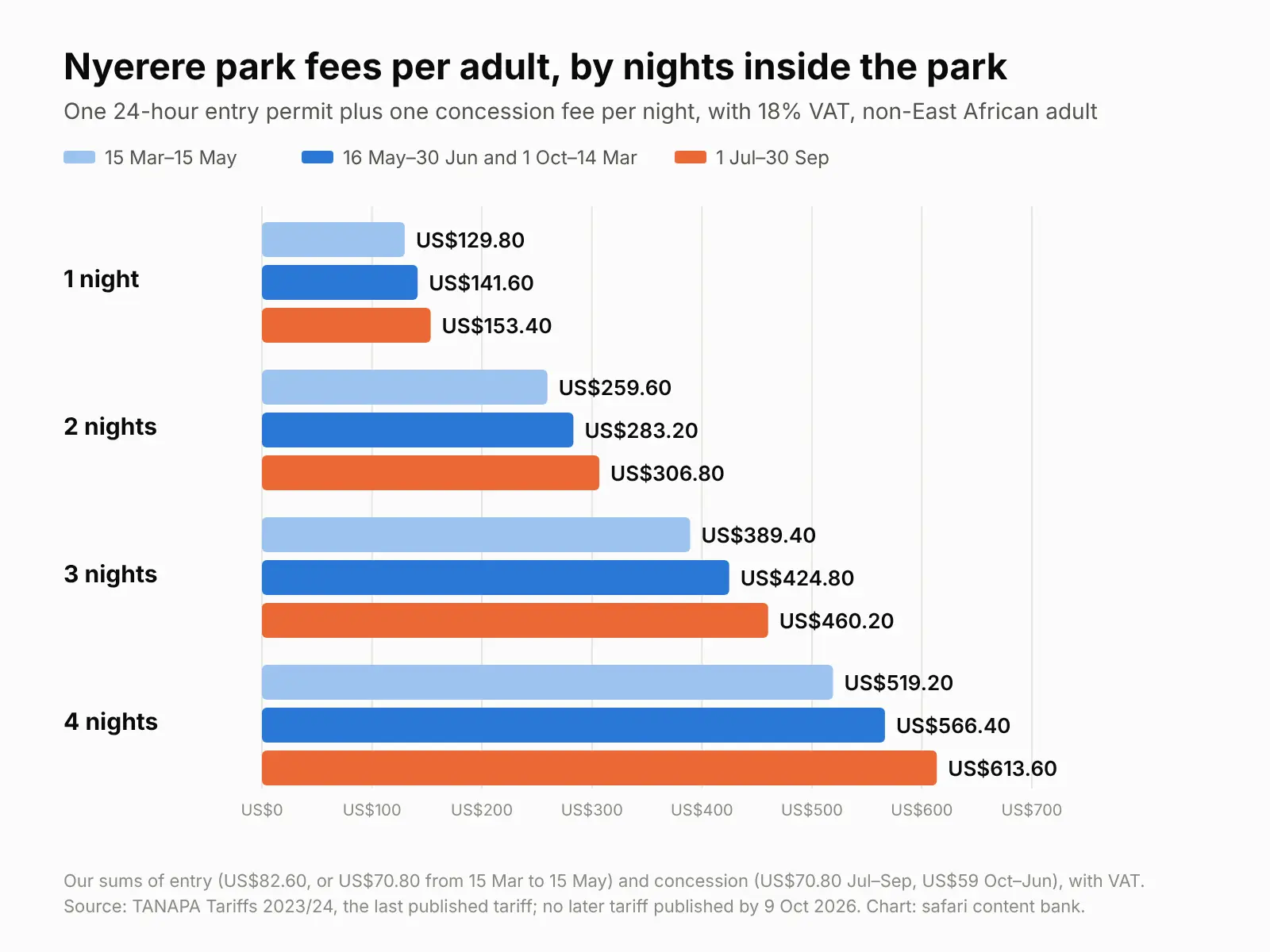 Our sums: entry plus concession per night, with 18% VAT, non-East African adult. Source: TANAPA Tariffs 2023/24, the last published tariff.
- Three nights in July–September cost US$460.20 per adult in park fees (our sum), before the camp and any boat, walking or guide fees.
- TANAPA froze fee increases for 12 months on 24 March 2025 (The Citizen); in May 2025 the government promised “a minimum of 12 months’ notice before any future changes” (Tourism Update).
- Entry costs. A tourist visa is US$50, or US$100 for US citizens (e-visa guidelines). As of October 2026, foreign visitors to mainland Tanzania, except residents of East African Community (EAC) and SADC countries, must buy government travel insurance at US$44 per adult (Clyde & Co); arriving via Zanzibar, you buy Zanzibar’s policy instead (UK FCDO). See Tanzania visitor insurance.
- More: Tanzania safaris cost US$220–873 per person per day; Tanzania park fees, US$35.40–118 a day; Serengeti park fees, also US$82.60 a day.
Common mistakes about Nyerere and the Selous
| What you’ll often read | What is correct |
|---|---|
| “The Selous is the cheap alternative to the Serengeti” | Park fees are the same: US$82.60 entry and US$59–70.80 concession per adult per night (last published tariff, 2023/24). Ruaha is cheaper, at US$35.40 entry. |
| “Nyerere entry is US$70” | That is before VAT. You pay US$82.60 (US$70.80 from 15 March to 15 May). |
| “It is still the Selous Game Reserve” | The photographic north has been Nyerere National Park (TANAPA) since 2019; the reserve to the south hosts hunting under TAWA. |
| “Ruaha is Tanzania’s largest national park” | Nyerere is, at 30,893 km², since 2019. |
| “Go any time of year” | Most camps close from mid-March to May. |
Compare: Ruaha vs Nyerere.
Frequently asked questions
Is Nyerere National Park the same as the Selous? Partly. Nyerere is the northern, photographic part of the old Selous Game Reserve, made a national park in 2019. The south is still the Selous Game Reserve, a TAWA hunting reserve, and UNESCO still lists the World Heritage Site as “Selous Game Reserve”.
Can you drive from Dar es Salaam to Nyerere? Yes. One published travel-time table gives 175 km and about 4 hours via Kisarawe; other published distances and times differ by gate. A self-drive operator’s guide describes “long gravel sections, such as 90 km from Kibiti to Nyerere”, and calls the park roads “very challenging in the rainy season”.
How do you get from Zanzibar to Nyerere? By light aircraft to one of the park’s airstrips; one operator’s published southern itineraries fly between the two. We found no verified fare or flight time for this sector.
Is late October or November a good time for Nyerere? November is cheaper but wetter. Sand Rivers, Rufiji River Camp and Selous Impala Camp keep their higher rates to 31 October and drop on 1 November: Sand Rivers from US$950 to US$625 per person a night, Rufiji River Camp from US$480 to US$410. Park fees fall earlier, from US$153.40 to US$141.60 a night on 1 October (last published tariff, 2023/24). Dar es Salaam averages 70 mm of rain in October and 125 mm in November.
Can you do night drives in Nyerere? Yes. Nyerere is on TANAPA’s night-drive list at US$59 per adult and US$29.50 per child with VAT (last published tariff, 2023/24). Night drives are not sold in the Serengeti or the Ngorongoro Conservation Area.
Is there hunting in Nyerere National Park? Around Nyerere, hunting takes place in the Selous Game Reserve to the south, a TAWA hunting reserve; the photographic camps are inside the national park. Replies in a TripAdvisor thread note that trophy hunting is legal in Tanzania and that operators’ hunting ties are hard to check, because hunting companies change names (TripAdvisor). You can check a safari operator’s licence.
Can I visit Nyerere in April or May? Only partly. One safari operator says many camps close in April and May because the roads are impassable. Entry is cheaper from 15 March to 15 May (US$70.80 instead of US$82.60, last published tariff, 2023/24), but most camps are closed for most of that window.
Sources
- Fees: TANAPA, Tariffs 2023/24 (PDF), last published, site checked 9 Oct 2026; The Citizen, 24 Mar 2025; Tourism Update
- Park and wildlife: Wikipedia, Nyerere National Park, Ruaha National Park and African wild dog; a Tanzania travel site’s Nyerere page; UNESCO, 2026 state of conservation report (PDF); IUCN via CMS (PDF); PBS, Craig Packer, 2012
- Seasons and areas: Climates to Travel (Dar es Salaam); one safari operator’s Nyerere guide, read 9 Oct 2026
- Camp rates (agent listings, read 8–9 Oct 2026): one booking agent for Rufiji River Camp, Sand Rivers, Roho ya Selous, Beho Beho, Kiba Point and Ruaha River Lodge; another for Selous Impala Camp
- Travel: Safari Air Link (PDF); Auric Air; a travel-guide site’s Coastal Aviation fares, 2 Jun 2026 (secondary); a safari operator’s published travel-time table (Dar es Salaam and Mikumi to Nyerere); a self-drive operator’s driving guide
- Itineraries: one safari operator’s 8-day fly-in safari; another operator’s published 10-day price, read 9 October 2026; a third operator’s southern itineraries
- Entry: Tanzania e-visa; Clyde & Co, 16 Sep 2026; UK FCDO
- Travellers: TripAdvisor, Safari help and Hunting affiliations; Routard
Fees and prices checked 9–10 October 2026. We will update this page when TANAPA publishes a new tariff and when the camps above publish their 2027 rates.
What visitors say
4.7/5 · 245 reviews · Tripadvisor · read
What visitors praise
- Boat safaris on the Rufiji River with hippos, crocodiles and riverside game
- Quiet, wild and much less busy than the northern parks
- Elephants, giraffe and big cats on drives
- A mix of drives, bush walks and boat trips
- Easy to reach from Zanzibar or Dar es Salaam
What visitors criticise
- One-day trips from Zanzibar make for very long days
- Some boat trips underwhelmed
- Lodge power cuts
- Many listing reviews are about tour arrangements rather than the park
Tips visitors repeat
- Stay at least two or three nights, as a day trip feels rushed
- Include a Rufiji boat safari and a walking safari
- Flying in saves a long road transfer
Steady and high: mostly 4-5 stars in 2024-26.
Photos from Nyerere (Selous)
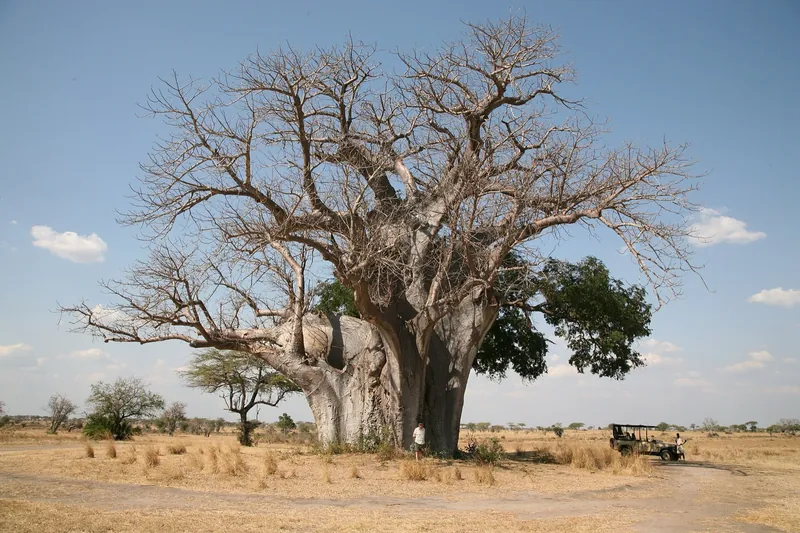
Baobab tree near the Sand River in Nyerere (Selous). Jenny Varley, Wikimedia Commons, CC BY-SA 2.0, cropped 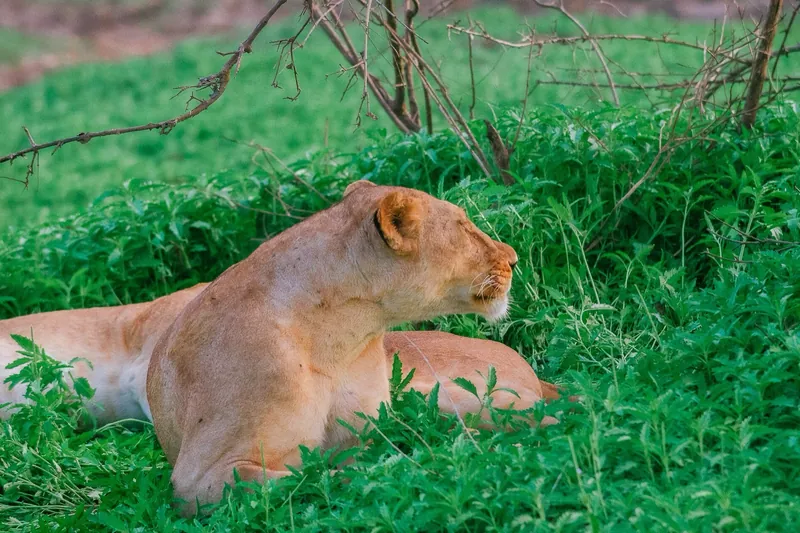
Lioness lying in green grass in Nyerere National Park. Erasmus Kamugisha, Wikimedia Commons, CC BY-SA 4.0, cropped 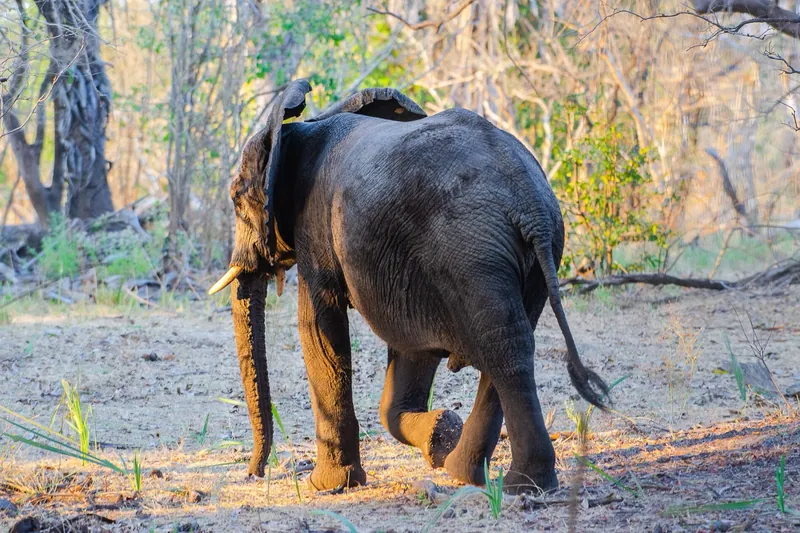
Elephant walking through the bush in Nyerere National Park. Erasmus Kamugisha, Wikimedia Commons, CC BY-SA 4.0, cropped 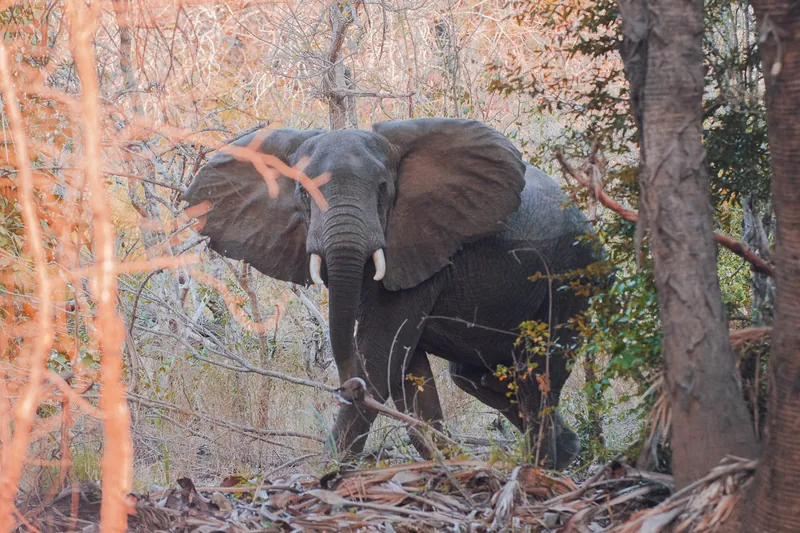
Elephant in the woodland of Nyerere National Park. Erasmus Kamugisha, Wikimedia Commons, CC BY-SA 4.0, cropped 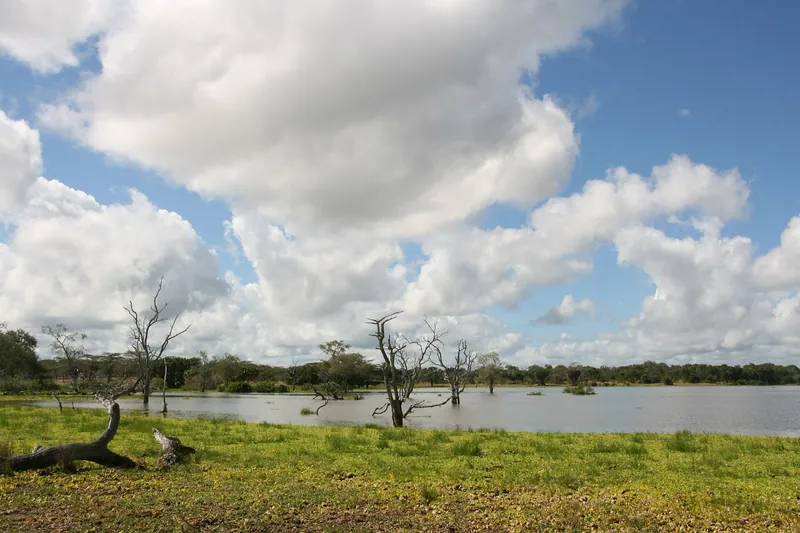
Lake and dead trees in Nyerere National Park (Selous). Marco Zanferrari, Wikimedia Commons, CC BY-SA 2.0, cropped 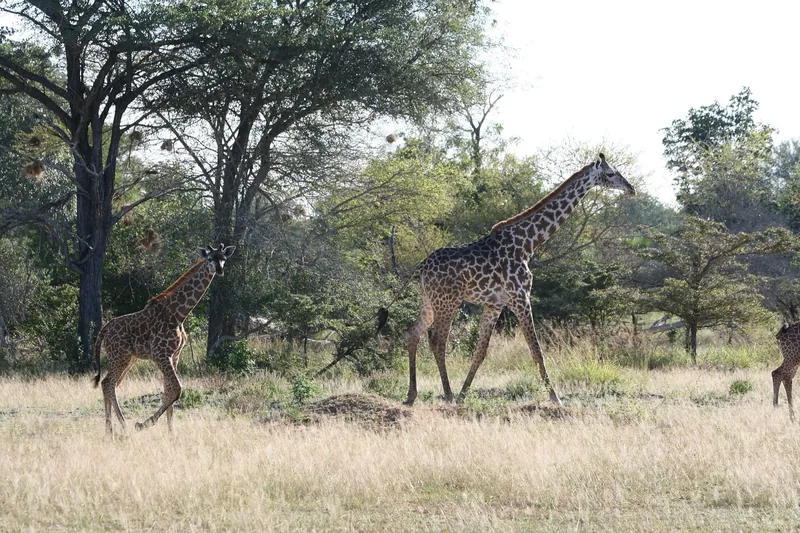
Giraffes in the woodland of Nyerere (Selous). Marco Zanferrari, Wikimedia Commons, CC BY-SA 2.0, cropped 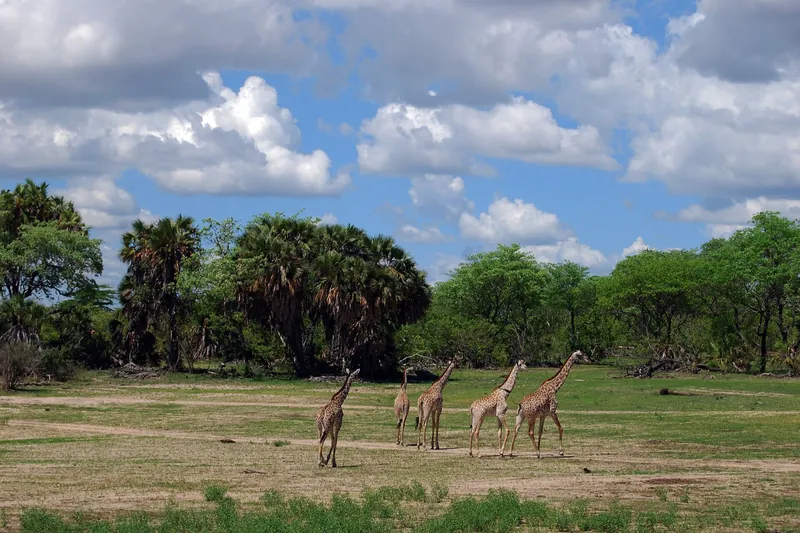
Giraffes on a grassy plain in Nyerere (Selous). BBM Explorer, Wikimedia Commons, CC BY 2.0, cropped 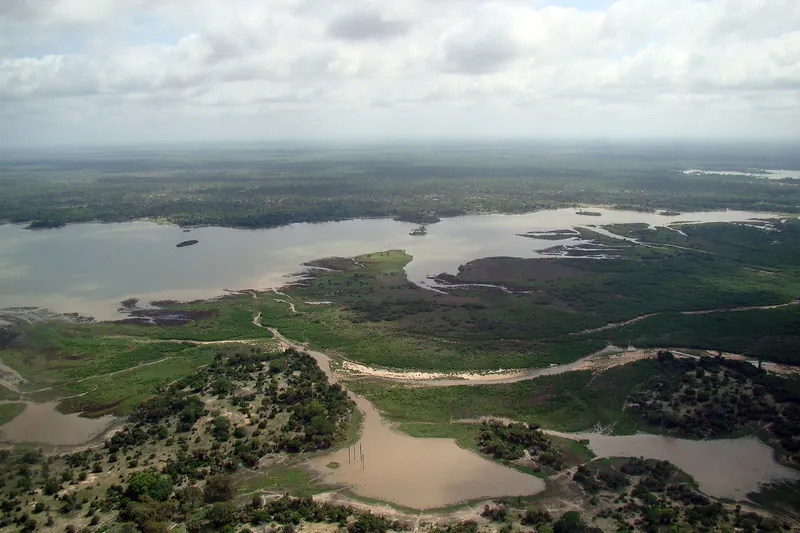
Aerial view of the Rufiji River in Nyerere (Selous). Digr, Wikimedia Commons, CC BY-SA 3.0, cropped 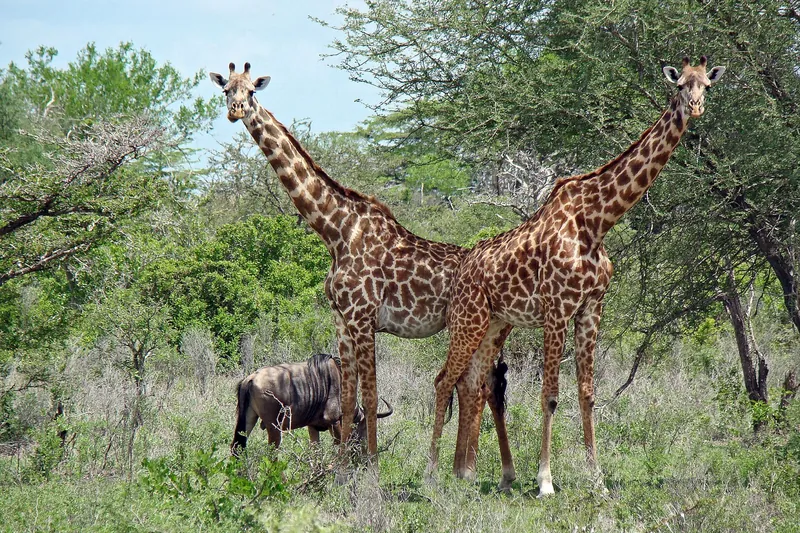
Giraffes and a wildebeest in Nyerere (Selous). Digr, Wikimedia Commons, CC BY-SA 3.0, cropped


Photos by visitors and photographers, used under their free licences. Click a name to see the original.
Ask for a quote
Tell us your dates and we send you a priced itinerary. Free, no obligation.
- Free quote, no obligation
- Trips run by licensed local operators