 Experience

Last verified · Next check due
On this page
- Tanzania safari risks at a glance (October 2026)
- What do the UK and US governments advise for Tanzania?
- Is it safe around wildlife in Tanzania’s parks?
- How dangerous are Tanzania’s roads for safari travellers?
- Where is crime a risk on a Tanzania safari?
- Health: malaria, yellow fever, tsetse and medical evacuation
- Scams and money
- Solo, women and LGBT travellers
- What changed in 2025–2026
- Common mistakes about Tanzania safari safety
- Frequently asked questions
- Sources
Short answer: The documented risks on a Tanzania safari are malaria, long roads and fast-changing entry rules, not animals or crime inside the parks. Malaria risk runs all year below 1,800 m (WHO). As of October 2026 every visitor needs a US$44 government insurance policy. Tourists are not driven outside towns after dark. Protests after the 29 October 2025 election cancelled flights. Check the UK FCDO and US State Department pages before booking. Checked 10 October 2026.
Key facts
- Every foreign visitor to Tanzania except residents must buy government inbound travel insurance: US$44 per adult, 92 days, under Government Notice 256 of 2026; the FCDO says you need it “even if” you have your own policy (page updated 20 October 2026).
- Malaria risk, mainly P. falciparum, exists all year in the entire country below 1,800 m (WHO), which includes the Serengeti, Tarangire, Nyerere, Ruaha and Zanzibar.
- A yellow fever certificate is required from travellers aged 1 or over arriving from a risk country, Kenya included, or after a transit of more than 12 hours there (WHO); WHO does not recommend the vaccine for Tanzania itself.
- Tourists are not allowed on the road outside cities after dark, so a same-day drive to a park needs a flight landing at Kilimanjaro, Arusha or Dar es Salaam before 13:00 (one operator’s travel-times page).
- Night drives are not permitted in the Serengeti or anywhere in the Ngorongoro Conservation Area, where driving ends at 18:00 and the crater descent gates close at 16:00.
- No traveller report in our 2024–26 review set describes a crime inside a park or an animal attack; the crime advice travellers give is about Dar es Salaam, Arusha and Stone Town after dark.
Tanzania safari risks at a glance (October 2026)
Most of the risk you can measure is on the road, in malaria country and in the entry paperwork; the parks themselves have short, published rules. Each row gives the evidence, where it applies and the source with its date.
| Risk | What the evidence shows | Where it applies | Source and date |
|---|---|---|---|
| Official travel advice | The FCDO and US State Department both publish Tanzania pages; check them for areas they advise against and for current events | Country-wide | FCDO Tanzania, updated 30 Oct 2026; US State Department Tanzania, 3 Sep 2026 |
| Political unrest | Protests after the 29 Oct 2025 election stranded passengers at airports; UK reviewers report cancelled flights and an unrefunded deposit. The first anniversary, 29 Oct 2026, passed without reported demonstrations or flight cancellations | Airports and cities, Oct–Nov 2025 | Africanews, 3 Nov 2025; a safari booking site’s 1-star traveller reviews; AFP via The Standard, 29 Oct 2026 |
| Malaria | Risk all year, mainly P. falciparum | Entire country below 1,800 m | WHO country list (2022, rev. Jan 2023) |
| Roads | No tourist driving outside cities after dark; Arusha to central Serengeti is 7–7.5 hours | All inter-park roads | One operator’s travel-times page, modified 1 Jul 2026; a safari booking site’s Serengeti guide |
| Wildlife | No off-road driving; walking only with an armed ranger; no night drives in the Serengeti or the NCA | National parks and the Ngorongoro Conservation Area | NCAA visitor guidelines; TANAPA Tariffs 2023/24 |
| Street crime | Taxi after dark, even for short distances; one long-time traveller was mugged walking 200 m to a taxi rank in Dar | Dar es Salaam, Arusha, Stone Town | TripAdvisor, “Safety” (Tanzania) |
| Scams | A scammer impersonates named guides and emails former clients asking for “loans” | Email, after a trip | TripAdvisor scam alert |
| Insurance and evacuation | US$44 compulsory policy covers emergency medical care, evacuation and repatriation; AMREF evacuation cover from US$24 for 30 days | Mainland and Zanzibar | Clyde & Co, 16 Sep 2026; AMREF Flying Doctors |
Official pages and traveller sources as linked, read 8–10 October 2026. Forum and review lines are travellers’ reports, not official findings.
What do the UK and US governments advise for Tanzania?
Both governments publish Tanzania advice; the FCDO last updated its Tanzania advice on 30 October 2026, adding advice on burglary in hotels and other accommodation, and the US State Department updated its country page on 3 September 2026. The FCDO still advises against all but essential travel within 20 km of the border with Cabo Delgado, Mozambique. The rest of their lists of advised-against areas is not reproduced here: our source bank recorded the entry and insurance sections of those pages on 9 October 2026, not their safety maps, and we do not print advice we have not read. Open both pages before you book, and again the week you travel.
- What the FCDO entry page says (read 9 October 2026): all visitors except residents must buy inbound travel insurance for their first port of entry, valid up to 92 days; the 20 October update says you need it “even if” you already have a personal policy, and visitors without it “may be refused entry” (FCDO entry requirements). Full details: Tanzania visitor insurance.
- The FCDO changed its Tanzania advice during the October 2025 unrest. The trade body ATTA relayed an FCDO advice change on 30 October 2025 (ATTA), and UK travellers’ reviews from December 2025 say they were “unable to travel because of FCDO advice” (a safari booking site’s traveller reviews).
- Safety: the first anniversary of the 2025 election, 29 October 2026, passed without reported demonstrations; Dar es Salaam was quiet under a heavy police presence and no airport closures or flight cancellations were reported (AFP via The Standard, 29 Oct 2026; Africanews, 29 Oct 2026). The UK FCDO says demonstrations, and violent responses from the security forces, could happen at any time, advises staying away from all demonstrations, rallies and large crowds, and notes that internet access has been limited during past protests; filming protests is illegal (FCDO safety and security, updated 30 October 2026). On 6 November 2026 a Dar es Salaam court sentenced opposition leader Tundu Lissu to four years for incitement; we found no reports of protests afterwards (Human Rights Watch, 6 Nov 2026). Checked 11 November 2026.
- Check your contract and policy against the advice. Ask your operator what happens to your deposit if the FCDO or the State Department advises against travel, and ask your insurer whether you are covered in that case. One UK reviewer’s “Agent in Tanzania could not refund our deposit” after the 2025 cancellations is the case to avoid.
Is it safe around wildlife in Tanzania’s parks?
Yes, within the rules: drive only in daylight, stay on the tracks, stay in the vehicle outside designated sites, and walk only with an armed ranger. The Ngorongoro Conservation Area Authority (NCAA) publishes its rules; for the national parks, the official trace is the TANAPA tariff.
| Where | Rule | Source |
|---|---|---|
| Ngorongoro Conservation Area (NCA) | Driving 06:00–18:00; crater descent gates close 16:00; “Off-road driving is not permitted within NCA unless authorized by the Conservation Commissioner”; only 4×4 vehicles up to 3,500 kg tare on the crater floor; a licensed or NCAA guide must accompany all crater visitors; walking “you must be accompanied by NCAA armed ranger” | NCAA visitor guidelines |
| Serengeti National Park | The day permit covers “twelve daylight hours”; night drives are not sold inside the park; the tariff fines over-speeding TZS 50,000 | TANAPA Tariffs 2023/24 (PDF), last published |
| Parks with night drives | The tariff’s night-drive line names Katavi, Ruaha, Mikumi, Tarangire, Lake Manyara and Nyerere, among others | TANAPA Tariffs 2023/24 |
| Walking | Permitted with an armed ranger in parks that sell walks, such as Tarangire, Ruaha and Katavi | TANAPA Tariffs 2023/24 (walking fees) |
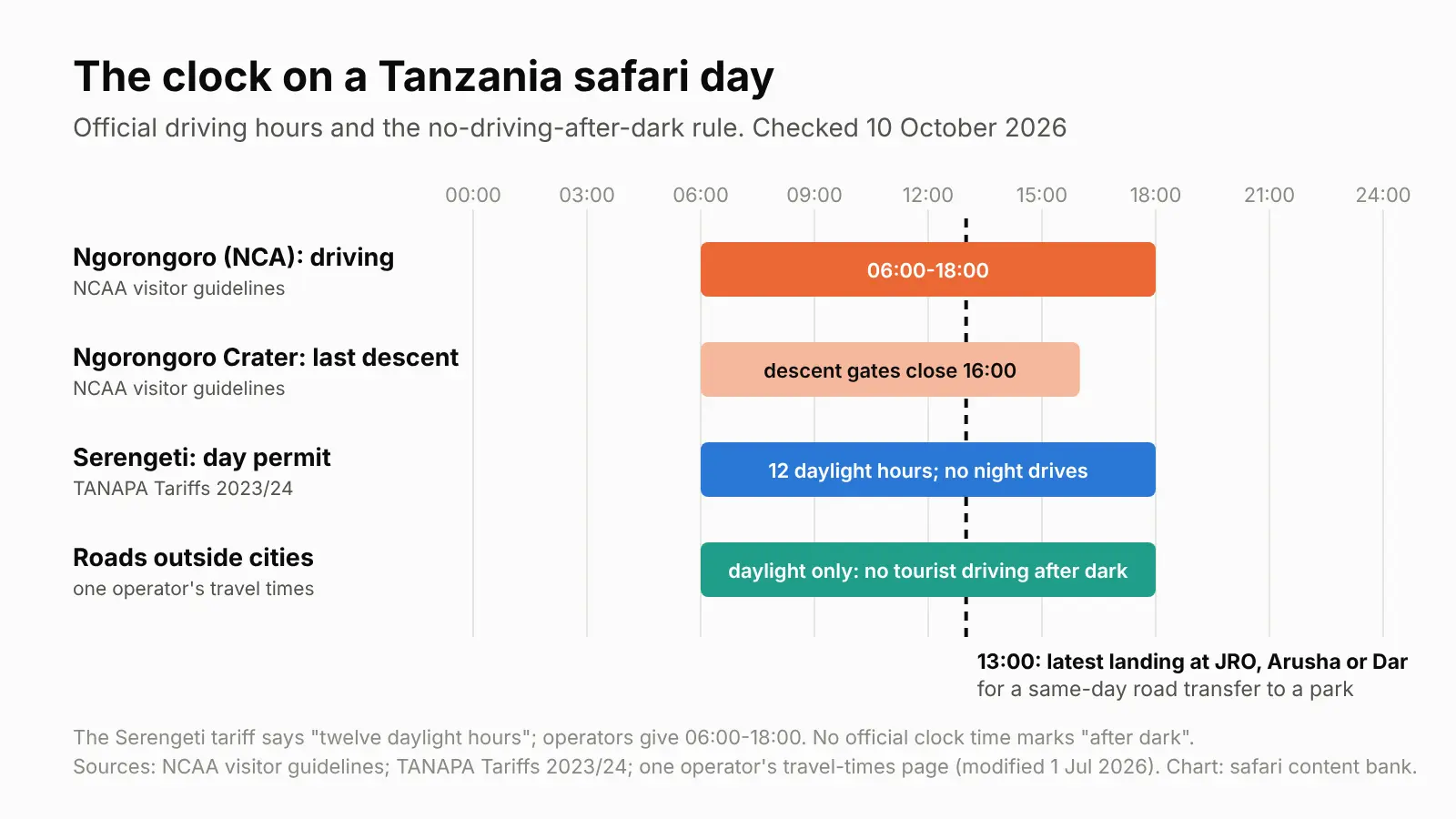 The Serengeti tariff says “twelve daylight hours”; operators give 06:00–18:00. Sources: NCAA visitor guidelines; TANAPA Tariffs 2023/24; one operator’s travel-times page (modified 1 Jul 2026). Checked 10 October 2026. Chart: safari content bank.
- Stay on the tracks and in the vehicle. In the national parks, visitors “must keep to the authorized tracks only and will be fined if found off the main tracks” (one self-drive operator’s guide), and may leave the vehicle only at designated picnic and observation sites or on ranger-escorted walks (another operator’s park-rules article). These are operators’ summaries; the fine amount is not published in the tariff.
- Animal incidents do not appear in the record we read. No review on a safari booking site and no forum thread in our 2024–26 Tanzania set reports an animal incident. The wildlife complaint travellers do make is the opposite: guides who “push the animals too much” (a safari booking site’s 2-star traveller reviews, 2024–25).
- Tsetse flies bite in some areas, and repellent barely helps. Guides on the TripAdvisor forum place them at Kusini, the Western Corridor and the Lobo road in the Serengeti and at Tarangire’s north gate and river, and say there are none at Seronera, in Arusha National Park or in Ngorongoro; one guide: “I don’t know of any repellent that works for tsetse fly” (TripAdvisor). This is guide testimony, not an official map.
How dangerous are Tanzania’s roads for safari travellers?
Long and rough rather than fast: the rule that matters is that tourists are not driven outside towns after dark. We found no official road-casualty figure for tourists in our sources, so we don’t print one.
- No road travel after dark. One operator’s travel-times page: “Tourists are not allowed on the road outside cities after dark.” Its planning rule is that flights must land at Kilimanjaro (JRO), Arusha or Dar es Salaam before 13:00 for a same-day transfer to a park (modified 1 Jul 2026).
- Speeds are low. On northern Tanzanian routes “you’ll rarely drive faster than 50 km/h”; Land Cruisers are capped at 80 km/h as trucks, and towns at 40 km/h (one self-drive operator’s guide). The same guide advises staying under 25 km/h on the Naabi–Seronera gravel.
- Drives are long. Arusha to central Serengeti takes “about 7 to 7.5 hours” (a safari booking site’s Serengeti guide); Ngorongoro Crater to Seronera is published as 3.5 hours, and travellers report “close to 5 hours” (TripAdvisor, thread closed 9 Nov 2025).
- Rain makes roads impassable. One March 2026 traveller wrote “We were stuck 11 times in 7 days”, and reaching one camp “required a 25 km tractor tow” (TripAdvisor).
- Vehicles break down; the backup is what you pay for. A destination expert on the forum: “even the best-maintained vehicles can and do break down” (TripAdvisor). Check the operator’s TALA licence first (how to check a safari operator’s licence).
Where is crime a risk on a Tanzania safari?
In the towns after dark: Dar es Salaam, Arusha and Stone Town. No traveller account we read reports a crime inside a park.
| Place | What residents and regulars advise | Source |
|---|---|---|
| Towns in general | No walking after dark; take a taxi even for short distances. “It’s a myth that not flashing anything protects you from robbery.” Daytime walking in towns, villages and on beaches is fine | TripAdvisor, “Safety” |
| Dar es Salaam | A traveller with 25 years of solo travel was mugged once, walking 200 m to a taxi rank | same thread |
| Stone Town (Zanzibar) | Walkable until about 20:30 in busy areas; “you may be hassled some by touts, but it’s not serious” (Oct 2026) | same thread; TripAdvisor, Zanzibar solo |
- On a guided safari you spend the nights in camps and lodges. The crime advice travellers give stops at the town edge; we found nothing on crime inside the parks in 213 traveller questions and the review sets we read.
Health: malaria, yellow fever, tsetse and medical evacuation
Malaria applies to every Tanzania safari; the yellow fever certificate applies if you arrive from Kenya or another risk country; the compulsory US$44 policy covers emergencies but not cancellation. See a travel clinic and check the official pages before you go.
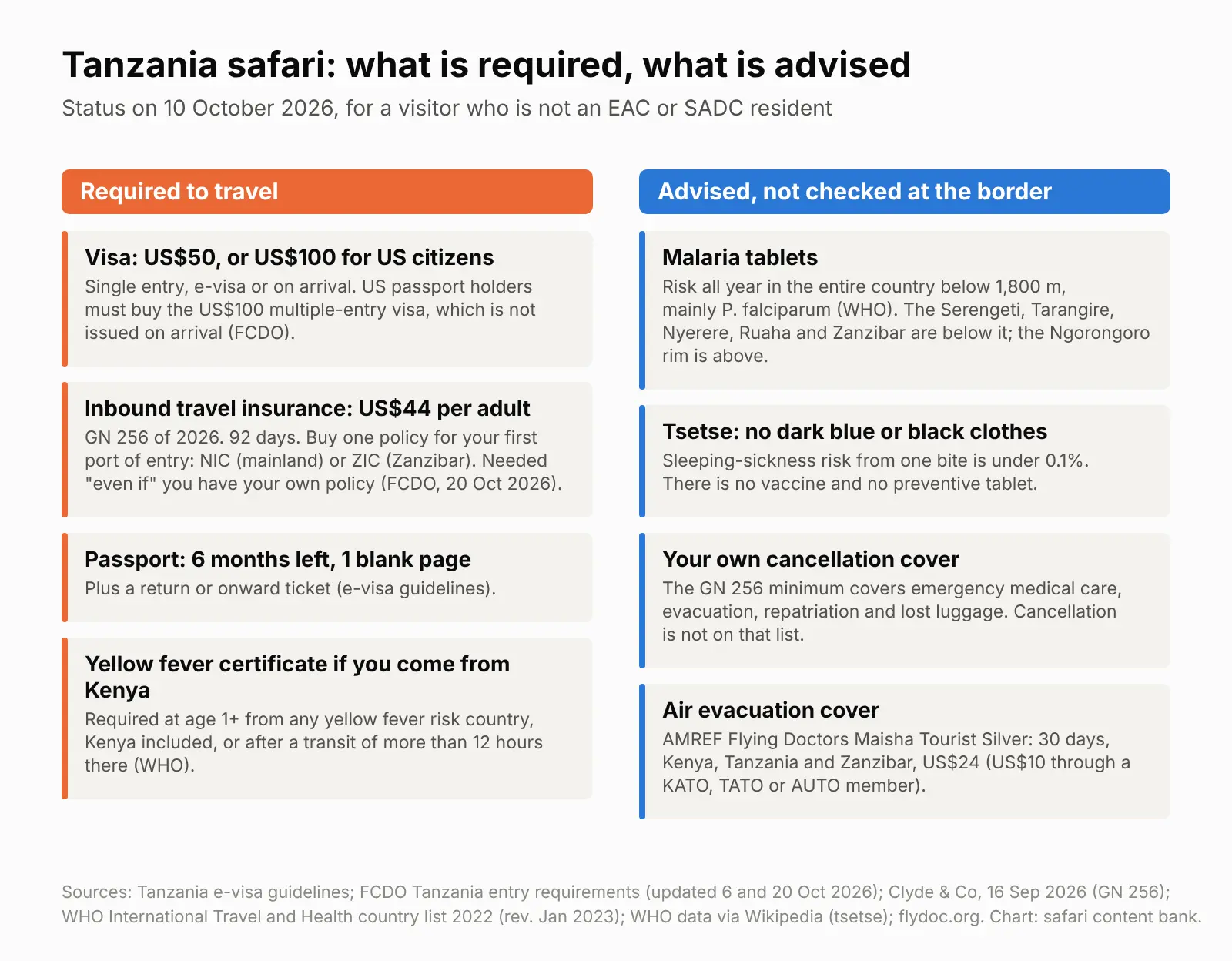 Status on 10 October 2026. Sources: Tanzania e-visa guidelines; FCDO (updated 6 and 20 Oct 2026); Clyde & Co (16 Sep 2026); WHO country list 2022 (rev. Jan 2023); flydoc.org. Chart: safari content bank.
Malaria
WHO: “risk due predominantly to P. falciparum exists throughout the year in the entire country below 1800 m” (WHO country list, 2022 edition, rev. Jan 2023). Every northern-circuit park, Nyerere, Ruaha and Zanzibar are below 1,800 m; the Ngorongoro crater rim and upper Kilimanjaro are above it. A travel clinic chooses the tablet; avoid bites day and night with repellent, long sleeves in the evening and nets.
Yellow fever
A certificate is required from travellers aged 1 year or over arriving from a country with yellow fever risk, and after a transit of more than 12 hours through an airport in one (WHO, Tanzania entry). WHO does not recommend the vaccine for a trip to Tanzania alone.
- Kenya is a risk country. Crossing from Kenya at Namanga, Isebania/Sirari, Taveta/Holili or Lunga Lunga/Horohoro, or flying in from Kenya, needs the certificate; so does a Nairobi connection of more than 12 hours. Combining the two countries: see Kenya vs Tanzania and Is a Kenya safari safe?.
- Arriving direct from Europe or North America, you need no certificate.
- Uganda dropped its own entry requirement on 2 October 2026, but Tanzania still asks arrivals from Uganda for the certificate (Uganda immigration notice).
- Certificates are valid for life (WHO, from 11 July 2016).
Health surveillance form
Since 17 October 2026 every traveller has had to fill in the free Traveller’s Health Surveillance Form (Ministry of Health Travel Advisory No. 18) at afyamsafiri.moh.go.tz; fill it in during the 24 hours before you arrive and keep the QR code or reference number for port health officers, or you will have to complete it at the airport, which can cause delays (U.S. Embassy in Tanzania, 3 Nov 2026).
Tsetse flies
Tanzania is one of eight countries that have reported cases of the East African form of sleeping sickness, but the risk from one tsetse bite is put at under 0.1% (Wikipedia, citing WHO data). East African cases numbered 41 in 2025 across all reporting countries. There is no vaccine and no preventive tablet: avoid dark blue and black clothing, close the vehicle up or move to open ground, and see a doctor for fever, headache or joint pain after travel.
Insurance and medical evacuation
Every foreign visitor must hold Tanzania’s inbound travel insurance (on the mainland, EAC and SADC travellers are exempt; ZIC says this is not automatic for Zanzibar): US$44 per adult, 92 days, multiple entries, under the Insurance (Inbound Travel Insurance) Regulations 2026, Government Notice 256 of 2026, published 4 September 2026 (Clyde & Co, 16 Sep 2026). Buy one policy for your first port of entry: from the National Insurance Corporation (NIC) for the mainland, or the Zanzibar Insurance Corporation via Visit Zanzibar for Zanzibar. You need it “even if” you already have a personal policy (FCDO, updated 20 Oct 2026). The full entry cost, with the visa, is on the Tanzania safari cost page.
- What the policy must cover: emergency medical treatment, emergency medical evacuation, emergency repatriation and loss of luggage (GN 256 minimum, per Clyde & Co). Benefit limits have not been published in any source we read. Trip cancellation is not on the list, so keep your own policy for that.
- AMREF Flying Doctors’ Maisha Tourist Silver covers Kenya, Tanzania and Zanzibar for 30 days: US$24, or US$10 bought through a KATO, TATO or AUTO member operator (flydoc.org, page modified 8 May 2026). It covers unlimited evacuation flights to Nairobi in the cover period and a 24-hour medical helpline; it is an evacuation subscription, not health insurance. Silver Plus (US$50) adds inpatient cover up to US$200,000. Emergency number: +254 20 699 2299.
- Ask your operator whether AMREF cover is already in the price. AMREF gives operators that are KATO, TATO or AUTO members a lower rate.
Scams and money
The scams documented for Tanzania in 2024–26 target you by email and through booking platforms, and the money risk is an operator that cannot refund.
- Guide impersonation. A scammer has impersonated named guides for three years, emailing former clients to ask for “loans” to buy a safari vehicle; police and tourism-board reports produced no action (TripAdvisor, 18 replies). A guide who asks for a loan or an investment is a red flag.
- Bus tickets through resellers. Tickets bought on the Bookaway platform were twice not in the bus company’s system; book with the bus company directly (TripAdvisor).
- Membership is not a guarantee. A solo woman reported being isolated and robbed of cash by a Kilimanjaro crew from a company that belongs to both TATO and the Kilimanjaro Porters Assistance Project (TripAdvisor). Check the TALA licence, pay only a company account, and get the vehicle, crew and number of days in the contract (how to check a safari operator’s licence).
- Use the official visa and insurance portals: visa.immigration.go.tz, inbound.nicinsurance.co.tz and inbound.visitzanzibar.go.tz.
Money: park fees are electronic, camps want US dollars.
- Park fees cannot be paid in cash at the gate. The TANAPA tariff routes payments through the government’s GePG system, online, by card at banks or by mobile money (TANAPA Tariffs 2023/24).
- Camp card machines fail on “poor network in the bush” and add 3–5%, so carry US dollars, series 2009 or newer (TripAdvisor). One operator’s published cost guide budgets US$300–500 per person in cash for a week’s safari.
- Kenya’s M-Pesa does not work in Tanzania; buy a Tanzanian SIM (TripAdvisor).
Solo, women and LGBT travellers
Sourced advice for solo and women travellers is about towns after dark and choosing the operator; for LGBT travellers we have one traveller thread and no official source.
- Women travelling alone: an older solo woman asking whether she could walk at night was told no: taxis after dark, daytime walking fine (TripAdvisor, “Safety”). A solo woman on Zanzibar in October 2026 found it “very welcoming and safe” (TripAdvisor). Lodges treat women travellers with respect, forum veterans say (TripAdvisor).
- Kilimanjaro alone: the robbery case above is the documented risk; check the operator, not only its memberships.
- LGBT travellers: in an 8-reply thread from a lesbian couple travelling to Zanzibar with children, posters who had made the trip took the visa on arrival, stood at separate counters, were asked for no birth or marriage certificates and had no problems at hotels; discretion was advised (TripAdvisor). Our sources hold no official statement on Tanzania’s laws; read the FCDO Tanzania page and the US State Department page before you book.
What changed in 2025–2026
Three changes matter for safety and planning: the October 2025 unrest, the March 2026 e-visa outage, compulsory mainland insurance under GN 256 of 2026, confirmed by the FCDO on 6 October 2026.
| Date | Change | Source |
|---|---|---|
| 8 Oct 2025 | TANAPA releases the TanapaGo booking app | App Store |
| 29 Oct 2025 onward | Protests after the general election; passengers stranded at airports; FCDO advice changed (relayed by ATTA, 30 Oct 2025) | Africanews, 3 Nov 2025; ATTA |
| 4 Mar 2026 | Immigration notice: central system unavailable, no new e-visa applications; visa on arrival “fully available”. The portal was working again by October 2026 | VisasNews, 5 Mar 2026 |
| 4 Sep 2026 | Inbound travel insurance regulations published, GN 256 of 2026: US$44, 92 days | Clyde & Co, 16 Sep 2026 |
| 6 Oct 2026 | FCDO: insurance mandatory for mainland and Zanzibar; one policy for the first port of entry; your own policy does not replace it | FCDO entry requirements |
Trade and press sources are labelled as such; the FCDO page is the only government page in our sources that confirms the insurance scheme. Checked 10 October 2026.
Common mistakes about Tanzania safari safety
| What you’ll often read | What is correct |
|---|---|
| “Your own travel insurance covers Tanzania’s new rule” | It does not. The FCDO says you need the US$44 government policy “even if” you already have your own (updated 20 Oct 2026). |
| “Mainland plus Zanzibar means two policies” | One policy, bought for your first port of entry, covers both (FCDO). |
| “No yellow fever certificate is needed for Tanzania” | Not from Europe or North America, but yes if you arrive from Kenya or another risk country, or after a transit of more than 12 hours there (WHO). |
| “Add a night game drive in the Serengeti” | Night drives are not sold inside the Serengeti and not permitted in the Ngorongoro Conservation Area. |
| “Land in the evening and drive straight to the lodge” | Tourists are not driven outside towns after dark; land by 13:00 for a same-day park transfer. |
| “Insect repellent keeps tsetse off” | Guides say no repellent works well against tsetse; avoid dark blue and black clothing instead. |
| “Tanzania’s safety picture hasn’t changed in years” | The October 2025 election protests cancelled flights; pages written before then leave it out. |
Frequently asked questions
Is it safe to go on a Tanzania safari in 2026? The risks we can document for a guided safari are malaria, long road days and new entry rules, not animals or crime inside the parks. Malaria risk exists all year below 1,800 m, and as of October 2026 every visitor needs a US$44 government insurance policy. Check the FCDO and US State Department pages for current advice before you book, since protests after the October 2025 election disrupted travel.
Is the Serengeti safe? No traveller account in our 2024–26 review set reports a crime or an animal incident inside the park. Vehicles must stay on authorised tracks, you leave the vehicle only at designated sites, and night drives are not sold inside the park. The Serengeti is in the year-round malaria zone.
Is Arusha safe for tourists? The standing forum advice for Tanzanian towns, Arusha included, is to walk by day and take a taxi after dark, even for short distances. Tourists are not driven out of town to the parks after dark.
Do I need malaria tablets for a Tanzania safari? Yes. WHO says risk, mainly P. falciparum, exists all year in the entire country below 1,800 m, which includes the Serengeti, Tarangire, Nyerere, Ruaha and Zanzibar. A travel clinic chooses the drug.
Do I need a yellow fever certificate for Tanzania? Only if you arrive from a yellow fever risk country, or after more than 12 hours in transit in one (WHO). Kenya is a risk country, so a Masai Mara and Serengeti trip needs the certificate. Arriving direct from Europe or North America, you need none.
Does the US$44 insurance cover medical evacuation? Yes: the GN 256 minimum includes emergency medical treatment, evacuation and repatriation, plus lost luggage. Benefit limits have not been published in any source we read, and cancellation is not covered. AMREF’s 30-day Maisha Tourist Silver adds air evacuation to Nairobi for US$24 (US$10 through a member operator).
Is Zanzibar safe for solo women? A solo woman who travelled there in October 2026 called it “very welcoming and safe”, and said Stone Town touts were “not serious”. Forum regulars say Stone Town’s busy areas are walkable until about 20:30; take a taxi after that.
What happens to my safari if the FCDO advises against travel? It depends on your operator’s contract and your insurance. After the October 2025 unrest, UK travellers reported cancelled flights and a deposit their Tanzanian agent could not refund. Read both documents for what they say about a government travel warning before you pay.
Sources
- UK FCDO, Tanzania travel advice (latest update 30 Oct 2026; safety and security) and entry requirements (updated 6 Oct 2026, read 9 Oct 2026; updated again 20 Oct 2026)
- US State Department, Tanzania country information (3 Sep 2026)
- WHO, International Travel and Health country list, 2022 edition (rev. Jan 2023)
- Clyde & Co, Introduction of inbound travel insurance, 16 Sep 2026 (GN 256 of 2026); VisasNews, 5 Mar 2026
- Tanzania Immigration, e-visa guidelines
- NCAA, visitor guidelines; TANAPA, Tariffs 2023/24 (PDF), the last published tariff
- One operator’s travel times and distances (modified 1 Jul 2026); one self-drive operator’s guide to driving in Tanzania (names and links kept in our editor notes)
- AMREF Flying Doctors, Maisha plans, page modified 8 May 2026
- October 2025 unrest: Africanews, 3 Nov 2025; ATTA; anniversary and after, checked 11 Nov 2026: AFP via The Standard, 29 Oct 2026; Africanews, 29 Oct 2026; Human Rights Watch, 6 Nov 2026
- Health form: U.S. Embassy in Tanzania, 3 Nov 2026
- Traveller reports: TripAdvisor Tanzania, Serengeti and Zanzibar forums, Routard and a safari booking site’s reviews, as linked in each section, read October 2026
Checked 10 October 2026. We will update this page when the FCDO or US State Department changes its Tanzania advice, when NIC publishes the policy’s benefit limits, and when TANAPA publishes a new tariff.
More photos from Tanzania
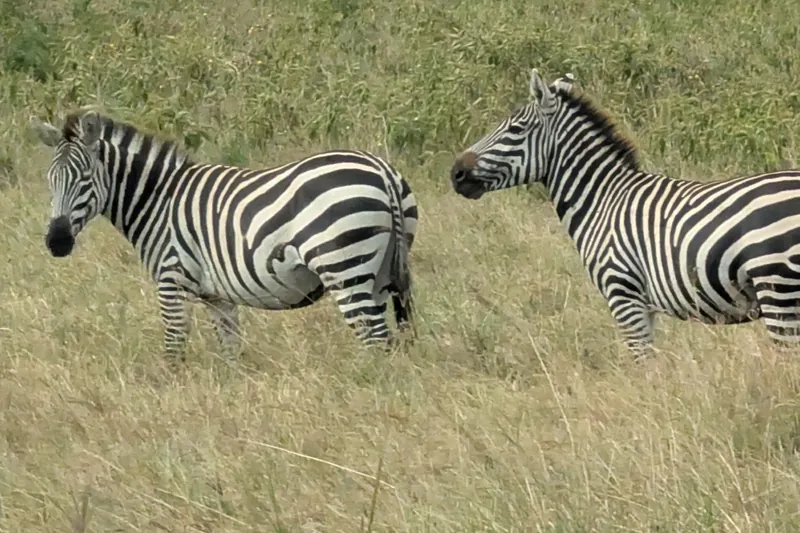
Plains zebra in the Ngorongoro Conservation Area. Christine Stone, iNaturalist, CC0 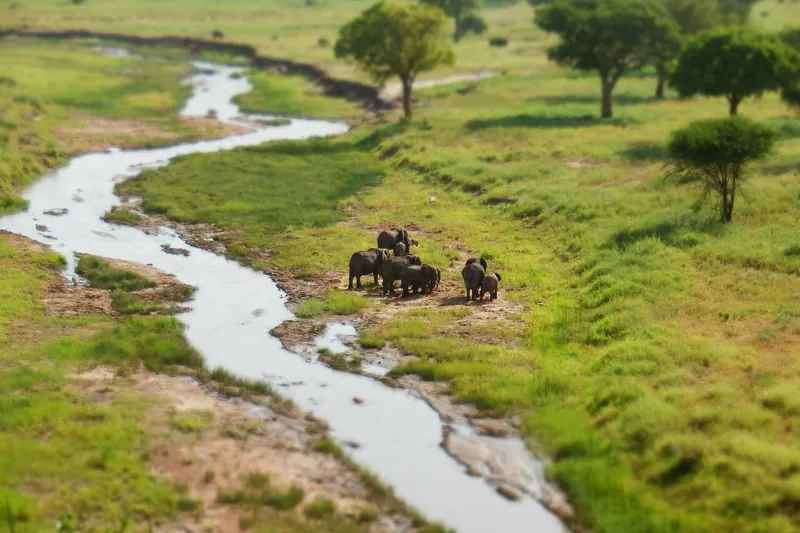
Elephant herd beside the Tarangire River. Fadez, Wikimedia Commons, CC BY-SA 3.0, cropped 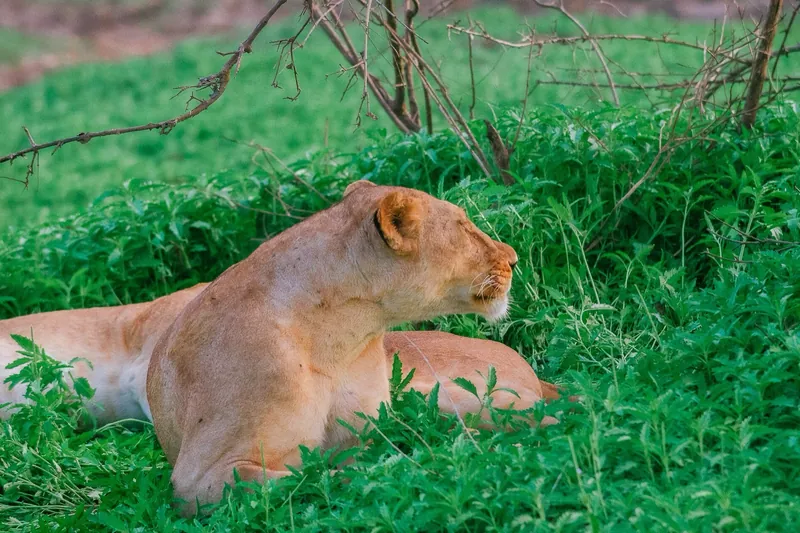
Lioness lying in green grass in Nyerere National Park. Erasmus Kamugisha, Wikimedia Commons, CC BY-SA 4.0, cropped


Photos by visitors and photographers, used under their free licences. Click a name to see the original.